Costa Rica National Parks: How to Plan a Trip Around the Country’s Wildest Landscapes
National Park
Costa Rica is a small country with an extraordinary concentration of protected landscapes. Within a relatively short distance, travelers can move from volcanic highlands to tropical beaches, from dry forest to dense rainforest, and from busy towns to places where the loudest sounds are waves, insects, and birds. Its national parks are a major reason why the country works so well for a nature-focused vacation.
Planning a Costa Rica national parks trip is different from planning a classic American park road trip. Distances on a map can look simple, but mountain roads, seasonal rain, ferry crossings, and the number of worthwhile stops can make travel days longer than expected. The best approach is to choose one or two regions, use the right arrival airport, and leave enough time to enjoy the parks rather than spending every day in transit.
Choose Parks by Region
Costa Rica’s protected areas are spread across several distinct regions. Trying to visit every famous park in one week usually creates too much driving. Instead, build an itinerary around the landscapes that interest you most.
Central Highlands: Arenal Volcano National Park
Arenal Volcano National Park is one of the country’s best-known nature destinations. The park and surrounding La Fortuna area combine volcano views, rainforest walks, lava fields, waterfalls, and hot springs. It is a strong choice for first-time visitors because there are many lodging and activity options nearby.
The volcano is sometimes concealed by clouds, especially during wetter periods, so treat a clear view as a welcome bonus rather than a guarantee. Even when the summit is hidden, the forest trails and the surrounding scenery make the area worthwhile. Plan at least two nights in La Fortuna if you want time for a hike, a waterfall visit, and an evening at hot springs.
Central Pacific: Manuel Antonio National Park
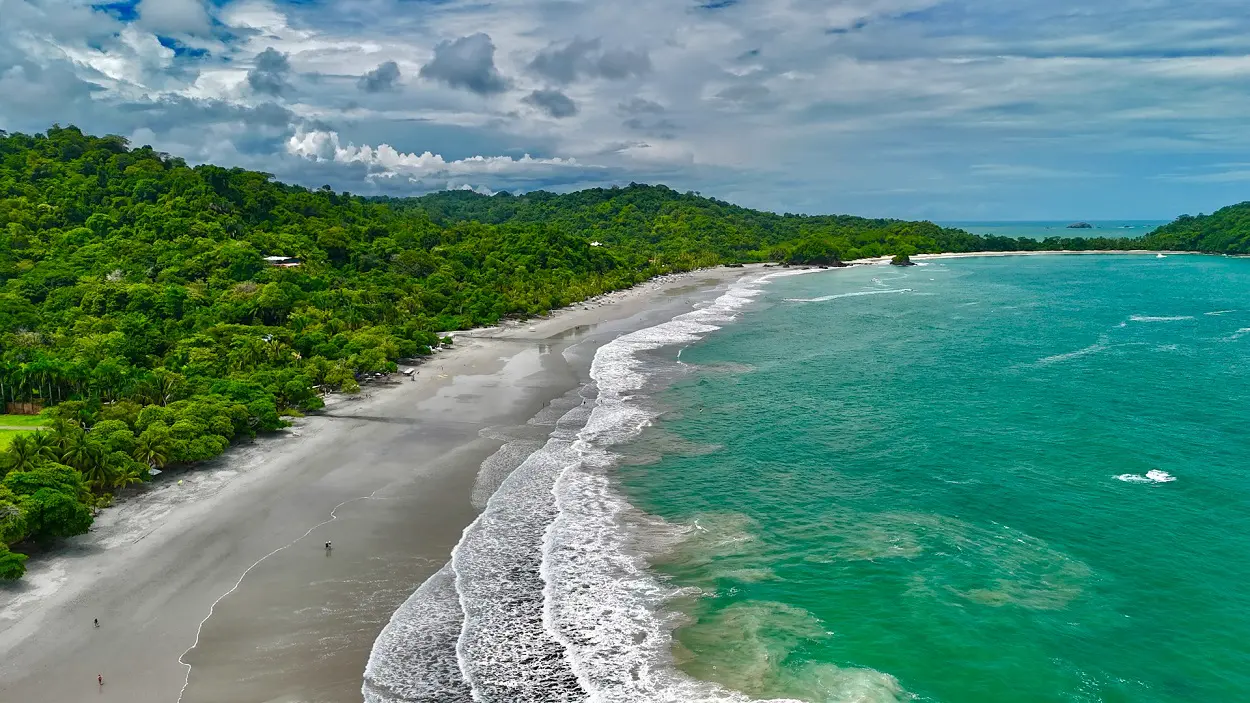
Manuel Antonio National Park is compact, scenic, and especially popular with travelers who want wildlife and beaches in the same day. Forest trails lead toward sandy coves, while sloths, monkeys, iguanas, and many bird species may be seen in the trees. Because the park is small and visitation is regulated, it is wise to check current entry arrangements and reserve in advance when required.
The nearby town of Quepos is the practical base for hotels, restaurants, and tours. Manuel Antonio can be paired with other Central Pacific destinations, but it is also a good standalone stop for families or first-time visitors who do not want an overly complicated itinerary.
Northern Guanacaste: Rincón de la Vieja National Park
For volcanic landscapes and a drier tropical environment, head to Rincón de la Vieja National Park in Guanacaste. The area is known for trails through forest, volcanic features, waterfalls, and geothermal activity. Conditions can change by season, and some sections or trails may close because of weather or volcanic activity, so always confirm the latest park information before traveling.
This region is particularly convenient for visitors who want to combine a national park with Pacific beaches around Tamarindo, Playa Hermosa, or the Papagayo area. It also offers a contrast to the wetter, greener interior of the country.
Osa Peninsula: Corcovado National Park
Corcovado National Park is for travelers seeking a more remote rainforest experience. The park protects a large expanse of lowland tropical forest on the Osa Peninsula and is widely known for its rich wildlife. Visiting requires more planning than the parks near major towns. Access may involve a domestic flight, boat, or a long ground journey, and advance arrangements are often necessary.
Give Corcovado time. A rushed day trip will not show what makes the region special. Travelers who stay nearby and explore with an authorized guide can better appreciate the layers of the forest: humid trails, river crossings, distant monkey calls, and the possibility of seeing animals that remain hidden from hurried visitors.
Pick the Right Airport
Two international airports serve most Costa Rica itineraries: Juan Santamaría International Airport near San José and Daniel Oduber Quirós International Airport near Liberia. Your arrival point should match your first region, not simply the cheapest flight.
San José is usually the more practical gateway for the Central Valley, Arenal, Manuel Antonio, the Caribbean side, and routes south toward the Osa Peninsula. After a long flight, arranging San Jose airport private transportation can simplify the first leg to a hotel or onward destination, particularly for families, groups, or travelers carrying outdoor gear. It also lets visitors begin with a direct route instead of trying to interpret road conditions immediately after landing.
Liberia is often the better choice for northern Guanacaste, Rincón de la Vieja, and beach destinations along the northwest Pacific. A pre-booked Liberia airport private shuttle is useful when a group wants to reach a lodge or beach town without renting a vehicle. It can be especially helpful for travelers whose itinerary includes one-way travel between regions, as the airport choice can reduce unnecessary backtracking.
Plan Transportation Realistically
A rental car offers flexibility, but it is not the only good option. Some travelers prefer private drivers or shuttles because mountain roads can be narrow, rainy-season conditions can slow traffic, and navigation may take more attention than expected. This is particularly true when the goal is to enjoy the scenery rather than arrive as quickly as possible.
If you rent a car, choose a vehicle suited to your exact route and confirm insurance, road restrictions, and parking arrangements before booking. Do not assume that every park or lodge requires four-wheel drive, but do research the access road carefully. For popular areas, an ordinary vehicle may be sufficient; for remote lodges or rural roads, conditions can be very different.
Public buses connect many towns and are an affordable option for travelers with time and light luggage. They are less ideal for a short itinerary that includes several parks, early trail starts, or remote locations. A mixed approach—private transfer for airport days, local transport for easy excursions, and a guided day trip for a remote park—often creates the least stressful plan.
Build in Time for Nature
National parks are not amusement parks with identical daily conditions. Rain may make a trail slippery. A beach may be closed because of currents. Wildlife sightings depend on patience, time of day, and luck. The most rewarding Costa Rica itineraries leave room for those realities.
Start hikes early, carry water and rain protection, and keep a dry bag for electronics. Follow marked trails, respect park rules, and never feed wildlife. If you visit more than one region, include a rest day or a short travel day between them. The forest is more memorable when you are not watching the clock.
With a well-chosen airport, a manageable route, and enough unplanned time, Costa Rica’s national parks become more than a collection of destinations. They become the rhythm of the trip: a volcano hidden in clouds, a monkey moving through the canopy, a trail ending at the sea, and the feeling that the country is still far wilder than its small size suggests.