Florida Weather by Month
Florida is known for its warm climate, abundant sunshine, beaches, and outdoor attractions, but the weather varies considerably from north to south. Miami and Key West stay warm through winter, while Jacksonville experiences cooler winter temperatures. Orlando and Tampa sit between these extremes and are popular year-round destinations.
The biggest seasonal change comes with rainfall. Florida generally has a drier and more comfortable winter and spring, followed by a hot, humid, and much wetter summer. June through September are among the wettest months in many parts of the state.
For this Florida weather guide, the main locations are Miami, Orlando, Tampa, Jacksonville, and Key West, giving travelers a useful picture of weather across the state.
Florida Weather by Month
You can click the image below to view the full-size weather chart for Florida.
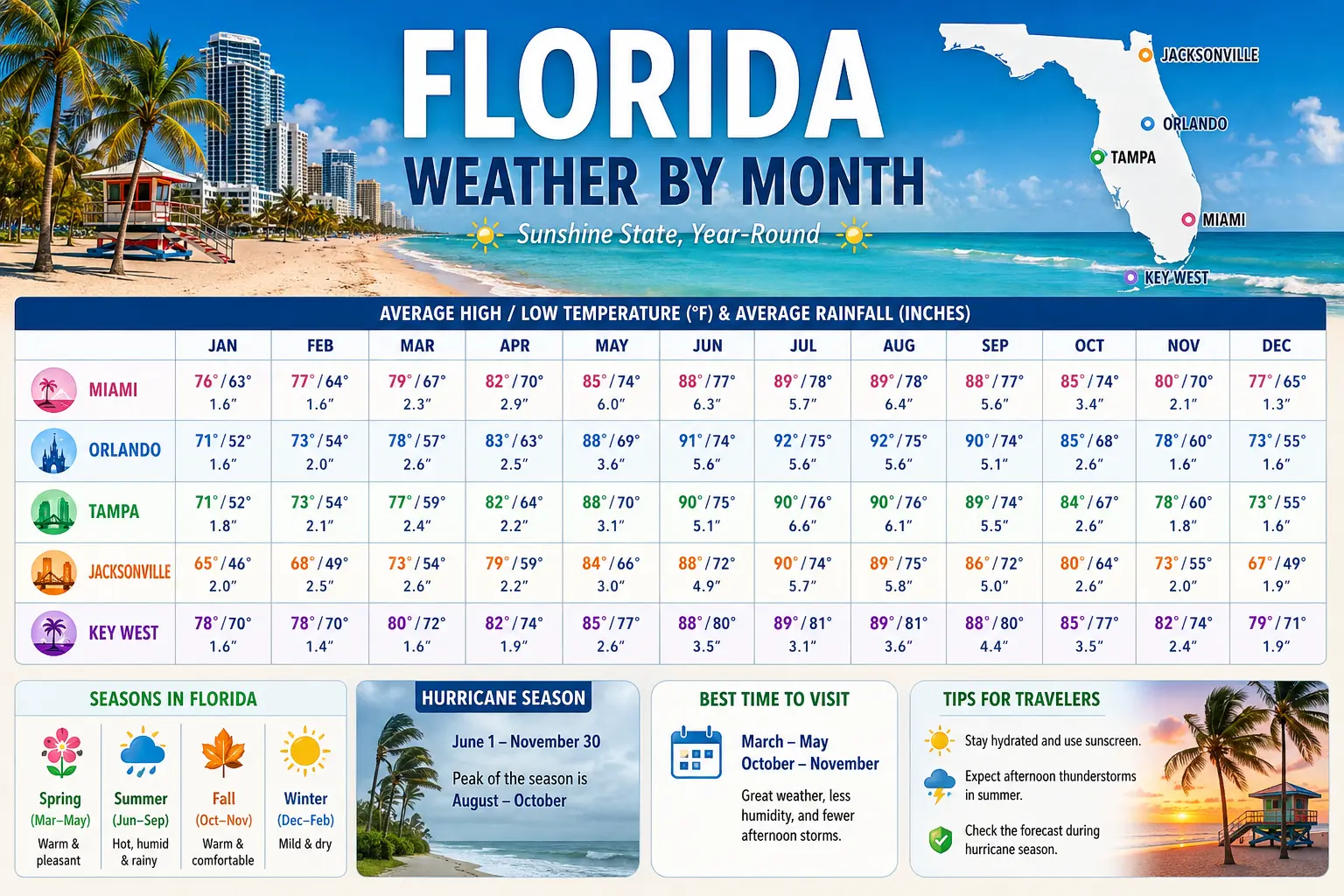
Temperatures are approximate monthly climate averages. Actual conditions can vary from year to year. The Miami, Tampa, and Jacksonville temperature patterns and Florida precipitation patterns are consistent with long-term climate data compiled by Weather Spark.
January – Mild Winter Weather and Low Rainfall
Average high: about 65–76°F
Average low: about 46–63°F
Rainfall: generally low across most of Florida
January is one of the most comfortable months to visit Florida. Northern Florida is noticeably cooler, with Jacksonville averaging around 65°F during the day and 46°F at night. Miami remains much warmer, with average temperatures around 76°F during the day and 63°F at night.
Orlando and Tampa offer mild afternoons and cool evenings, making January excellent for theme parks, sightseeing, golf, beaches, and outdoor activities.
Best For: Theme parks, beaches, sightseeing, golf
Travel Tip: Pack light layers because mornings and evenings can feel cool, especially in northern and central Florida.
February – Comfortable Days and Pleasant Sunshine
Average high: about 68–77°F
Average low: about 49–64°F
Rainfall: generally low
February continues Florida’s dry-season pattern. Miami remains warm enough for beach activities, while Orlando and Tampa are comfortable for outdoor attractions.
Jacksonville can still experience cool mornings, but daytime temperatures become increasingly pleasant as spring approaches.
Best For: Beaches, city sightseeing, theme parks, outdoor activities
Travel Tip: February is one of the better months for combining outdoor activities with comfortable temperatures.
March – Warm Spring Weather
Average high: about 73–79°F
Average low: about 54–67°F
Rainfall: low to moderate
March brings noticeably warmer weather across Florida. Miami approaches 80°F during the afternoon, while Orlando and Tampa become comfortably warm.
Rainfall is still relatively limited compared with summer. This makes March one of the most attractive months for road trips, beaches, national parks, and outdoor attractions.
Best For: Road trips, beaches, parks, sightseeing
Travel Tip: March can be a busy travel month, so reserve popular attractions and accommodations ahead of time.
April – Warm, Sunny, and Increasingly Humid
Average high: about 79–82°F
Average low: about 59–70°F
Rainfall: moderate
April marks the transition toward Florida’s hotter season. Miami reaches the low 80s, while Orlando and Tampa also become quite warm.
Rainfall generally begins increasing, but April is still considerably drier than the peak summer months in many locations.
Best For: Beaches, theme parks, sightseeing, outdoor recreation
Travel Tip: Plan outdoor activities for the morning when temperatures are generally more comfortable.
May – Hotter Temperatures and Rising Humidity
Average high: about 84–88°F
Average low: about 66–74°F
Rainfall: increasing
May feels distinctly tropical in southern Florida and increasingly hot in central and northern areas. Orlando and Tampa can reach the upper 80s, while Miami remains warm and humid.
Thunderstorms become more common as Florida approaches its summer wet season.
Best For: Beaches, water activities, early-summer vacations
Travel Tip: Bring sunscreen, breathable clothing, and plenty of water.
June – Hot, Humid, and Wet
Average high: about 88–90°F
Average low: about 72–77°F
Rainfall: high
June marks the beginning of Florida’s wetter summer pattern. Afternoon thunderstorms become much more common, and humidity can make temperatures feel considerably hotter.
Rainfall increases substantially in cities such as Miami, Orlando, Tampa, and Jacksonville. Weather Spark’s climate data shows roughly 4.6–6.3 inches of precipitation in these representative locations during June.
Best For: Water parks, beaches, indoor attractions, flexible itineraries
Travel Tip: Expect short but sometimes heavy afternoon thunderstorms and keep indoor activities as backup options.
July – Peak Summer Heat and Humidity
Average high: about 89–92°F
Average low: about 74–78°F
Rainfall: very high
July is one of the hottest months in Florida. Orlando and Tampa can reach around 90°F or higher during the afternoon, while Miami remains consistently hot and humid.
Rainfall is also high. Tampa, for example, averages about 6.6 inches of rainfall in July, while Orlando averages about 5.6 inches.
Best For: Water parks, beaches, family vacations
Travel Tip: Start outdoor activities early and expect afternoon thunderstorms.
August – Hot, Humid, and Stormy
Average high: about 89–92°F
Average low: about 75–78°F
Rainfall: very high
August is similar to July, with some of the highest temperatures and rainfall of the year.
Orlando and Tampa can experience rain on roughly 20 days of the month when measured using days with observed precipitation, while Miami also sees frequent summer rainfall.
Despite frequent storms, rain often comes in relatively short bursts, leaving periods of sunshine between showers.
Best For: Water activities, resort vacations, indoor attractions
Travel Tip: Keep your daily schedule flexible and carry rain protection.
September – Hot Weather and Peak Rainfall
Average high: about 86–90°F
Average low: about 72–77°F
Rainfall: very high
September remains hot and humid but begins the gradual transition toward cooler autumn weather.
It is also an important month to consider when planning a Florida trip because the Atlantic hurricane season runs through this period. Tropical systems can affect travel plans even when a hurricane does not make landfall.
Miami averages around 5.6 inches of rainfall in September, while Orlando and Tampa receive around 5.1 and 5.5 inches, respectively, according to Weather Spark’s climate data.
Best For: Resorts, indoor attractions, quieter travel periods
Travel Tip: Monitor official weather forecasts closely if traveling during hurricane season.
October – Warm Weather and Improving Conditions
Average high: about 80–85°F
Average low: about 64–74°F
Rainfall: decreasing
October brings one of the most noticeable improvements in Florida weather. Temperatures begin to moderate, humidity generally becomes more manageable, and rainfall decreases compared with summer.
Northern Florida cools more quickly than southern Florida. Jacksonville averages around 80°F during the day, while Miami remains in the mid-80s.
Best For: Theme parks, beaches, road trips, sightseeing
Travel Tip: October is a strong choice if you want warm weather without the intensity of midsummer.
November – Warm, Dry, and Comfortable
Average high: about 73–80°F
Average low: about 55–70°F
Rainfall: relatively low
November is one of Florida’s most comfortable months. The summer heat has faded, rainfall is considerably lower, and outdoor activities become easier.
Miami remains warm enough for beach vacations, while Orlando and Tampa offer comfortable temperatures for theme parks and sightseeing. Jacksonville can feel cool in the mornings.
Best For: Beaches, theme parks, road trips, outdoor activities
Travel Tip: November is an excellent month for travelers who want warm weather with less summer humidity.
December – Mild Winter Weather and Sunshine
Average high: about 67–77°F
Average low: about 49–65°F
Rainfall: relatively low
December begins Florida’s mild winter season. Southern Florida remains warm, while northern Florida can have cool mornings and occasional cold fronts.
Miami averages around 77°F during the day and 65°F at night, compared with approximately 67°F and 49°F in Jacksonville.
Best For: Winter sun, beaches, holiday travel, theme parks
Travel Tip: Southern Florida is the better choice if warm beach weather is your priority.
Florida Weather by Month Overview
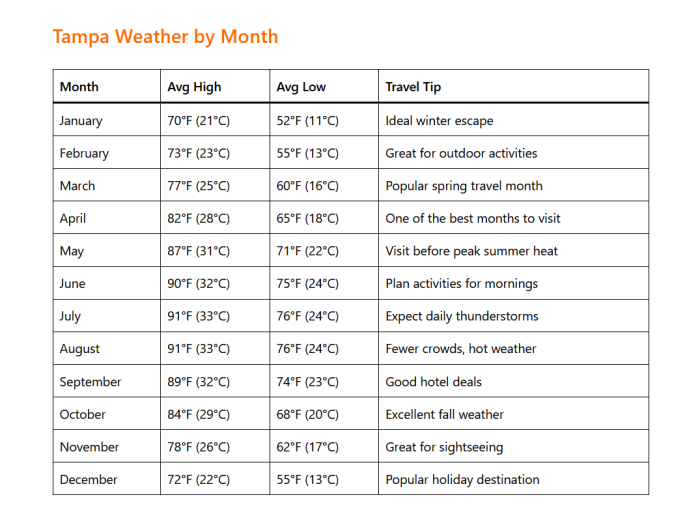
| Month | Miami | Orlando | Tampa | Jacksonville | Key West |
|---|---|---|---|---|---|
| January | 76°F / 63°F | 71°F / 52°F | 71°F / 52°F | 65°F / 46°F | Warm |
| February | 77°F / 64°F | 73°F / 54°F | 73°F / 54°F | 68°F / 49°F | Warm |
| March | 79°F / 67°F | 78°F / 57°F | 77°F / 59°F | 73°F / 54°F | Warm |
| April | 82°F / 70°F | 83°F / 63°F | 82°F / 64°F | 79°F / 59°F | Hot |
| May | 85°F / 74°F | 88°F / 69°F | 88°F / 70°F | 84°F / 66°F | Hot |
| June | 88°F / 77°F | 91°F / 74°F | 90°F / 75°F | 88°F / 72°F | Hot & humid |
| July | 89°F / 78°F | 92°F / 75°F | 90°F / 76°F | 90°F / 74°F | Hot & humid |
| August | 89°F / 78°F | 92°F / 75°F | 90°F / 76°F | 89°F / 75°F | Hot & humid |
| September | 88°F / 77°F | 90°F / 74°F | 89°F / 74°F | 86°F / 72°F | Hot & humid |
| October | 85°F / 74°F | 85°F / 68°F | 84°F / 67°F | 80°F / 64°F | Warm |
| November | 80°F / 70°F | 78°F / 60°F | 78°F / 60°F | 73°F / 55°F | Warm |
| December | 77°F / 65°F | 73°F / 55°F | 73°F / 55°F | 67°F / 49°F | Warm |
Florida Weather by Region
Florida’s large north-south range means choosing the right destination can make a major difference.
South Florida – Miami
Miami has the warmest winter weather among the major cities in this guide. January highs average around 76°F, and even December afternoons average around 77°F. The city becomes much wetter from late spring through early fall.
Best for: Winter beach vacations, nightlife, warm-weather escapes.
Central Florida – Orlando
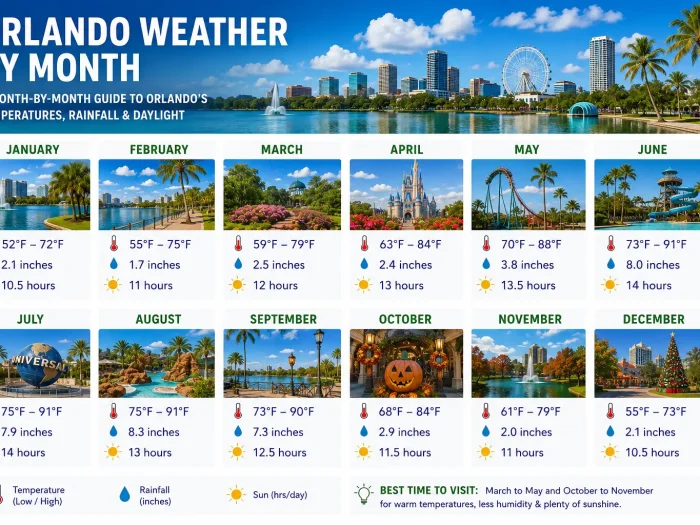
Orlando has hot summers, mild winters, and a pronounced wet season. Summer precipitation is particularly high, with around 5–6 inches of rainfall per month from June through September.
Best for: Theme parks, family vacations, attractions.
West Florida – Tampa
Tampa experiences warm temperatures throughout the year. Summer is hot and humid, with July and August among the wettest months.
Best for: Gulf Coast beaches, outdoor recreation, city breaks.
North Florida – Jacksonville
Jacksonville has greater seasonal variation than southern Florida. Winter mornings can be cool, while summer afternoons can reach around 90°F.
Best for: Beaches, history, outdoor activities, northern Florida road trips.
Florida Keys – Key West
Key West remains warm throughout winter and is one of the best choices for travelers seeking tropical conditions. Its island location produces a distinct climate compared with northern and central Florida.
Best for: Tropical vacations, boating, snorkeling, beaches, and winter escapes.
When Is the Best Time to Visit Florida?
For many travelers, March through April and October through November offer the best balance of warm temperatures, outdoor-friendly conditions, and lower rainfall than the summer months.
December through February is particularly attractive for escaping cold winter weather. Southern Florida and the Florida Keys are especially appealing during this period.
June through September can be very hot, humid, and rainy. However, these months can still work well for travelers who don’t mind afternoon thunderstorms and want to enjoy water parks, beaches, or indoor attractions.
Florida Rainy Season
Florida’s rainy season generally affects much of the state from late spring through early fall, although the exact timing and rainfall amounts vary by location.
Summer thunderstorms are often most common during the afternoon. A typical day can start sunny before clouds build during the afternoon and produce a heavy shower or thunderstorm.
Rainfall varies considerably between locations. For example, Weather Spark’s data puts Tampa’s average rainfall at about 6.6 inches in July, compared with approximately 1.3 inches in Miami in December.
This seasonal difference is one of the most important things to understand when planning a Florida vacation.
Florida Hurricane Season
The Atlantic hurricane season officially runs from June 1 through November 30, with the greatest need for weather awareness generally occurring during the peak part of the season.
A hurricane does not need to make landfall in Florida to affect travel. Tropical systems can bring heavy rain, strong winds, dangerous surf, flooding, and flight disruptions.
If traveling during hurricane season, check the forecast before departure and remain flexible with outdoor activities and transportation plans.
Best Months to Visit Florida
| Travel Goal | Best Months |
|---|---|
| Best overall weather | March–April, October–November |
| Warm winter vacation | December–February |
| Beach vacation | March–May, October–November |
| Theme parks | January–April, October–November |
| Avoiding extreme summer heat | December–April |
| Lower rainfall | November–April |
| Florida Keys | December–April |
| Outdoor activities | March–April, October–November |
Florida Weather by Month: Quick Takeaway
Florida does not have one single weather pattern. Northern Florida has cooler winters, Central Florida has hot and humid summers, and South Florida remains warm for most of the year.
For the most comfortable combination of temperature and rainfall, March, April, October, and November are excellent choices. Winter is ideal for escaping cold weather, particularly in Miami and the Florida Keys, while summer is best suited to travelers who don’t mind heat, humidity, and frequent afternoon thunderstorms.
20 FAQs About Florida Weather
1. What is the weather like in Florida year-round?
Florida generally has a warm climate year-round. Winters are mild and relatively dry, while summers are hot, humid, and wetter. Southern Florida stays warmer than northern Florida throughout the year.
2. What is the best month to visit Florida for good weather?
March, April, October, and November are among the best months for comfortable weather. These months generally offer warm temperatures with less humidity and rainfall than the peak summer season.
3. What is the hottest month in Florida?
July and August are typically among the hottest months. Daytime temperatures often reach around 90°F or higher in Central and South Florida, accompanied by high humidity.
4. What is the coldest month in Florida?
January is generally the coolest month. Northern Florida can have chilly mornings, while Miami, the Florida Keys, and other southern areas remain considerably warmer.
5. Does Florida get cold in the winter?
Yes, but winter is usually mild compared with much of the United States. Northern Florida can experience temperatures in the 40s°F, while South Florida often remains in the 60s and 70s°F.
6. What is Florida’s rainy season?
Florida’s rainy season generally occurs from late spring through early fall, with the wettest period often falling during the summer. Afternoon thunderstorms are especially common during this period.
7. Which month gets the most rain in Florida?
June through September are generally among the wettest months, although the exact peak varies by location. Central and South Florida commonly receive frequent summer thunderstorms.
8. Does it rain every day in Florida during summer?
No. Summer thunderstorms can be frequent, but they often develop during the afternoon and may pass relatively quickly. A day can include heavy rain followed by sunshine.
9. What is Florida weather like in January?
January is generally mild and relatively dry. Northern Florida is cooler, while Miami and the Florida Keys remain warm enough for beaches and outdoor activities.
10. What is Florida weather like in March?
March typically brings warm, comfortable spring weather. Temperatures rise across the state while rainfall is generally lower than during the summer months, making it a popular time for outdoor activities.
11. What is Florida weather like in June?
June is hot, humid, and increasingly wet. Afternoon thunderstorms become common, and temperatures often reach the upper 80s or around 90°F.
12. What is Florida weather like in July?
July is typically very hot and humid, with frequent thunderstorms. Daytime temperatures often reach around 90°F or higher, particularly in Central and South Florida.
13. What is Florida weather like in October?
October brings cooler temperatures and generally less rainfall than the summer months. It is often considered one of the more comfortable months for visiting Florida.
14. Is Florida humid all year?
Humidity can occur throughout the year, but it is generally most noticeable from late spring through summer. Winter and early spring tend to feel more comfortable, especially in northern and central Florida.
15. Which part of Florida has the warmest weather?
South Florida and the Florida Keys generally have the warmest weather, particularly during winter. Miami and Key West remain significantly warmer than Jacksonville during the cooler months.
16. Which part of Florida has the coolest weather?
North Florida generally has the coolest weather. Jacksonville and the Panhandle experience more noticeable winter temperature changes than Miami, Tampa, or Key West.
17. When is hurricane season in Florida?
The Atlantic hurricane season officially runs from June 1 through November 30. Tropical weather can affect Florida during this period, so travelers should monitor forecasts when planning trips.
18. Is Florida a good destination in winter?
Yes. Winter is one of the most popular times to visit Florida because temperatures are generally mild and rainfall is lower than during summer. South Florida and the Florida Keys are especially attractive for warm-weather vacations.
19. What is the best time to visit Florida for beaches?
March through May and October through November can offer an excellent combination of warm temperatures and relatively comfortable conditions. For the warmest winter beach weather, South Florida and the Keys are good choices.
20. Which Florida city has the best weather?
There is no single answer because it depends on what you prefer. Miami and Key West are excellent for warm winters, Orlando is convenient for theme parks, Tampa offers Gulf Coast weather, and Jacksonville provides a more seasonal climate.
Read more: