What to Pack for a Day Hike in a National Park: Trail Food Guide
Every year, park rangers assist hikers who set out on popular trails with a single water bottle and no food. Most day hike problems in national parks are not caused by wildlife or weather. They are caused by poor planning, and food is one of the easiest things to plan right. This guide covers how much to bring, the best snacks for the trail, how food needs change from desert parks to bear country, and the food rules that apply inside US national parks.
How Much Food Do You Need on a Day Hike?
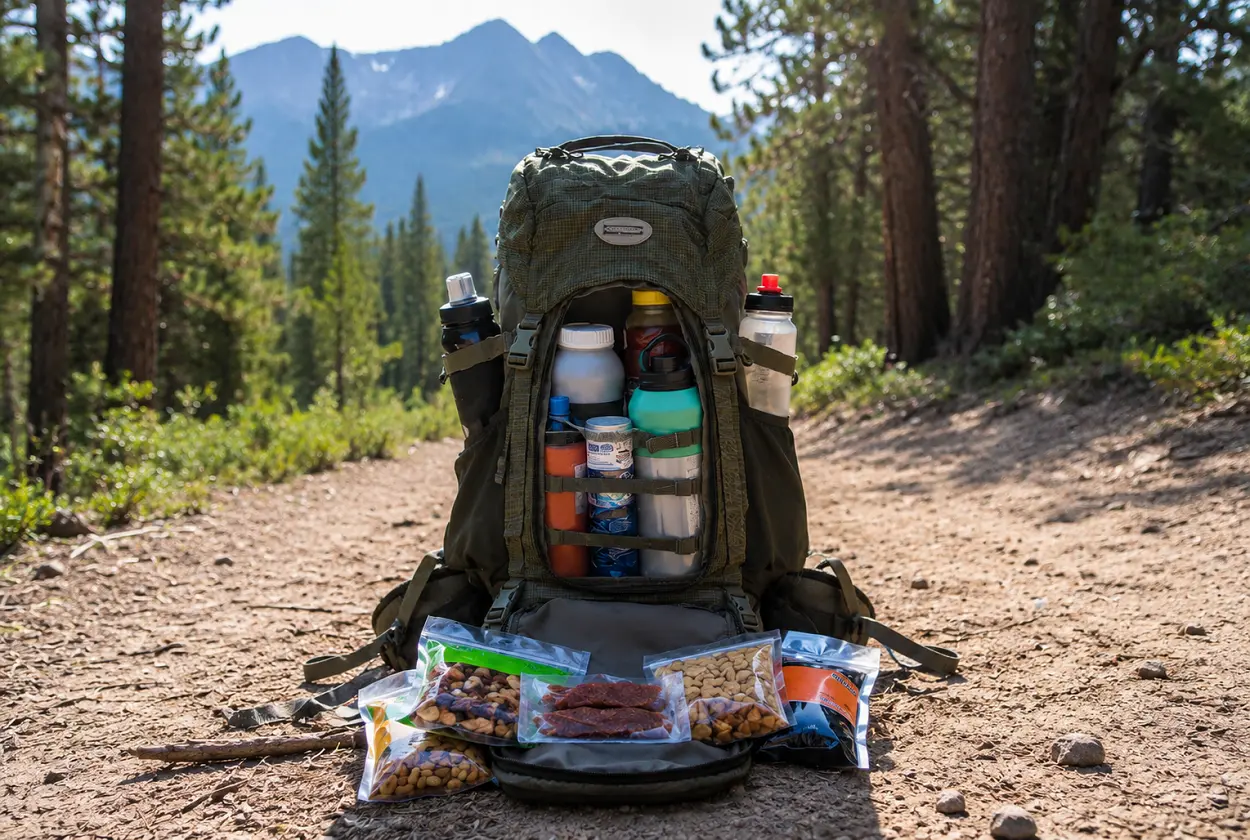
A good rule of thumb is 200 to 300 calories per hour of hiking, on top of a solid breakfast. Hiking burns roughly double the calories of walking on flat ground, and steep trails at elevation burn even more. For a typical 4 to 6 hour day hike, that means packing 1,000 to 1,500 calories per person, even if you do not plan to eat all of it. Extra food weighs little and becomes essential if a wrong turn or an injury keeps you on the trail longer than planned.
Water matters just as much: plan on half a liter per hour in mild conditions and a full liter per hour in heat. Desert parks are unforgiving on this point, and rangers at Grand Canyon recommend that summer hikers eat salty snacks with every water break to keep electrolytes balanced. As a quick reference for a full day on the trail, each person should carry roughly 1,000 to 1,500 calories of food, 2 to 3 liters of water, and at least one snack they can eat without stopping.
The Best Trail Snacks for National Park Hikes
Protein: Jerky and Nuts
Protein keeps you full far longer than sugary snacks, and it does not melt in a hot pack. Jerky is the classic trail protein for good reason: it is lightweight, shelf-stable, and calorie-dense for its weight. Look for healthy jerky snacks with simple ingredients and lower sodium if you are watching salt intake, and consider chicken or turkey jerky as a leaner option for long, hot days. Pair it with almonds, cashews, or peanuts and you have a compact snack system that covers protein, fat, and salt in one pocket of your pack.
Carbohydrates: Dried Fruit, Bars, and Crackers
Carbs are your fast fuel on climbs. Dried mango, raisins, dates, granola bars, and whole-grain crackers all travel well and give you quick energy when the trail turns steep. Fresh fruit works too if it is sturdy: apples and oranges survive a backpack, bananas do not. Many experienced hikers eat a small carb snack every 60 to 90 minutes rather than stopping for one large lunch, which keeps energy steady and avoids the sluggish feeling that follows a big midday meal.
Salty Snacks and Electrolytes
Sweating on a long climb drains sodium and potassium, which plain water does not replace. Pretzels, salted nuts, jerky, and electrolyte tablets or powder all help. Cramping calves on the second half of a hike are very often an electrolyte problem, not a fitness problem. In hot weather, alternate salty snacks with water breaks instead of drinking large amounts of plain water on an empty stomach.
Best Snacks by Park Type
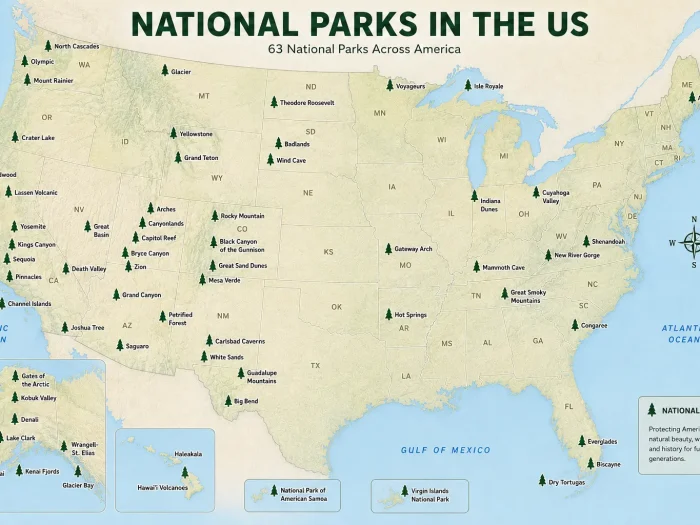
Desert parks (Grand Canyon, Death Valley, Arches). Heat is the main enemy. Skip anything that melts, including chocolate and most protein bars with coatings. Focus on salty snacks, jerky, nuts, and dried fruit, and carry more water than you think you need. In summer, rangers advise hiking before 10 a.m. and eating small amounts frequently, since heat suppresses appetite while your body still burns fuel.
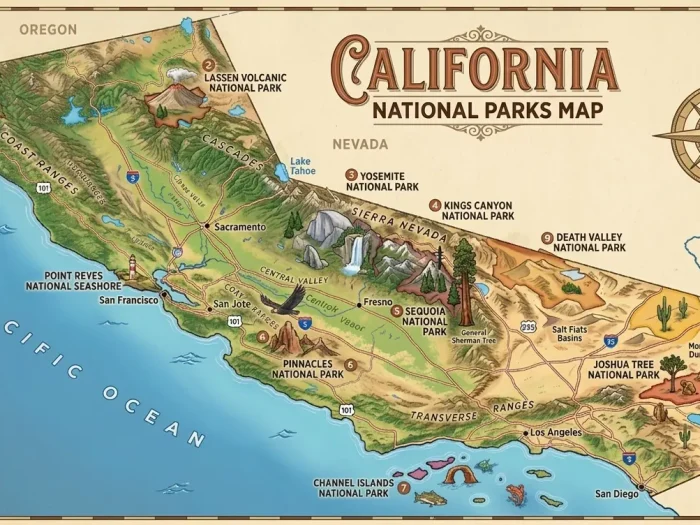
Mountain and bear country parks (Glacier, Grand Teton, Yosemite). Elevation increases calorie burn, so pack on the high end of the range. These parks also have strict food storage rules. Keep snacks sealed inside your pack, never in tents or open pockets, and use provided bear lockers or canisters where required.
Cold weather and Alaska parks (Denali, Gates of the Arctic). Cold increases calorie needs significantly, and frozen snacks are a real problem. Soft foods like cheese, tortillas, nut butter pouches, and jerky stay edible in freezing temperatures, while granola bars can become tooth-breakers. Keep the next snack in an inside jacket pocket so body heat keeps it soft.
Food Rules Inside National Parks
Food handling is regulated in most parks, and the rules exist to protect both visitors and wildlife.
Never feed wildlife. This includes squirrels and birds, not just bears. Animals that learn to associate humans with food become aggressive and often have to be relocated or destroyed. Feeding wildlife is also illegal in national parks and can carry fines.
Store food properly. In bear country, parks such as Yosemite, Glacier, and Grand Teton require food to be stored in bear canisters, provided lockers, or your vehicle, never in a tent. On the trail, keep snacks sealed in your pack rather than in open pockets.
Pack out everything. All wrappers, peels, and cores leave the trail with you. Orange peels and apple cores are litter too: they take months or years to break down and attract animals to trails in the meantime. A small resealable bag in a hip pocket makes this effortless.
What Not to Bring
A few foods cause more problems than they solve on national park trails. Chocolate and yogurt-coated anything melts into a mess by mid-morning in summer. Glass containers are heavy and banned in some park areas. Canned food is weight you do not need for a day hike. Strong-smelling foods like tuna or cured fish are a poor choice in bear country, where odor control matters. And avoid relying on caffeine drinks for energy: they are dehydrating, which works against you on a long trail.
Pre-Hike and Post-Hike Meals
Eat a real breakfast one to two hours before a long hike: oatmeal, eggs, toast, or yogurt with granola all work well. Avoid starting a strenuous trail on a heavy, greasy meal. After the hike, a mix of protein and carbs within an hour helps recovery, which matters if you are hiking again the next day, as most park visitors are. Many park gateway towns are built around exactly this routine, and a proper dinner after a long trail day is part of the experience.
Quick Packing List: Trail Food for One Person, One Day
Jerky (2 to 3 ounces), one bag of trail mix or nuts, two granola or energy bars, one piece of sturdy fruit or a bag of dried fruit, a salty snack such as pretzels, electrolyte tablets, and 2 to 3 liters of water depending on heat and trail length. Total weight is under three pounds, and it covers you for a full day plus a margin of safety.
Trail food is not complicated, but it rewards planning. Pack more than you think you need, keep protein at the center of your snack strategy, match your food to the park you are visiting, follow the storage rules, and leave nothing behind but footprints.