Black Canyon of the Gunnison National Park Map Guide
A Black Canyon of the Gunnison National Park map is one of the most valuable resources you can have before visiting this spectacular Colorado national park. Unlike many parks where attractions are spread across wide valleys, Black Canyon features steep cliffs, dramatic overlooks, and two separate rim roads that are not connected by a bridge. Understanding the park layout will help you maximize your time and avoid unnecessary driving.
Whether you’re planning a quick scenic drive, a day of hiking, or a multi-day adventure, this guide explains how to read the park map, what each area offers, and how to plan your visit efficiently.
Black Canyon of the Gunnison National Park Map
Click the image below to view map of Black Canyon of the Gunnison National Park in full size.
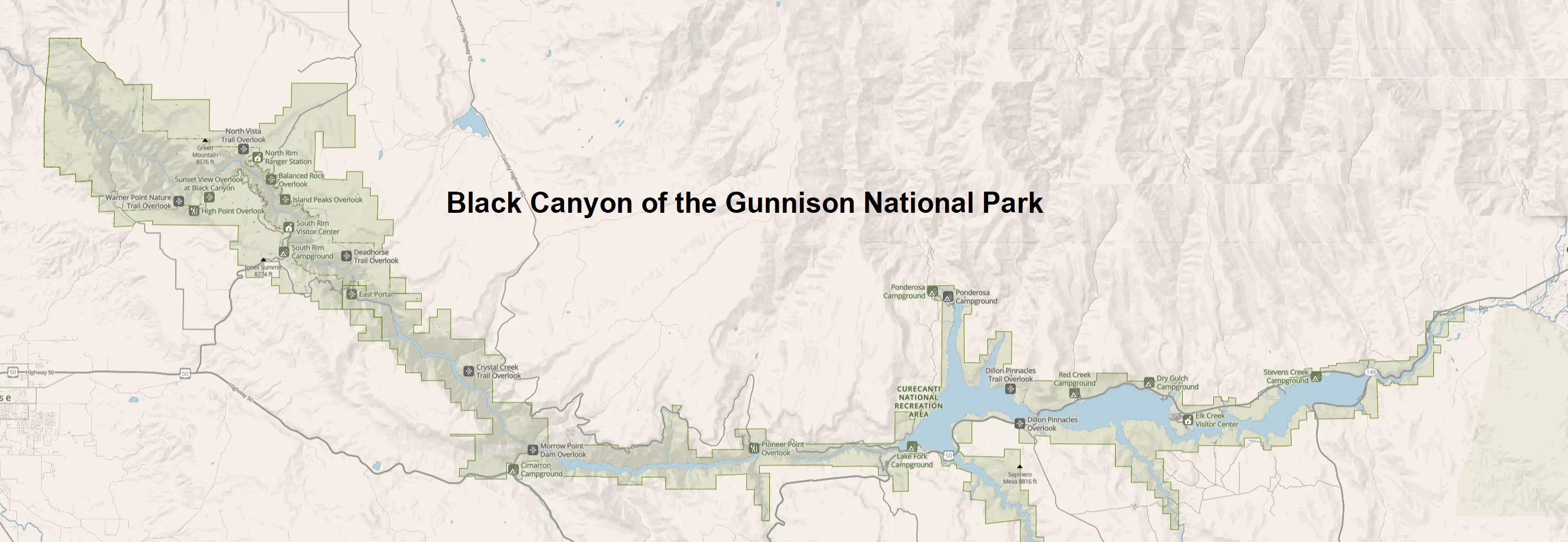
If you want to download Black Canyon of the Gunnison National Park PDF file you can click here
Why You Need a Black Canyon of the Gunnison Map
Black Canyon of the Gunnison is relatively compact, but its geography can be confusing for first-time visitors. The canyon is so deep and narrow that the South Rim and North Rim are completely separated, requiring a 2–3 hour drive around the canyon if you want to visit both sides.
A good park map helps you:
- Locate visitor centers and entrance stations
- Identify scenic overlooks
- Find hiking trails
- Plan campground locations
- Estimate driving distances
- Navigate seasonal road closures
- Understand where facilities are available
The official National Park Service (NPS) brochure map is the best resource for most visitors. It includes roads, overlooks, trails, campgrounds, picnic areas, and services.
Park Overview
Black Canyon of the Gunnison National Park is located in western Colorado, approximately:
- 15 miles east of Montrose (South Rim)
- 11 miles south of Crawford (North Rim)
- Around 250 miles southwest of Denver
The park protects approximately 30,750 acres of rugged canyon landscape carved by the Gunnison River through ancient Precambrian rock.
The park is divided into four primary areas:
- South Rim
- North Rim
- East Portal
- Wilderness Inner Canyon
South Rim Map
The South Rim is where most visitors spend their time. It is open year-round (weather permitting), contains the main visitor center, and offers the largest number of overlooks.
Key locations include:
- South Rim Visitor Center
- Gunnison Point
- Pulpit Rock Overlook
- Chasm View
- Painted Wall View
- Dragon Point
- Sunset View
- High Point
- South Rim Campground
A paved scenic road runs along the canyon rim, connecting nearly all viewpoints.
The South Rim also features several popular hiking trails:
- Rim Rock Nature Trail
- Oak Flat Loop Trail
- Cedar Point Nature Trail
- Warner Point Nature Trail
Most scenic stops are only a short walk from parking areas, making this side ideal for families and first-time visitors.
North Rim Map
The North Rim is quieter and receives far fewer visitors.
Although the overlooks are fewer, many photographers consider them even more dramatic.
Major viewpoints include:
- Exclamation Point
- Chasm View Nature Trail
- The Narrows View
- Balanced Rock View
- Big Island View
- Kneeling Camel View
- Island Peaks View
The North Rim campground is smaller and more primitive than the South Rim campground.
Facilities are limited, so visitors should bring food, water, and fuel before arriving.
East Portal Area
The East Portal sits at the bottom of the canyon along the Gunnison River.
The steep East Portal Road descends dramatically from the South Rim to river level.
Here you’ll find:
- Fishing access
- Riverside picnic area
- Campground
- River viewpoints
Vehicles longer than 22 feet are prohibited on East Portal Road because of its steep grades and tight curves. Seasonal winter closures are common.
Scenic Overlooks on the Map
One of the highlights of every park map is the collection of overlooks.
Popular stops include:
| Overlook | Rim | Highlights |
|---|---|---|
| Gunnison Point | South | Visitor Center overlook |
| Pulpit Rock | South | Sheer canyon walls |
| Chasm View | South | Narrowest canyon section |
| Painted Wall View | South | Colorado’s tallest cliff |
| Dragon Point | South | Wide panoramic views |
| Sunset View | South | Excellent evening photography |
| Exclamation Point | North | One of the deepest views |
| The Narrows View | North | Extremely narrow canyon section |
| Balanced Rock View | North | Rock formations and cliffs |
| Big Island View | North | River bends below |
Many overlooks are located only a few hundred feet from parking areas, making them accessible for visitors of all ages.
Hiking Trails on the Map
The official map marks trails by difficulty.
Easy Trails
- Cedar Point Nature Trail
- Rim Rock Nature Trail
Moderate Trails
- Warner Point Nature Trail
- North Vista Trail
Strenuous Trails
- Oak Flat Loop
- Gunnison Route
- Tomichi Route
- Warner Route
Inner Canyon routes are not maintained trails. They require wilderness permits, route-finding skills, and significant elevation gain.
Campgrounds
The park map clearly identifies campground locations.
South Rim Campground
- Largest campground
- Near Visitor Center
- Suitable for RVs and tents
- Restrooms available
North Rim Campground
- Smaller
- More secluded
- Limited services
East Portal Campground
- Along the river
- Scenic setting
- Seasonal access
Some campgrounds require reservations during peak season, while others may operate on a first-come, first-served basis depending on the season. Always check current availability before arriving.
Visitor Centers and Facilities
Your map also identifies important visitor services.
South Rim Visitor Center
- Park information
- Ranger programs
- Restrooms
- Bookstore
- Maps
- Junior Ranger materials
Facilities on the North Rim are much more limited, so the South Rim Visitor Center is the best place to begin your visit.
Driving Distances
One of the biggest surprises for new visitors is how long it takes to travel around the canyon.
Approximate driving distances:
- Montrose → South Rim: 15 miles
- Crawford → North Rim: 11 miles
- South Rim → North Rim: 2–3 hours by road
- Visitor Center → High Point: about 7 miles
There is no bridge crossing the canyon, so plan your itinerary carefully.
Seasonal Road Closures
The map remains the same throughout the year, but road access changes seasonally.
Winter may close:
- Portions of South Rim Road
- East Portal Road
- Most North Rim roads
Because closures vary with weather, always check current road conditions before visiting.
Download the Official Park Map
The easiest way to navigate is by downloading the official National Park Service map before your trip.
The official brochure includes:
- Scenic roads
- Trail distances
- Overlooks
- Campgrounds
- Picnic areas
- Accessibility information
- Shuttle and visitor services (where applicable)
Downloading the map in advance is recommended because cellular coverage is limited throughout much of the park. The NPS App also allows you to save maps for offline use.
Tips for Using the Park Map
- Download an offline copy before entering the park.
- Decide whether you’ll visit the South Rim, North Rim, or both.
- Mark the overlooks you don’t want to miss.
- Bring extra water, especially if hiking.
- Don’t rely solely on mobile navigation because cell service is unreliable.
- Check for seasonal closures before your trip.
Frequently Asked Questions
Is the South Rim or North Rim better?
The South Rim is more accessible and has more overlooks, trails, and visitor services. The North Rim offers a quieter experience with fewer crowds and equally impressive views.
Can you drive between the South Rim and North Rim?
Yes, but there is no bridge across the canyon. Driving from one rim to the other typically takes 2–3 hours.
Is there a printable PDF map?
Yes. The National Park Service provides a free downloadable brochure map in PDF format.
Does Google Maps work inside the park?
Navigation generally works on the approach roads, but cellular service is limited inside the park. Download offline maps before your visit.
How long does it take to drive the South Rim?
Driving the South Rim Road with stops at the main overlooks typically takes 2–4 hours, depending on how often you stop and whether you include short hikes.
Final Thoughts
A Black Canyon of the Gunnison National Park map is more than a navigation tool—it is the key to understanding one of Colorado’s most dramatic landscapes. By familiarizing yourself with the South Rim, North Rim, East Portal, scenic overlooks, hiking trails, and seasonal access before you arrive, you can make the most of your visit. Whether you have just a few hours or several days, an official park map will help you discover breathtaking viewpoints, avoid unnecessary detours, and safely explore this remarkable canyon.