Kings Canyon National Park Weather by Month
Kings Canyon National Park is one of California’s most breathtaking mountain destinations, known for giant sequoias, deep canyons, alpine lakes, and dramatic seasonal weather changes. Because the park ranges from low foothills to high Sierra peaks, weather can vary significantly depending on elevation and time of year.
This month-by-month guide helps travelers decide the best time to visit based on temperatures, snowfall, road access, hiking conditions, and outdoor activities.
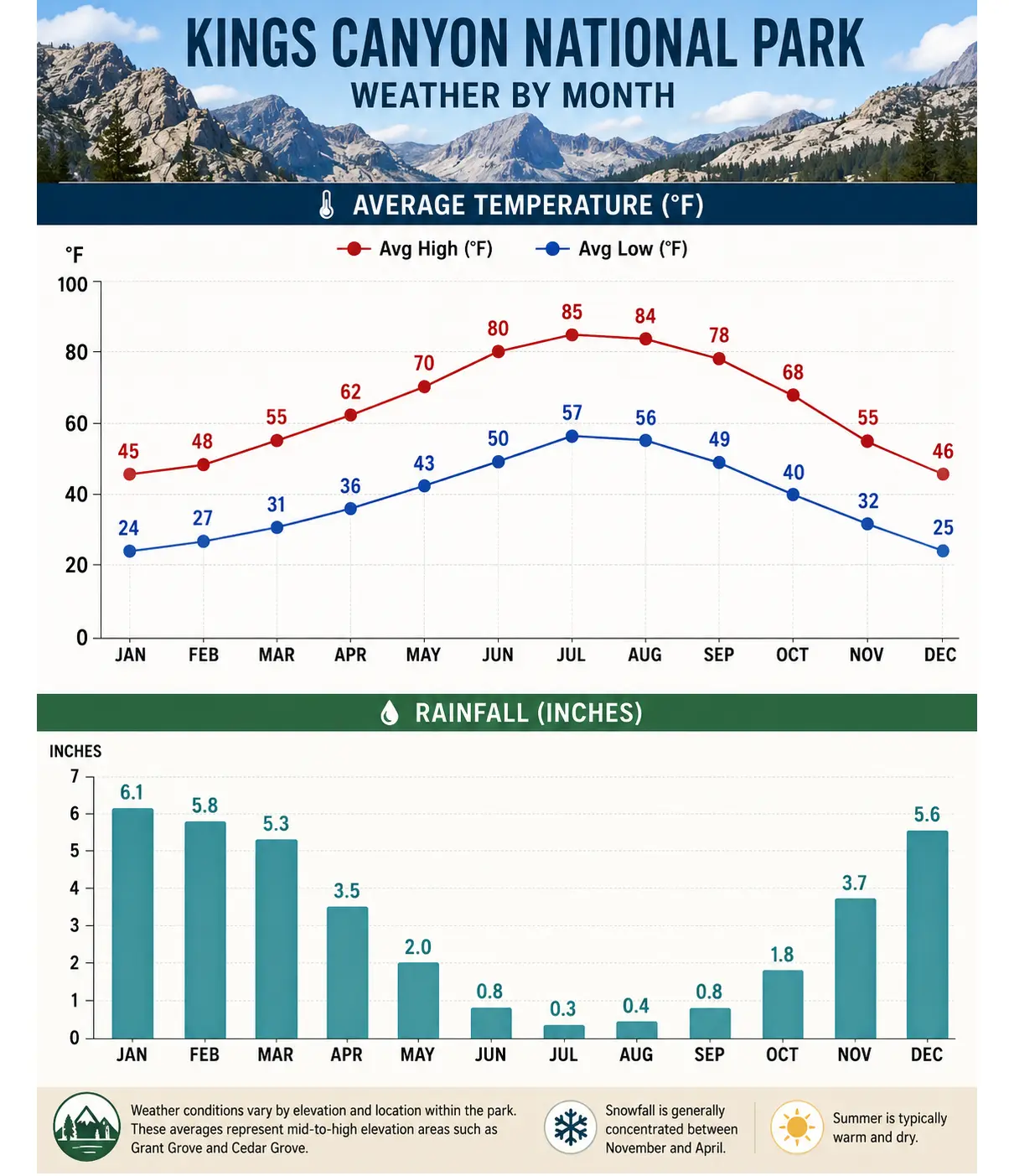
Kings Canyon National Park Temperatures by Month
You can click the image below to view the full-size weather chart for Kings Canyon NP.
January Weather in Kings Canyon National Park
January is the coldest and snowiest month in the park.
- Average daytime temperatures: 30°F to 45°F (-1°C to 7°C)
- Overnight lows often drop below freezing
- Heavy snowfall is common in higher elevations
- Roads such as Highway 180 may experience temporary closures
Winter visitors enjoy:
- Snowshoeing
- Cross-country skiing
- Peaceful snowy landscapes
- Fewer crowds
The giant sequoia groves become especially magical under fresh snow.
February Weather in Kings Canyon National Park
February remains cold and snowy, although occasional sunny days appear.
- Temperatures: 32°F to 48°F (0°C to 9°C)
- Snowpack is typically deep in mountain areas
- Winter storms are still frequent
This is a great month for:
- Winter photography
- Quiet cabin stays nearby
- Snow-based recreation
Visitors should always check road and weather conditions before traveling.
March Weather in Kings Canyon National Park
March marks the transition from winter to spring.
- Temperatures: 38°F to 55°F (3°C to 13°C)
- Snow begins melting at lower elevations
- Higher elevations remain winter-like
Waterfalls become stronger as snowmelt increases, creating beautiful scenery throughout the park.
March visitors should prepare for:
- Mixed weather conditions
- Muddy trails
- Cold nights
April Weather in Kings Canyon National Park
Spring arrives more noticeably in April.
- Temperatures: 45°F to 62°F (7°C to 17°C)
- Wildflowers begin blooming
- Lower elevation trails become more accessible
However, some mountain roads and high-country areas may still remain closed because of snow.
April is excellent for:
- Scenic drives
- Waterfall viewing
- Moderate hiking
May Weather in Kings Canyon National Park
May brings warmer temperatures and greener landscapes.
- Temperatures: 50°F to 70°F (10°C to 21°C)
- Snow continues melting rapidly
- Rivers and waterfalls reach peak flow
This is one of the best months for:
- Hiking
- Camping
- Wildlife spotting
Crowds start increasing near Memorial Day weekend.
June Weather in Kings Canyon National Park
June offers ideal outdoor conditions.
- Temperatures: 60°F to 80°F (16°C to 27°C)
- Sunny days become common
- Most roads gradually reopen
Popular summer activities include:
- Backpacking
- Fishing
- Scenic photography
- Exploring cedar groves and alpine valleys
Even in June, higher elevations can still have patches of snow.
July Weather in Kings Canyon National Park
July is warm, dry, and one of the busiest months.
- Temperatures: 65°F to 85°F (18°C to 29°C)
- Minimal rainfall
- Comfortable evenings in most areas
This is peak season for:
- Camping
- Hiking
- Family vacations
- Ranger programs
Afternoon thunderstorms occasionally develop in high alpine areas.
August Weather in Kings Canyon National Park
August continues the warm summer pattern.
- Temperatures: 64°F to 84°F (18°C to 29°C)
- Dry conditions dominate
- High UV exposure during midday
Visitors should:
- Carry plenty of water
- Start hikes early
- Watch for wildfire smoke during dry years
August is perfect for high-elevation adventures and overnight backpacking trips.
September Weather in Kings Canyon National Park
September is one of the most pleasant months in the park.
- Temperatures: 55°F to 78°F (13°C to 26°C)
- Cooler nights return
- Summer crowds begin thinning
The weather remains excellent for:
- Hiking
- Scenic drives
- Photography
- Camping
Many travelers consider September the best overall month to visit.
October Weather in Kings Canyon National Park
October brings crisp autumn weather and beautiful fall colors.
- Temperatures: 45°F to 68°F (7°C to 20°C)
- Cold nights become common
- Early snowfall is possible at high elevations
This month is ideal for:
- Quiet nature experiences
- Fall photography
- Wildlife viewing
Visitor numbers decrease significantly compared to summer.
November Weather in Kings Canyon National Park
November marks the beginning of winter conditions.
- Temperatures: 38°F to 55°F (3°C to 13°C)
- Rain and snow become more frequent
- Higher elevation facilities may close seasonally
Travelers should prepare for rapidly changing weather and shorter daylight hours.
December Weather in Kings Canyon National Park
December transforms the park into a winter wonderland.
- Temperatures: 30°F to 45°F (-1°C to 7°C)
- Snowfall becomes common
- Holiday-season visitors enjoy snowy scenery
Winter recreation opportunities increase throughout the park, especially after major snowstorms.
Kings Canyon National Park Weather by Month
| Month | Avg High (°F) | Avg Low (°F) | Rainfall (inches) | Snowfall (inches) |
|---|---|---|---|---|
| January | 45 | 24 | 6.1 | 30 |
| February | 48 | 27 | 5.8 | 28 |
| March | 55 | 31 | 5.3 | 20 |
| April | 62 | 36 | 3.5 | 8 |
| May | 70 | 43 | 2.0 | 2 |
| June | 80 | 50 | 0.8 | 0 |
| July | 85 | 57 | 0.3 | 0 |
| August | 84 | 56 | 0.4 | 0 |
| September | 78 | 49 | 0.8 | 0 |
| October | 68 | 40 | 1.8 | 1 |
| November | 55 | 32 | 3.7 | 8 |
| December | 46 | 25 | 5.6 | 24 |
Best Time to Visit Kings Canyon National Park
The best time depends on your travel goals:
| Season | Best For |
|---|---|
| Spring (April–May) | Waterfalls, wildflowers, fewer crowds |
| Summer (June–August) | Hiking, camping, full road access |
| Fall (September–October) | Mild weather, photography, smaller crowds |
| Winter (November–March) | Snow scenery, winter sports, solitude |
Monthly Weather Tips for Visitors
- Always check road conditions before visiting mountain areas.
- Temperatures can change quickly at higher elevations.
- Summer days are warm, but nights may still feel chilly.
- Winter travelers should carry tire chains and emergency supplies.
- Hydration is important during summer hikes due to dry mountain air.
FAQs About Kings Canyon National Park Weather
1. What is the best month to visit Kings Canyon National Park?
September is often considered the best month because temperatures are mild, roads are open, and summer crowds begin to decrease.
2. Does Kings Canyon National Park get snow?
Yes. Snow is common from late fall through early spring, especially at higher elevations.
3. What is the hottest month in Kings Canyon National Park?
July is usually the hottest month, with daytime highs reaching around 85°F in many visitor areas.
4. What is the coldest month in the park?
January is typically the coldest month, with freezing overnight temperatures and heavy snowfall.
5. Does it rain a lot in Kings Canyon National Park?
Most rainfall occurs during winter and early spring. Summers are generally dry.
6. Can you visit Kings Canyon National Park in winter?
Yes, but some roads and facilities may close temporarily due to snow and icy conditions.
7. What should I pack for summer weather in Kings Canyon?
Bring lightweight clothing, sunscreen, hiking shoes, plenty of water, and a light jacket for cooler evenings.
8. What should I pack for winter weather?
Winter visitors should pack warm layers, waterproof boots, gloves, snow gear, and tire chains.
9. Is summer crowded in Kings Canyon National Park?
Yes. June through August is peak tourist season due to warm weather and fully open roads.
10. Are thunderstorms common in the park?
Afternoon thunderstorms sometimes occur during summer, especially in higher alpine areas.
11. When does snowfall usually begin?
Snowfall often starts in November and can continue into April or May at higher elevations.
12. How warm does Kings Canyon get in summer?
Lower elevations can reach the mid-80s°F during the hottest summer days.
13. Are nights cold even during summer?
Yes. Mountain temperatures can drop significantly after sunset, even in July and August.
14. What is spring weather like in Kings Canyon National Park?
Spring brings warming temperatures, melting snow, strong waterfalls, and blooming wildflowers.
15. Is fall a good time to visit Kings Canyon?
Yes. Fall offers cooler temperatures, fewer crowds, and beautiful autumn scenery.
16. Can weather vary within the park?
Absolutely. Elevation changes create major temperature differences between low valleys and high mountain areas.
17. When are waterfalls strongest in Kings Canyon?
Waterfalls are usually most powerful during spring snowmelt, especially in April and May.
18. Are roads affected by weather conditions?
Yes. Snowstorms, rockslides, and winter weather can cause temporary road closures.
19. What is the driest month in Kings Canyon National Park?
July is generally the driest month, with very little rainfall.
20. How can I check current weather conditions before visiting?
Visitors should check forecasts, road updates, and alerts from National Park Service official website before traveling to Kings Canyon National Park.
Final Thoughts
Kings Canyon National Park offers a completely different experience in every season. From snowy sequoia forests in winter to sunny alpine adventures in summer, the park’s changing weather creates year-round beauty for outdoor enthusiasts.
Choosing the right month depends on whether you prefer snow sports, wildflower hikes, summer camping, or peaceful fall landscapes.