Sequoia National Park Weather by Month
Sequoia National Park experiences four distinct seasons, with weather changing dramatically depending on elevation. Conditions in the giant sequoia groves are much cooler than California’s valleys, and temperatures can vary significantly throughout the park. Winters bring snow and icy conditions, while summer offers warm days and ideal hiking weather.
Sequoia National Park Weather by Month
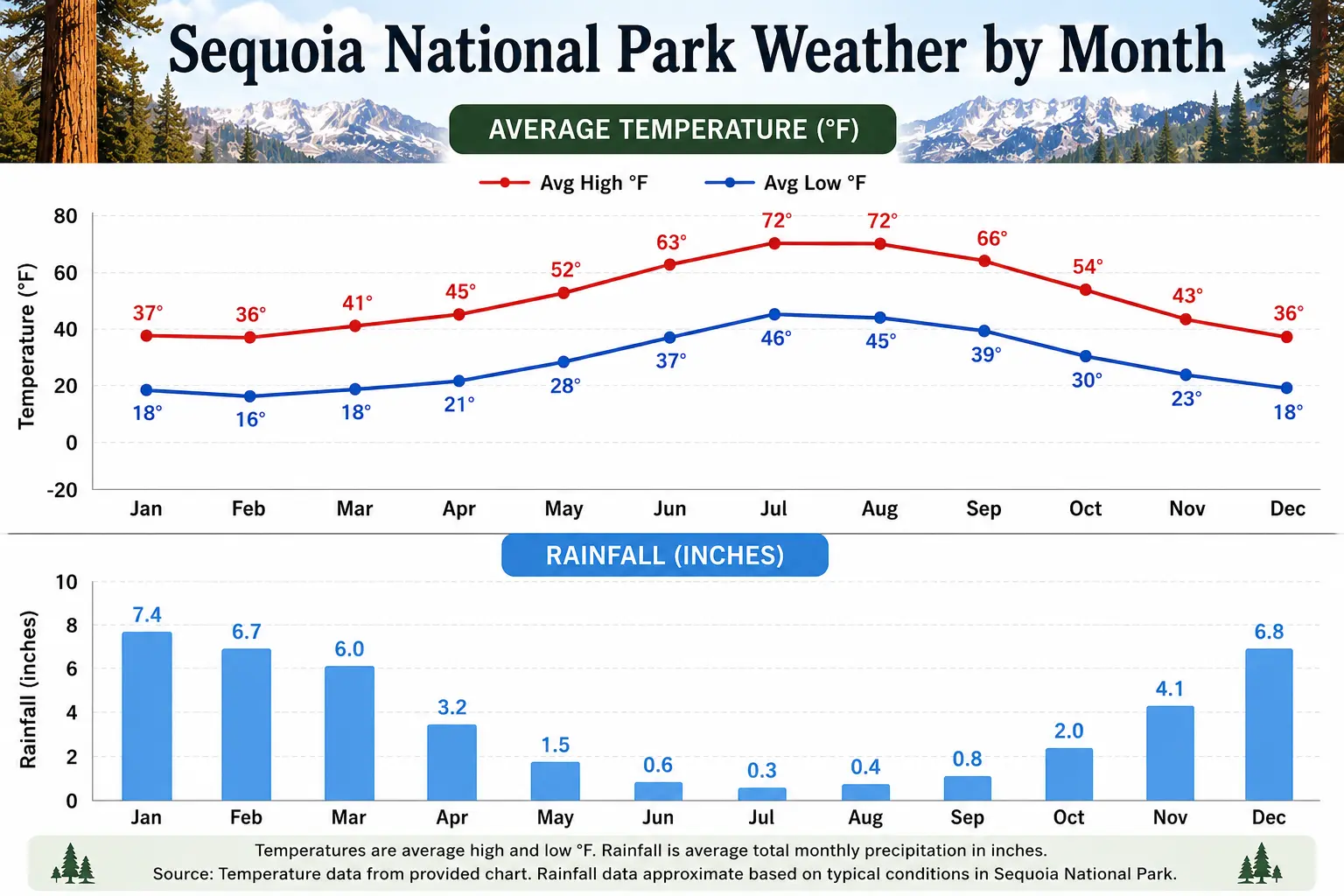
Click the image below to view the full-size version.
January – Cold and Snowy
- Average high: 37°F (3°C)
- Average low: 18°F (-8°C)
- Rainfall: Moderate winter precipitation, often snow
- Daylight: 10 hours
January is one of the coldest months in Sequoia National Park. Snow frequently blankets the Giant Forest area, creating spectacular winter scenery among the giant sequoias.
Road conditions may change quickly after storms and tire chains are sometimes required. Despite the cold, sunny days are common.
Best for:
- Snow play
- Winter photography
- Quiet sightseeing
February – Crisp Days and Winter Landscapes
- Average high: 36°F (2°C)
- Average low: 16°F (-9°C)
- Rainfall: Moderate, mostly snow at higher elevations
- Daylight: 11 hours
February remains firmly in winter with cold mornings and snow-covered forests. Days gradually become longer, giving visitors more time to explore.
Snow conditions can vary depending on elevation.
Best for:
- Snowshoeing
- Scenic drives
- Giant sequoia viewing
March – Early Signs of Spring
- Average high: 41°F (5°C)
- Average low: 18°F (-8°C)
- Rainfall: Moderate precipitation
- Daylight: 12 hours
March begins the transition toward spring. Snow may still linger across higher elevations while lower areas begin warming.
Visitors can experience a mix of winter landscapes and milder afternoons.
Best for:
- Wildlife viewing
- Photography
- Spring scenery
April – Cool with Longer Days
- Average high: 45°F (7°C)
- Average low: 21°F (-6°C)
- Rainfall: Light to moderate
- Daylight: 13 hours
April brings more daylight and slightly warmer temperatures. Snow starts melting in some areas, though cool weather continues in the sequoia groves.
Layered clothing remains essential.
Best for:
- Scenic drives
- Light hiking
- Spring visits
May – Mild and Pleasant
- Average high: 52°F (11°C)
- Average low: 28°F (-2°C)
- Rainfall: Lower precipitation
- Daylight: 14 hours
May is one of the most comfortable months to visit Sequoia National Park. Trails become increasingly accessible and temperatures are pleasant for outdoor activities.
Wildflowers begin appearing at lower elevations.
Best for:
- Hiking
- Nature photography
- Exploring sequoia groves
June – Warm Days and Summer Begins
- Average high: 63°F (17°C)
- Average low: 37°F (3°C)
- Rainfall: Dry conditions
- Daylight: 14.5 hours
June marks the beginning of summer conditions. Warm afternoons and cool evenings create ideal weather for long days outdoors.
Popular areas become busier during this period.
Best for:
- Hiking
- Camping
- Scenic viewpoints
July – Warm and Peak Season
- Average high: 72°F (22°C)
- Average low: 46°F (8°C)
- Rainfall: Very low, occasional afternoon storms
- Daylight: 14.5 hours
July is among the warmest and busiest months in Sequoia National Park. Days are generally sunny with comfortable mountain temperatures.
Afternoon thunderstorms may occasionally develop.
Best for:
- Long hikes
- Camping
- Family trips
August – Sunny and Comfortable
- Average high: 72°F (22°C)
- Average low: 45°F (7°C)
- Rainfall: Dry summer conditions
- Daylight: 13.5 hours
August continues the warm summer pattern with pleasant temperatures during the day and cool evenings.
This is one of the best months for exploring higher-elevation trails.
Best for:
- Outdoor adventures
- Scenic drives
- Ranger programs
September – Mild and Less Crowded
- Average high: 66°F (19°C)
- Average low: 39°F (4°C)
- Rainfall: Low precipitation
- Daylight: 12.5 hours
September offers excellent weather with fewer visitors compared to peak summer.
Temperatures remain comfortable for nearly all outdoor activities.
Best for:
- Hiking
- Photography
- Relaxed sightseeing
October – Cool and Scenic
- Average high: 54°F (12°C)
- Average low: 30°F (-1°C)
- Rainfall: Light precipitation
- Daylight: 11.5 hours
October brings cooler weather and changing seasonal colors. Early snowfall can occasionally appear at higher elevations.
Crowds begin decreasing.
Best for:
- Scenic drives
- Fall photography
- Quiet park visits
November – Cold with Early Winter Conditions
- Average high: 43°F (6°C)
- Average low: 23°F (-5°C)
- Rainfall: Increasing winter precipitation
- Daylight: 10.5 hours
November signals the return of winter conditions. Snow becomes increasingly possible in the sequoia groves.
Visitors should prepare for changing road conditions.
Best for:
- Peaceful sightseeing
- Seasonal photography
- Early winter visits
December – Snow Season Returns
- Average high: 36°F (2°C)
- Average low: 18°F (-8°C)
- Rainfall: Snow common at higher elevations
- Daylight: 10 hours
December transforms Sequoia National Park into a winter destination. Giant sequoias surrounded by fresh snow create some of the park’s most iconic scenery.
Expect cold mornings and possible road restrictions.
Best for:
- Snow photography
- Winter experiences
- Holiday travel
Sequoia National Park Weather by Month Table
| Month | Avg High °F (°C) | Avg Low °F (°C) | Rainfall (inches) | Sun (hrs/day) | Snowfall (inches) |
|---|---|---|---|---|---|
| January | 37°F (3°C) | 18°F (-8°C) | 7.4 | 10.0 | 28 |
| February | 36°F (2°C) | 16°F (-9°C) | 6.7 | 11.0 | 24 |
| March | 41°F (5°C) | 18°F (-8°C) | 6.0 | 12.0 | 20 |
| April | 45°F (7°C) | 21°F (-6°C) | 3.2 | 13.0 | 8 |
| May | 52°F (11°C) | 28°F (-2°C) | 1.5 | 14.0 | 2 |
| June | 63°F (17°C) | 37°F (3°C) | 0.6 | 14.5 | 0 |
| July | 72°F (22°C) | 46°F (8°C) | 0.3 | 14.5 | 0 |
| August | 72°F (22°C) | 45°F (7°C) | 0.4 | 13.5 | 0 |
| September | 66°F (19°C) | 39°F (4°C) | 0.8 | 12.5 | 0 |
| October | 54°F (12°C) | 30°F (-1°C) | 2.0 | 11.5 | 1 |
| November | 43°F (6°C) | 23°F (-5°C) | 4.1 | 10.5 | 8 |
| December | 36°F (2°C) | 18°F (-8°C) | 6.8 | 10.0 | 22 |
Best Time to Visit Sequoia National Park
- Best overall weather: June–September
- Best for snow: December–March
- Best for fewer crowds: May and September
- Best for hiking: June–October
20 FAQs About Sequoia National Park Weather
1. What is the best month to visit Sequoia National Park?
June through September generally offer the warmest temperatures, longest days, and the most accessible trails.
2. Does Sequoia National Park get snow?
Yes. Snow is common from late fall through early spring, especially in the Giant Forest and higher elevations.
3. What is the hottest month in Sequoia National Park?
July and August are typically the warmest months, with average highs around 72°F (22°C) in the sequoia grove areas.
4. What is the coldest month in Sequoia National Park?
January and December are usually the coldest months, with average lows near 18°F (-8°C).
5. Is Sequoia National Park open year-round?
Yes, Sequoia National Park is open all year, although weather conditions may temporarily affect road access.
6. Does it rain a lot in Sequoia National Park?
Most precipitation arrives between November and March. Summers are usually dry.
7. What should I wear in Sequoia National Park?
Dress in layers. Weather can change quickly and temperatures vary significantly with elevation.
8. How cold does Sequoia National Park get at night?
Even in summer, nighttime temperatures can feel cool. Winter nights often drop below freezing.
9. Is summer a good time to visit Sequoia NP?
Yes. Summer provides warm daytime weather and excellent conditions for hiking and sightseeing.
10. Can you visit Sequoia National Park in winter?
Yes. Winter visits are popular for snow scenery, photography, and seasonal recreation.
11. Does Sequoia National Park require snow chains?
Snow chains may be required during winter storms depending on road conditions.
12. What is the rainiest month in Sequoia National Park?
January is typically among the wettest months.
13. Does Sequoia National Park get thunderstorms?
Occasional afternoon thunderstorms can develop during summer months.
14. What is the weather like in spring?
Spring is cool and variable, with melting snow and gradually warmer temperatures.
15. Is fall a good season to visit Sequoia National Park?
Yes. September and October often bring mild weather and smaller crowds.
16. How many hours of daylight does Sequoia National Park get?
Daylight ranges from about 10 hours in winter to approximately 14.5 hours in summer.
17. Does elevation affect the weather in Sequoia National Park?
Absolutely. Higher elevations are much cooler and receive more snow than lower elevations.
18. Can temperatures change during the same day?
Yes. Large temperature swings between morning, afternoon, and evening are common.
19. Is July too hot for Sequoia National Park?
Usually not. Mountain elevations keep temperatures more comfortable than California’s lowlands.
20. What month has the best hiking weather in Sequoia National Park?
June through October are generally considered the best months for hiking due to warmer temperatures and lower snowfall.