Scotland’s weather is famously unpredictable, but that’s part of its charm. One moment you’re walking under blue skies, the next you’re watching mist roll over ancient castles and rugged mountains. Understanding Scotland weather by month can help travelers plan the best time to visit, pack appropriately, and make the most of their trip.
This complete guide breaks down Scotland’s weather throughout the year, highlighting temperatures, rainfall, daylight hours, and travel tips for each month.
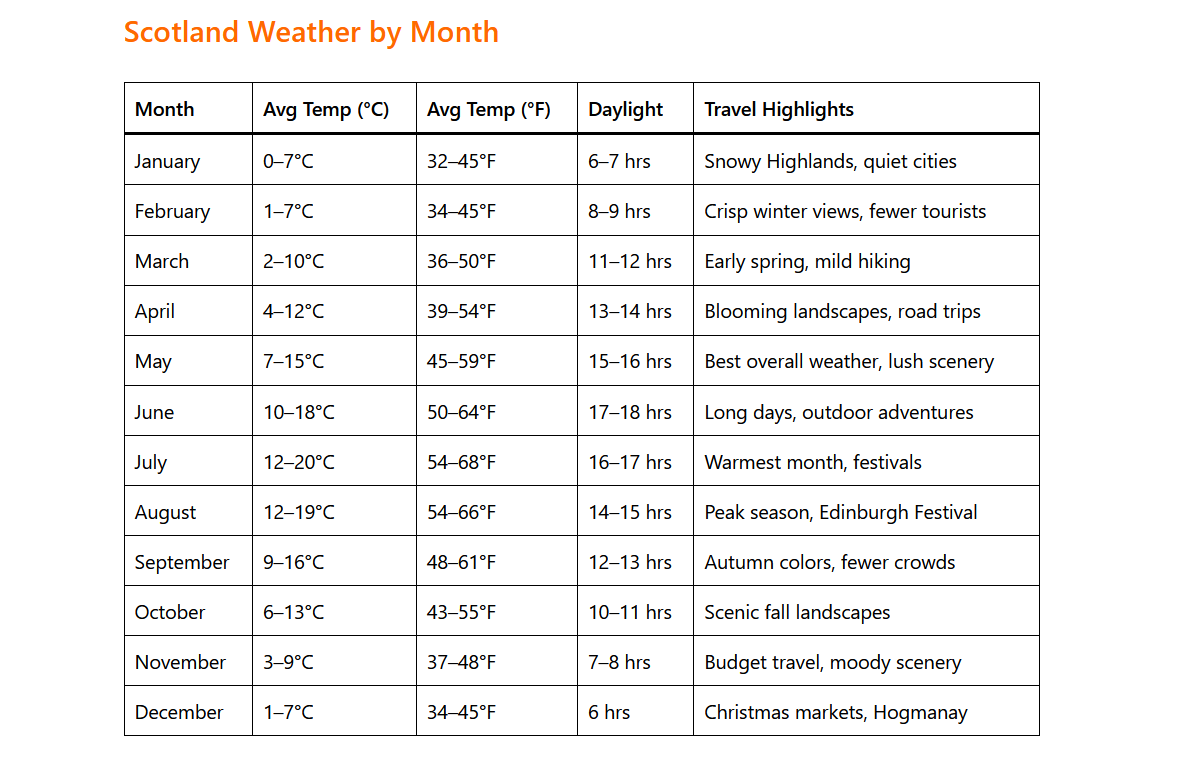
Scotland Weather by Month
Month
Avg Temp (°C)
Avg Temp (°F)
Daylight
Travel Highlights
January
0–7°C
32–45°F
6–7 hrs
Snowy Highlands, quiet cities
February
1–7°C
34–45°F
8–9 hrs
Crisp winter views, fewer tourists
March
2–10°C
36–50°F
11–12 hrs
Early spring, mild hiking
April
4–12°C
39–54°F
13–14 hrs
Blooming landscapes, road trips
May
7–15°C
45–59°F
15–16 hrs
Best overall weather, lush scenery
June
10–18°C
50–64°F
17–18 hrs
Long days, outdoor adventures
July
12–20°C
54–68°F
16–17 hrs
Warmest month, festivals
August
12–19°C
54–66°F
14–15 hrs
Peak season, Edinburgh Festival
September
9–16°C
48–61°F
12–13 hrs
Autumn colors, fewer crowds
October
6–13°C
43–55°F
10–11 hrs
Scenic fall landscapes
November
3–9°C
37–48°F
7–8 hrs
Budget travel, moody scenery
December
1–7°C
34–45°F
6 hrs
Christmas markets, Hogmanay
January: Cold, Quiet, and Atmospheric
Average temperature: 0–7°C (32–45°F)
Weather: Cold, frosty mornings, occasional snow (especially in the Highlands)
Rainfall: Moderate
Daylight: Short (around 6–7 hours)
January is one of the coldest months in Scotland. Snow is possible, particularly in mountainous regions, making it a popular time for winter sports in the Cairngorms. Cities like Edinburgh and Glasgow are quieter, offering a peaceful experience for travelers who don’t mind cold weather.
Best for: Winter scenery, budget travel, cozy pub experiences Packing tips: Heavy coat, gloves, scarf, waterproof boots
February: Crisp Winter Days
Average temperature: 1–7°C (34–45°F)
Weather: Cold, windy, occasional snow or sleet
Rainfall: Moderate
Daylight: Slowly increasing
February remains wintry but starts to feel slightly brighter as daylight increases. It’s still off-season for tourism, which means fewer crowds and lower accommodation prices.
Best for: Snowy landscapes, photography, quiet city breaks Packing tips: Warm layers, waterproof jacket, sturdy shoes
March: Early Signs of Spring
Average temperature: 2–10°C (36–50°F)
Weather: Chilly but improving, mix of sun and rain
Rainfall: Moderate
Daylight: Around 11–12 hours
March marks the transition from winter to spring. Snow becomes less common, and early flowers start to appear. Weather can still be changeable, but it’s a refreshing time to explore nature.
Best for: Hiking (lower elevations), sightseeing without crowds Packing tips: Layered clothing, light waterproof jacket
April: Spring in Full Bloom
Average temperature: 4–12°C (39–54°F)
Weather: Mild, sunnier days, occasional showers
Rainfall: Lower than winter months
Daylight: Around 13–14 hours
April is one of the most pleasant months in Scotland. Parks, gardens, and countryside areas come alive with spring colors. Rainfall is relatively low compared to other months.
Best for: Outdoor activities, city walks, road trips Packing tips: Light jacket, sweater, waterproof shoes
May: Mild and Bright
Average temperature: 7–15°C (45–59°F)
Weather: Mild, relatively dry, long daylight hours
Rainfall: Low to moderate
Daylight: Up to 16 hours
May is considered one of the best months to visit Scotland. The weather is comfortable, landscapes are lush, and tourist crowds haven’t yet peaked.
Best for: Highlands exploration, Isle visits, photography Packing tips: Light layers, sunglasses, rain jacket just in case
June: Long Days and Early Summer
Average temperature: 10–18°C (50–64°F)
Weather: Mild, occasional rain, very long days
Rainfall: Moderate
Daylight: Up to 18 hours (near the solstice)
June offers near-endless daylight, especially in northern Scotland. It’s an excellent time for outdoor adventures, though midges (tiny biting insects) begin to appear in rural areas.
July is typically the warmest month in Scotland, though “warm” is relative. Temperatures are comfortable rather than hot, making sightseeing enjoyable.
Best for: Summer festivals, island hopping, outdoor activities Packing tips: Light clothing, rain jacket, sunscreen
August: Peak Summer and Festivals
Average temperature: 12–19°C (54–66°F)
Weather: Mild, humid at times, frequent showers
Rainfall: Higher than June and July
Daylight: Gradually decreasing
August is peak tourist season, especially during the famous Edinburgh Festival Fringe. Weather remains pleasant, but rain is more common.
Best for: Cultural events, city travel, social atmosphere Packing tips: Waterproof jacket, breathable layers
September: Calm and Colorful
Average temperature: 9–16°C (48–61°F)
Weather: Cooler, clearer skies, less rain than summer
Rainfall: Moderate
Daylight: Around 12–13 hours
September is a favorite month for many travelers. Crowds thin out, midges disappear, and autumn colors begin to show.
October brings dramatic scenery with golden forests and misty mornings. Weather becomes more unpredictable, but the atmosphere is magical.
Best for: Scenic road trips, castles, fall photography Packing tips: Warm waterproof jacket, boots
November: Quiet and Moody
Average temperature: 3–9°C (37–48°F)
Weather: Cold, wet, occasional frost
Rainfall: High
Daylight: Around 8 hours
November is one of the wettest months. Tourist numbers drop significantly, making it ideal for travelers who enjoy solitude and moody landscapes.
Best for: Budget travel, city museums, cozy stays Packing tips: Heavy coat, umbrella, waterproof footwear
December: Festive and Frosty
Average temperature: 1–7°C (34–45°F)
Weather: Cold, possible snow, festive atmosphere
Rainfall: Moderate
Daylight: Very short (around 6 hours)
December is cold but charming, especially with Christmas markets and Hogmanay (New Year celebrations). Snowfall adds to the festive feel, particularly in the Highlands.
What is the best month to visit Scotland for good weather? May and June offer the best balance of mild temperatures, lower rainfall, and long daylight hours.
What is the coldest month in Scotland? January is usually the coldest month, especially in the Highlands where snowfall is common.
What is the warmest month in Scotland? July is typically the warmest month, with average temperatures reaching around 20°C (68°F).
Does it rain every day in Scotland? No, but rain can occur at any time of year. Showers are often brief and weather can change quickly.
Which month has the least rainfall in Scotland? April and May generally have the lowest rainfall compared to other months.
When is the best time to avoid crowds in Scotland? April, early May, September, and October are ideal for fewer tourists and pleasant weather.
Is Scotland very cold in summer? No, summers are mild rather than cold, with temperatures usually between 15–20°C (59–68°F).
Does Scotland get snow? Yes, snow is common in winter, especially in the Highlands, but less frequent in cities.
What months are best for hiking in Scotland? May, June, and September are excellent for hiking due to stable weather and fewer midges.
When do midges appear in Scotland? Midges usually appear from late May to August, mainly in rural and Highland areas.
Is Scotland windy year-round? Scotland can be windy throughout the year, with stronger winds in autumn and winter.
What is the best month to visit the Scottish Highlands? May and September are ideal for clear views, fewer insects, and moderate temperatures.
How many daylight hours does Scotland have in summer? In June, Scotland can experience up to 18 hours of daylight, especially in the north.
How short are the days in winter in Scotland? In December, daylight can be as short as 6 hours.
Is Scotland weather suitable for road trips? Yes, late spring and early autumn provide the best conditions for scenic road trips.
What should I pack for Scotland’s weather? Layers, a waterproof jacket, comfortable walking shoes, and warm clothing year-round.
Is Scotland humid? Scotland is generally not very humid, though summer months can feel slightly humid after rain.
What is the best month for festivals in Scotland? August is the busiest festival month, especially in Edinburgh.
Is winter a good time to visit Scotland? Yes, if you enjoy quiet travel, winter landscapes, and festive events like Hogmanay.
Can Scotland’s weather change quickly in one day? Absolutely. It’s common to experience sunshine, rain, and wind all in the same day.
Final Thoughts: When Is the Best Time to Visit Scotland?
The best time to visit Scotland depends on your travel style:
Best weather: May to September
Fewer crowds: April, May, September, October
Budget travel: November to March
Festivals & culture: July and August
No matter the month, Scotland’s weather adds character to its landscapes and cities. Pack layers, expect sudden changes, and embrace the adventure—because in Scotland, the weather is always part of the story.
Hi,
I'm Thanh Tung and I'm an avid nature enthusiast with an insatiable curiosity for the wonders of the natural world, I spends their time exploring the beauty and diversity of national parks. From majestic mountain ranges to serene desert landscapes, they are dedicated to uncovering the stories, history, and ecosystems of these protected areas
View all posts by Thanh Tung