

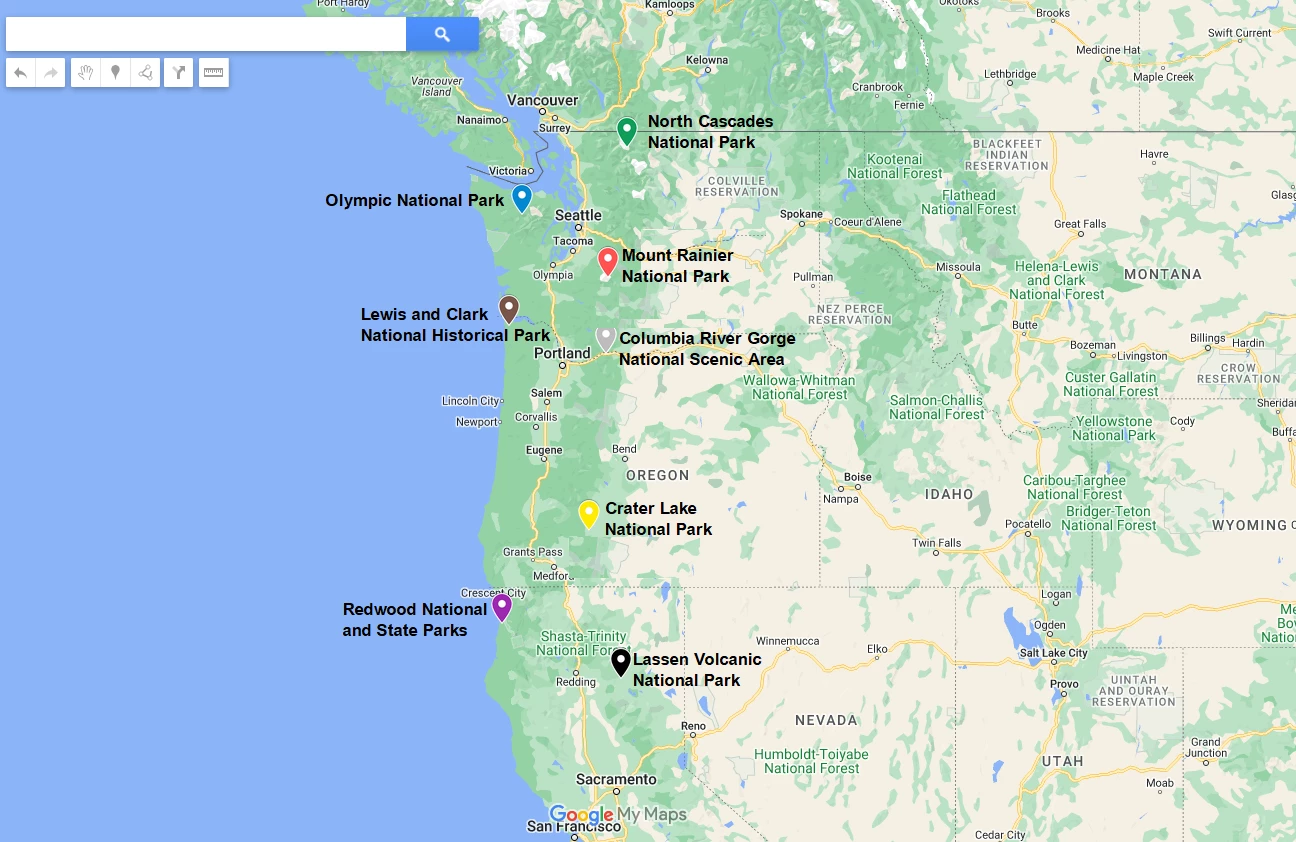
The Pacific Northwest (PNW) is home to some of the most stunning national parks in the United States, known for their lush rainforests, towering mountains, rugged coastlines, and diverse ecosystems. Here’s a list of the major national parks in the PNW.
List of national parks in Pacific Northwest
- North Cascades National Park
- Olympic National Park
- Mount Rainier National Park
- Lewis and Clark National Historical Park
- Columbia River Gorge National Scenic Area
- Crater Lake National Park
- Redwood National and State Parks
- Lassen Volcanic National Park
(You can click the image below to see PNW national parks map in full size)
1. North Cascades National Park (Washington)
Known as the “American Alps,” North Cascades National Park is a haven for adventurers seeking dramatic mountain landscapes and pristine wilderness. The park boasts over 300 glaciers, jagged peaks, and turquoise alpine lakes such as Diablo Lake and Ross Lake. It is a paradise for hikers and climbers, offering challenging trails like the Cascade Pass and Hidden Lake Lookout. The diverse ecosystems host black bears, mountain goats, and a variety of bird species. For those looking for solitude, North Cascades provides remote backcountry camping opportunities and a chance to truly immerse oneself in nature.
2. Olympic National Park (Washington)
Olympic National Park is a UNESCO World Heritage Site celebrated for its incredible diversity of ecosystems. From the moss-draped Hoh Rainforest to the snow-capped peaks of Hurricane Ridge and the rugged shores of Rialto and Ruby Beaches, this park offers something for everyone. Visitors can explore tide pools along the coast, hike through temperate rainforests, or marvel at the mountain vistas. Wildlife abounds, including Roosevelt elk, black bears, and bald eagles. Olympic National Park is also home to countless hiking trails, such as the Hall of Mosses and the Seven Lakes Basin.
3. Mount Rainier National Park (Washington)
Dominated by the iconic 14,411-foot Mount Rainier, this national park is a testament to the power and beauty of a volcanic landscape. Known for its vibrant wildflower meadows in Paradise and Sunrise, the park offers visitors breathtaking views and a chance to hike trails such as the Skyline Trail and Wonderland Trail. Mount Rainier is also a mountaineer’s dream, with challenging routes to the summit. The park’s ecosystems support a range of wildlife, including marmots, black-tailed deer, and mountain goats. With year-round activities like snowshoeing in winter and camping in summer, Mount Rainier National Park is a must-visit.
4. Lewis and Clark National Historical Park
Lewis and Clark National Historical Park commemorates one of America’s most significant expeditions, marking the spot where the Corps of Discovery reached the Pacific Ocean in 1805. The park’s centerpiece, Fort Clatsop, is a faithful reconstruction of the wooden fort where Meriwether Lewis, William Clark, and their team spent a challenging winter before their return journey east.
5. Columbia River Gorge National Scenic Area (Oregon/Washington)
Straddling the border between Oregon and Washington, the Columbia River Gorge is a spectacular canyon carved by the mighty Columbia River. This scenic area is famous for its stunning waterfalls, including the iconic Multnomah Falls, as well as its dramatic cliffs and panoramic vistas. Outdoor enthusiasts can enjoy activities like hiking, windsurfing, and biking. The area is rich in Native American history and offers numerous viewpoints, such as Crown Point and Rowena Crest. Wildflower blooms in spring and vibrant foliage in autumn make the gorge a year-round destination.
6. Crater Lake National Park (Oregon)
Crater Lake National Park is home to the deepest lake in the United States, formed within the collapsed caldera of Mount Mazama. The lake’s vivid blue waters and incredible clarity make it one of the most striking natural wonders in the Pacific Northwest. Visitors can drive the 33-mile Rim Drive for panoramic views or hike trails like Garfield Peak and Cleetwood Cove, which leads down to the lake. During summer, boat tours to Wizard Island are a popular attraction. In winter, the park transforms into a snowy wonderland perfect for cross-country skiing and snowshoeing.
7. Redwood National and State Parks (California)
The Redwood National and State Parks protect some of the tallest trees on Earth, the majestic coast redwoods. Spanning over 139,000 acres, the parks include lush forests, scenic beaches, and sprawling prairies. Iconic trails like the Lady Bird Johnson Grove and Tall Trees Grove offer awe-inspiring views of these ancient giants. The parks also feature opportunities for wildlife viewing, with species such as Roosevelt elk, gray whales (off the coast), and black bears. Scenic drives like the Newton B. Drury Scenic Parkway allow visitors to experience the magic of the redwoods from their vehicles.
8. Lassen Volcanic National Park (California)
Lassen Volcanic National Park is a geologic wonderland where visitors can witness the power of Earth’s geothermal activity. The park features boiling mud pots, fumaroles, and hot springs, with Bumpass Hell being one of the most popular attractions. Lassen Peak, a dormant volcano, offers a challenging hike with rewarding panoramic views. The park is also home to sparkling alpine lakes, lush meadows, and dense forests. Wildlife enthusiasts can spot mule deer, coyotes, and a variety of bird species. With its unique combination of volcanic features and serene landscapes, Lassen Volcanic National Park is a lesser-known gem worth exploring.

National parks in Pacific Northwest map
Tag: national parks northwest usa map, pnw national parks, best national parks in the pacific northwest, national parks in pnw
20 FAQs about National Parks in the Pacific Northwest
🌲 General Questions
- What national parks are located in the Pacific Northwest?
The main ones are Olympic, Mount Rainier, and North Cascades (Washington), plus Crater Lake (Oregon). - What makes Pacific Northwest national parks unique?
They feature diverse ecosystems—rainforests, volcanoes, glaciers, alpine lakes, and rugged coastlines. - When is the best time to visit these parks?
Summer (June–September) offers the best weather, while spring and fall provide fewer crowds. - Do I need reservations to visit these parks?
Some parks (like Mount Rainier) may require timed-entry reservations during peak season. - Are these parks family-friendly?
Yes, they offer trails, ranger programs, and scenic drives suitable for all ages.
🏔️ Activities & Attractions
- What are the top activities in these parks?
Hiking, camping, wildlife watching, photography, kayaking, and snow sports. - Can I see glaciers in the Pacific Northwest parks?
Yes, especially in Mount Rainier and North Cascades. - Are there beaches in any of these parks?
Olympic National Park has stunning coastal areas like Rialto Beach. - Which park is best for hiking?
All are excellent, but North Cascades is ideal for remote and challenging hikes. - Can I go skiing or snowboarding in these parks?
Mount Rainier offers winter recreation opportunities.
🌧️ Weather & Conditions
- Why is it so rainy in the Pacific Northwest parks?
Moist ocean air rises over mountains, creating heavy rainfall, especially in Olympic’s rainforest. - Is it safe to visit during winter?
Yes, but expect snow, road closures, and limited access in some areas. - What should I pack for a visit?
Layers, waterproof gear, hiking boots, and navigation tools.
🐻 Wildlife & Nature
- What wildlife can I see?
Elk, black bears, mountain goats, bald eagles, and more. - Are there dangerous animals?
Bears and cougars exist, but encounters are rare with proper precautions. - Are these parks good for birdwatching?
Yes, especially Olympic and coastal regions.
🚗 Logistics & Planning
- How do I get to these parks?
Major access points are from Seattle (Washington) and Portland (Oregon). - Are there lodging options inside the parks?
Yes, including lodges, cabins, and campgrounds. - Do I need a park pass?
Yes, either individual park entry fees or the America the Beautiful pass. - How many days do I need to explore?
Ideally 2–4 days per park for a good experience.