

A U.S. national parks road trip is one of the most rewarding ways to see the country. It gives travelers the freedom to move at their own pace while taking in mountains, deserts, forests, canyons, coastlines and wildlife along the way. For many visitors, especially those traveling from abroad, it can become the highlight of an entire trip to the United States.
The key is planning with care. The U.S. is large, park roads can be seasonal and popular destinations often require advance reservations. A strong plan helps you avoid rushed days, long drives and missed opportunities.
Start With the Parks You Most Want to See
The first step is choosing which national parks belong on your route. It can be tempting to list every famous park, but that usually leads to an exhausting itinerary. A better approach is to choose one region and build around it.
First-time visitors often consider parks like Yellowstone, Grand Canyon, Yosemite, Zion, Grand Teton, Rocky Mountain, Arches, Bryce Canyon, Glacier and Great Smoky Mountains. These parks are popular for good reason. They offer dramatic scenery, visitor services, accessible viewpoints and a wide range of activities.
Think about your travel style too. If you enjoy hiking, Zion, Yosemite, Glacier and Grand Canyon may be strong choices. If you prefer scenic drives and easy walks, Yellowstone, Bryce Canyon, Rocky Mountain and Grand Teton can work well. Families may want parks with shorter trails, ranger programs and convenient lodging nearby.
This is also the stage where budgeting matters. A national parks trip can be flexible, but costs add up through lodging, fuel, food, flights and gear. Some travelers use simple savings methods like the 100 envelope saving challenge to set money aside before a major trip. It fits naturally with road trip planning because you can connect your savings goal to a clear experience.
Choose a Realistic Road Trip Route
Once you know your priority parks, decide on a route. Regional routes are usually best because they reduce driving time and make the trip feel more complete.
A classic Southwest national parks road trip might include Grand Canyon, Zion, Bryce Canyon, Capitol Reef, Arches and Canyonlands. This route is ideal for red rock scenery, desert landscapes, photography and memorable hikes.
A Yellowstone and Grand Teton route is another strong option. Travelers can start in Salt Lake City or Jackson, then explore mountain views, geysers, lakes and wildlife. With more time, Glacier National Park can be added, though the drive is significant.
California offers a different kind of variety. Yosemite, Sequoia, Kings Canyon, Death Valley and Joshua Tree can create a route that moves from granite cliffs to giant trees and desert landscapes. In the Pacific Northwest, Olympic, Mount Rainier, North Cascades and Crater Lake offer forests, waterfalls, alpine views and rugged coastlines.
The East Coast also has excellent options. Acadia, Shenandoah, Great Smoky Mountains, Congaree and Everglades can form part of a longer route, especially for travelers who prefer forests, scenic drives and wildlife viewing.
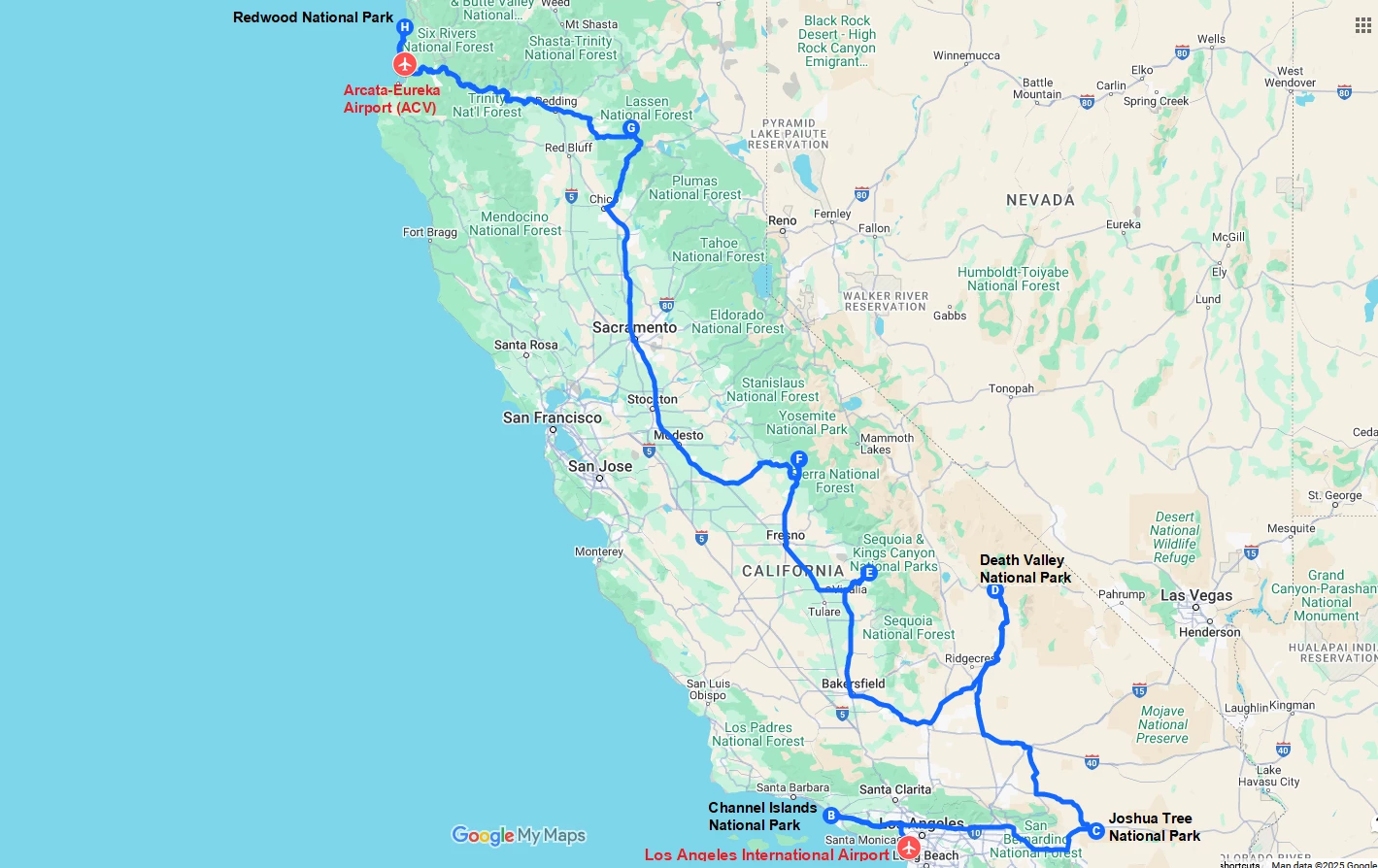
California National Parks Road Trip
Decide How Long Your Trip Should Be
Time is one of the most important planning factors. A one-week trip is best for one region and two or three parks. For example, Zion, Bryce Canyon and Grand Canyon can fit into a compact route without too much backtracking.
A two-week trip gives you more space. You could explore Utah’s Mighty Five with Grand Canyon or build a fuller Yellowstone and Grand Teton itinerary. Three weeks or more allows for bigger combinations, such as California plus the Southwest or Yellowstone plus Glacier.
Avoid measuring success by how many parks you visit. A slower trip often feels better. You will have time for sunrise viewpoints, short hikes, local towns, rest days and unexpected stops.
Pick the Best Season for Your Route
Season affects nearly every part of a national parks road trip. Weather, road access, crowds, prices and trail conditions can change greatly from one month to another.
Spring can be excellent for desert parks because temperatures are more comfortable. It can also bring wildflowers and waterfalls. In mountain parks, however, snow may still close roads and trails.
Summer offers the broadest access in many parks. Most roads and visitor services are open, but crowds are highest and lodging is often expensive. Desert parks can also be dangerously hot.
Fall is a strong choice for many routes. Temperatures are cooler, crowds often drop and autumn colors can be beautiful. Still, northern and high elevation parks may see early snow.
Winter can be peaceful and scenic, but it requires more flexibility. Some roads close, services may be limited and driving conditions can be difficult.
Map Driving Distances Carefully
Many travelers underestimate distances in the United States. A route that looks simple on a map may involve long stretches of remote roads. Check actual drive times before finalizing your itinerary.
Try not to schedule long driving days back to back. Build in shorter days and leave time for meals, fuel stops, viewpoints and delays. Download offline maps because cell service can be weak inside parks and across remote areas.
Fuel planning is important too. Some parks and desert routes have long gaps between services. Fill up before entering remote sections and keep water in the car.
Book Lodging, Campsites and Transportation Early
Popular national parks can sell out months in advance. Lodging inside the parks is convenient because it reduces daily driving and gives easier access to sunrise or sunset views. The downside is that rooms can be expensive and limited.
Staying outside the park can offer more hotel choices, restaurants and lower prices. The tradeoff is more driving and possible entrance traffic in the morning.
Camping and RV travel can be excellent, but they require planning. Many campgrounds need reservations. RV travelers also need to check length restrictions, hookups and road rules.
If renting a car, choose enough space for passengers and luggage. International travelers should review insurance, license requirements, one-way rental fees and winter driving rules before booking.
Understand Passes, Permits and Reservations
A park entrance pass is not always enough. Some parks require timed-entry reservations, vehicle permits or shuttle access during busy seasons. Famous hikes may need separate permits. Examples include Angels Landing in Zion and Half Dome in Yosemite.
The America the Beautiful Pass can be a good value if you plan to visit several federal recreation sites. Still, always check each park’s official requirements before your trip.
Build a Flexible Itinerary
A good itinerary includes must-see experiences but leaves space for changes. Weather, road closures, crowds and fatigue can affect your plans.
Choose a few priorities for each park. That might be Old Faithful in Yellowstone, sunrise at Grand Canyon, Delicate Arch in Arches or Yosemite Valley viewpoints. Then add backup options such as short hikes, scenic drives and visitor centers.
Mix famous attractions with quieter stops. State parks, small towns and scenic byways can make the road trip feel richer and less crowded.
Pack for Comfort and Safety
Packing well makes the trip easier. Bring offline maps, chargers, a power bank, reusable water bottles, snacks, a cooler, sunscreen, sunglasses, a first-aid kit, a flashlight and layers.
For hiking, pack comfortable shoes, a daypack, rain protection, trail snacks, extra water and basic navigation tools. International travelers should also carry passports, driver’s licenses, travel insurance details, rental documents, hotel confirmations and park reservations.
Safety matters in every park. Keep distance from wildlife, stay on marked trails, carry enough water, respect thermal areas and check weather before hiking. In desert parks, heat can be serious. In mountain parks, altitude and storms can change plans quickly.
Travel Responsibly
National parks protect fragile landscapes. Visitors help by staying on trails, packing out trash, not feeding wildlife and following fire restrictions. Respect local communities and Indigenous lands connected to these places.
Small choices matter. Refill water bottles, avoid disturbing animals and choose less crowded trails when possible.
Final Thoughts
A once-in-a-lifetime U.S. national parks road trip does not need to be complicated. Start with one region, choose a realistic route, book early and plan around the season. Most of all, leave room to enjoy the journey.
The best road trips are not about checking off every park. They are about seeing unforgettable places with enough time to appreciate them.