Yellowstone National Park Weather by Month
Yellowstone National Park is one of the most spectacular natural destinations in the United States, famous for its geysers, wildlife, and dramatic landscapes. However, its high elevation (most of the park sits above 7,000 feet / 2,100 meters) means weather can vary significantly throughout the year. Understanding Yellowstone’s weather by month is key to planning the perfect trip.
Yellowstone National Park Weather by Month
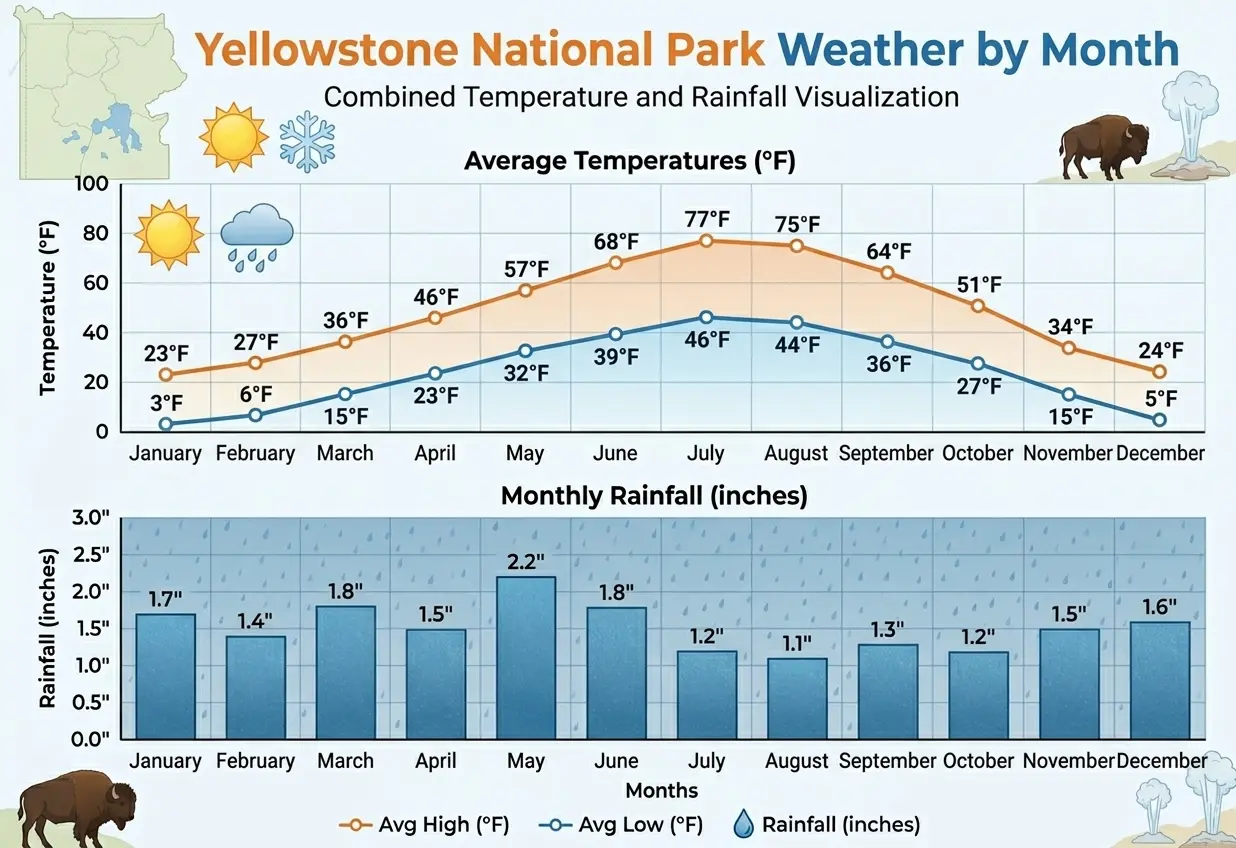
You can click the image below to view the full-size weather chart for Yellowstone National Park
January – Freezing and Snow-Covered
- Average high: 21°F (-6°C)
- Average low: 1°F (-17°C)
- Rainfall: 2.0 inches (50 mm)
- Snowfall: 31.6 inches (802.4 mm)
- Daylight: 9 hours
January is the coldest month in Yellowstone National Park. Deep snow blankets the landscape, turning the park into a winter wonderland filled with frozen waterfalls, steaming geysers, and snow-covered forests.
Most park roads are closed to regular vehicles, but guided snowcoach and snowmobile tours operate in some areas. Wildlife such as bison and wolves are often easier to spot against the snowy terrain.
Best for:
- Snowmobile tours
- Winter photography
- Wildlife watching
February – Deep Winter Continues
- Average high: 25°F (-4°C)
- Average low: 1°F (-17°C)
- Rainfall: 1.8 inches (46.6 mm)
- Snowfall: 26.8 inches (680.6 mm)
- Daylight: 10.5 hours
February remains extremely cold with heavy snowfall across Yellowstone. The park’s geothermal features create dramatic steam clouds in the icy air, making this one of the most scenic months for winter visitors.
Although conditions are harsh, the park is quieter than summer and offers a peaceful wilderness experience.
Best for:
- Cross-country skiing
- Snowshoeing
- Seeing geothermal features in winter
March – Late Winter Conditions
- Average high: 34°F (1°C)
- Average low: 9°F (-13°C)
- Rainfall: 1.9 inches (48.2 mm)
- Snowfall: 26.2 inches (665.2 mm)
- Daylight: 12 hours
March brings slightly warmer temperatures, but winter still dominates Yellowstone. Snowstorms remain common, especially at higher elevations.
Wildlife becomes more active as days grow longer, and visitors may spot bison, elk, and coyotes moving through snowy valleys.
Best for:
- Winter wildlife viewing
- Scenic photography
- Quiet park visits
April – Snow and Spring Mix Together
- Average high: 41°F (5°C)
- Average low: 16°F (-9°C)
- Rainfall: 2.2 inches (56.6 mm)
- Snowfall: 19.8 inches (503 mm)
- Daylight: 13.5 hours
April is a transition month in Yellowstone. Snow still falls frequently, but warmer days begin melting lower-elevation areas. Muddy trails and changing road conditions are common.
Many animals emerge from winter with newborn offspring appearing later in the month.
Best for:
- Early spring scenery
- Wildlife photography
- Fewer crowds
May – Spring Wildlife Season
- Average high: 50°F (10°C)
- Average low: 27°F (-3°C)
- Rainfall: 2.2 inches (56.5 mm)
- Snowfall: 8 inches (203 mm)
- Daylight: 14.5 hours
May is one of the best months for wildlife viewing in Yellowstone. Baby bison, elk calves, and bears become increasingly active throughout the park.
Snow is still possible, especially at night, but many roads and facilities reopen for the summer season.
Best for:
- Wildlife watching
- Spring landscapes
- Hiking at lower elevations
June – Pleasant Early Summer Weather
- Average high: 61°F (16°C)
- Average low: 34°F (1°C)
- Rainfall: 2.1 inches (53.4 mm)
- Snowfall: 1.3 inches (33 mm)
- Daylight: 15.5 hours
June offers comfortable daytime temperatures and long daylight hours. Wildflowers bloom across meadows while rivers run high from snowmelt.
Crowds begin increasing, but the weather is excellent for hiking and sightseeing.
Best for:
- Hiking
- Camping
- Wildflower photography
July – Warmest Month of the Year
- Average high: 72°F (22°C)
- Average low: 39°F (4°C)
- Rainfall: 1.1 inches (28.2 mm)
- Snowfall: 0 inches
- Daylight: 15 hours
July is the warmest and driest month in Yellowstone National Park. Sunny days and mild nights create ideal conditions for outdoor activities.
This is peak tourist season, so popular attractions such as Old Faithful and Grand Prismatic Spring can become crowded.
Best for:
- Scenic drives
- Family vacations
- Backpacking and hiking
August – Warm Days and Cool Nights
- Average high: 70°F (21°C)
- Average low: 37°F (3°C)
- Rainfall: 1.4 inches (36.1 mm)
- Snowfall: 0 inches
- Daylight: 14 hours
August remains warm during the day, though nights can feel chilly, especially at higher elevations. Afternoon thunderstorms occasionally develop but are usually brief.
Wildlife is active during early mornings and evenings when temperatures are cooler.
Best for:
- Camping
- Fishing
- Wildlife photography
September – Beautiful Fall Colors
- Average high: 61°F (16°C)
- Average low: 30°F (-1°C)
- Rainfall: 1.6 inches (39.4 mm)
- Snowfall: 1.4 inches (36.3 mm)
- Daylight: 12.5 hours
September is one of the most beautiful months in Yellowstone. Fall colors begin appearing, temperatures cool down, and summer crowds slowly decrease.
Elk mating season starts, and visitors can often hear bugling echoing across the valleys.
Best for:
- Fall photography
- Wildlife viewing
- Scenic hiking
October – Cold Nights Return
- Average high: 46°F (8°C)
- Average low: 23°F (-5°C)
- Rainfall: 1.8 inches (44.7 mm)
- Snowfall: 8.6 inches (219.2 mm)
- Daylight: 11 hours
October brings crisp autumn weather and increasing chances of snow. Many services and roads begin closing for the winter season.
The park becomes much quieter, offering peaceful landscapes and excellent wildlife viewing opportunities.
Best for:
- Autumn scenery
- Wildlife photography
- Quiet sightseeing
November – Early Winter Arrives
- Average high: 30°F (-1°C)
- Average low: 12°F (-11°C)
- Rainfall: 1.9 inches (47.3 mm)
- Snowfall: 23.6 inches (598.9 mm)
- Daylight: 9.5 hours
November marks the return of serious winter weather in Yellowstone. Snow accumulates quickly, especially at higher elevations, and temperatures drop sharply.
Visitor numbers are very low, creating a calm and remote atmosphere.
Best for:
- Peaceful winter landscapes
- Wildlife spotting
- Late fall photography
December – A True Yellowstone Winter
- Average high: 21°F (-6°C)
- Average low: 3°F (-16°C)
- Rainfall: 2.2 inches (56.5 mm)
- Snowfall: 29.3 inches (743.2 mm)
- Daylight: 9 hours
December transforms Yellowstone into a snowy wilderness once again. Thick snow covers the forests and geyser basins, while steaming geothermal areas create magical winter scenery.
Holiday visitors enjoy snowcoach tours, skiing, and the peaceful beauty of the park in winter.
Best for:
- Christmas-season travel
- Snow adventures
- Winter scenery and photography
Yellowstone National Park Weather by Month Table
| Month | Avg High °F (°C) | Avg Low °F (°C) | Rainfall (inches) | Sun (hrs/day) | Snowfall (inches) |
|---|---|---|---|---|---|
| January | 21°F (-6°C) | 1°F (-17°C) | 2.0 | 9 | 31.6 |
| February | 25°F (-4°C) | 1°F (-17°C) | 1.8 | 10.5 | 26.8 |
| March | 34°F (1°C) | 9°F (-13°C) | 1.9 | 12 | 26.2 |
| April | 41°F (5°C) | 16°F (-9°C) | 2.2 | 13.5 | 19.8 |
| May | 50°F (10°C) | 27°F (-3°C) | 2.2 | 14.5 | 8.0 |
| June | 61°F (16°C) | 34°F (1°C) | 2.1 | 15.5 | 1.3 |
| July | 72°F (22°C) | 39°F (4°C) | 1.1 | 15 | 0 |
| August | 70°F (21°C) | 37°F (3°C) | 1.4 | 14 | 0 |
| September | 61°F (16°C) | 30°F (-1°C) | 1.6 | 12.5 | 1.4 |
| October | 46°F (8°C) | 23°F (-5°C) | 1.8 | 11 | 8.6 |
| November | 30°F (-1°C) | 12°F (-11°C) | 1.9 | 9.5 | 23.6 |
| December | 21°F (-6°C) | 3°F (-16°C) | 2.2 | 9 | 29.3 |
Best Time to Visit Yellowstone
- For warm weather & full access: June to August
- For fewer crowds & wildlife: May and September
- For winter experiences: December to February
20 helpful FAQs about weather in Yellowstone National Park
1. What is the best month to visit Yellowstone for good weather?
July and August offer the warmest temperatures and the most accessible roads and trails.
2. Is Yellowstone cold year-round?
Yes, due to its high elevation, temperatures can be cool even in summer, especially at night.
3. Does it snow in Yellowstone during summer?
Yes, snow is possible in June and even early September, though it’s usually light and short-lived.
4. What is the coldest month in Yellowstone?
January is typically the coldest month, with temperatures often dropping well below freezing.
5. What is the hottest month in Yellowstone?
July is usually the warmest month, with daytime highs around 25°C (77°F).
6. How unpredictable is Yellowstone weather?
Very unpredictable—conditions can change rapidly within hours, including sudden rain, snow, or temperature drops.
7. Does Yellowstone get a lot of rain?
Rainfall is moderate, with late spring and early summer (May–June) being the wettest periods.
8. When does snowfall start in Yellowstone?
Snow can begin as early as September and becomes more consistent by October.
9. How much snow does Yellowstone get in winter?
The park receives heavy snowfall, often exceeding several feet, especially between December and February.
10. Are roads open year-round in Yellowstone?
No, most roads close in winter due to snow and reopen gradually in spring.
11. What should I wear in Yellowstone?
Layered clothing is essential year-round, including a waterproof jacket and warm layers.
12. Is Yellowstone windy?
Yes, wind is common and can make temperatures feel colder, especially in open areas.
13. Can I visit Yellowstone in winter?
Yes, but access is limited. Winter visits are best for snow-based activities like skiing and snowmobiling.
14. When is the least crowded time weather-wise?
April and October have fewer visitors, but weather can be unpredictable and some facilities may be closed.
15. Does elevation affect weather in Yellowstone?
Absolutely. Higher elevations are colder and can receive more snow than lower areas.
16. Are thunderstorms common in Yellowstone?
Yes, especially in summer afternoons, often brief but sometimes intense.
17. What is spring weather like in Yellowstone?
Spring (April–May) is a mix of snow, rain, and sunshine, with rapidly changing conditions.
18. What is fall weather like in Yellowstone?
Fall (September–October) brings cooler temperatures, crisp air, and occasional early snowfall.
19. Is it safe to travel during winter weather?
It can be challenging due to snow and ice, so proper planning and guided tours are recommended.
20. How should I prepare for Yellowstone weather?
Check forecasts frequently, pack for all conditions, and be flexible with your itinerary.
Final Thoughts
Weather in Yellowstone National Park can change rapidly at any time of year. Even in summer, nights can be chilly, and sudden storms are common. The key to enjoying Yellowstone is preparation—pack layers, check forecasts, and stay flexible with your plans.