Yellowstone National Park Map Guide
Yellowstone National Park is one of the largest and most iconic national parks in the United States. Spanning more than 2.2 million acres across Wyoming, Montana, and Idaho, the park is home to famous geothermal features, wildlife-rich valleys, dramatic canyons, and pristine lakes. Because of its vast size, understanding a Yellowstone National Park map is essential for planning a successful visit.
This Yellowstone National Park Map Guide explains the park’s layout, entrances, major attractions, road system, and how to use a map to maximize your time.
Yellowstone National Park Map
(You can click the image below to see Yellowstone National Park Map in full size)
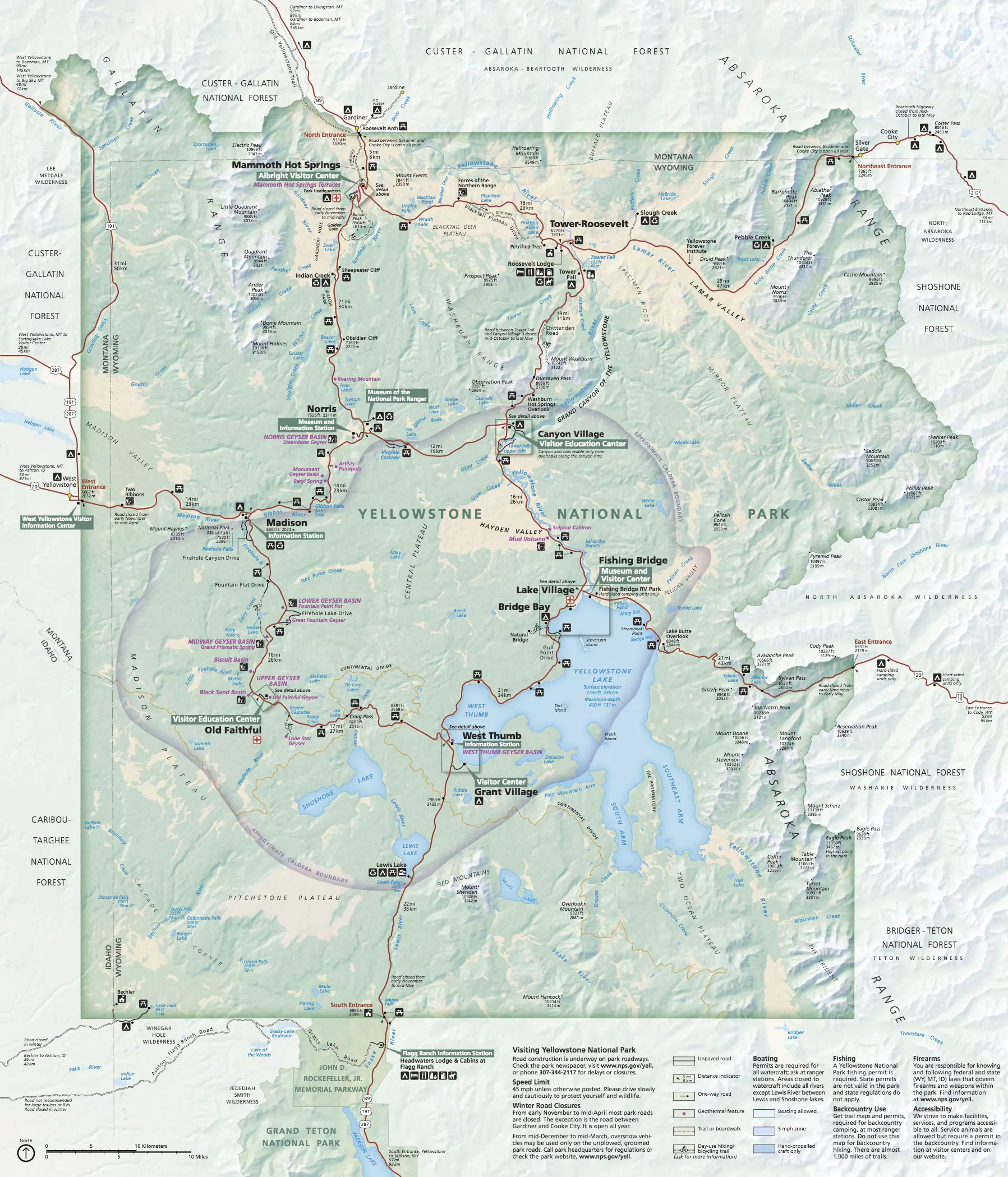
To download Yellowstone National Park Map PDF file you click here
Understanding the Yellowstone Map
A Yellowstone map is designed around the park’s famous figure-eight road system, known as the Grand Loop Road. This network connects the park’s major attractions and visitor services.
The Grand Loop Road consists of:
- Upper Loop (approximately 70 miles)
- Lower Loop (approximately 96 miles)
Together, these roads provide access to nearly every major destination within the park.
The closest major airport to Yellowstone National Park is Bozeman Yellowstone International Airport (BZN).
Key Areas on the Map
The park is divided into several popular regions:
Mammoth Hot Springs
Located near the North Entrance, Mammoth Hot Springs is known for its unique limestone terraces. This area also serves as a gateway to the northern section of Yellowstone.
Highlights:
- Mammoth Hot Springs Terraces
- Albright Visitor Center
- Historic Fort Yellowstone
Norris Geyser Basin
Situated near the center of the park, Norris is the hottest and most dynamic geothermal area in Yellowstone.
Highlights:
- Steamboat Geyser
- Porcelain Basin
- Back Basin Trails
Old Faithful Area
The most famous section of Yellowstone, Old Faithful attracts millions of visitors annually.
Highlights:
- Old Faithful Geyser
- Upper Geyser Basin
- Old Faithful Visitor Education Center
- Historic Old Faithful Inn
Canyon Village
Located on the eastern side of the Grand Loop Road, this area provides access to the spectacular Grand Canyon of the Yellowstone.
Highlights:
- Upper Falls
- Lower Falls
- Artist Point
- Inspiration Point
Yellowstone Lake
The largest high-elevation lake in North America dominates the southeastern portion of the park.
Highlights:
- Lake Village
- Fishing Bridge
- West Thumb Geyser Basin
- Scenic Lake Overlooks
Tower-Roosevelt
This region is known for wildlife viewing and rugged landscapes.
Highlights:
- Tower Fall
- Lamar Valley access
- Roosevelt Lodge
Lamar Valley
Often called the “Serengeti of North America,” Lamar Valley is one of the best wildlife-viewing destinations in the world.
Common sightings include:
- Bison
- Elk
- Wolves
- Bears
- Pronghorn
Yellowstone National Park Entrances
The map shows five primary entrances to Yellowstone National Park.
North Entrance (Gardiner, Montana)
- Open year-round
- Features the historic Roosevelt Arch
- Closest access to Mammoth Hot Springs
West Entrance (West Yellowstone, Montana)
- Most popular entrance
- Closest route to Old Faithful
- Major lodging and dining options nearby
Northeast Entrance (Cooke City, Montana)
- Scenic route through wildlife-rich terrain
- Convenient for Lamar Valley exploration
East Entrance (Sylvan Pass, Wyoming)
- Connects Yellowstone with Cody, Wyoming
- Scenic mountain drive
South Entrance (Grand Teton Connection)
- Provides direct access from Grand Teton National Park
- Popular for visitors exploring both parks
Major Attractions
When reviewing a Yellowstone map, these landmarks should be prioritized:
| Attraction | Area |
|---|---|
| Old Faithful | Old Faithful |
| Grand Prismatic Spring | Midway Geyser Basin |
| Mammoth Hot Springs | Mammoth Area |
| Grand Canyon of the Yellowstone | Canyon Village |
| Yellowstone Lake | Lake Area |
| Lamar Valley | Northeast Yellowstone |
| Norris Geyser Basin | Central Yellowstone |
| Tower Fall | Tower-Roosevelt |
| West Thumb Geyser Basin | Yellowstone Lake |
| Hayden Valley | Central-East Yellowstone |
Map of Yellowstone National Park
Yellowstone Driving Distances
One of the biggest mistakes first-time visitors make is underestimating driving times.
Approximate distances:
| Route | Distance |
|---|---|
| West Entrance to Old Faithful | 16 miles |
| West Entrance to Mammoth Hot Springs | 48 miles |
| Mammoth Hot Springs to Canyon Village | 40 miles |
| Canyon Village to Lake Village | 16 miles |
| Old Faithful to Canyon Village | 40 miles |
| Mammoth Hot Springs to Northeast Entrance | 50 miles |
Remember that wildlife traffic jams, road construction, and summer congestion can significantly increase travel times.
Visitor Centers on the Map
Several visitor centers provide maps, exhibits, and ranger information.
Main visitor centers include:
- Albright Visitor Center (Mammoth)
- Old Faithful Visitor Education Center
- Canyon Visitor Education Center
- Grant Visitor Center
- Fishing Bridge Visitor Center
These locations are clearly marked on official Yellowstone maps.
Campgrounds and Lodging
Most maps identify campgrounds and lodging facilities throughout the park.
Popular campgrounds include:
- Madison Campground
- Grant Village Campground
- Canyon Campground
- Bridge Bay Campground
- Mammoth Campground
- Lewis Lake Campground
Lodging options are available at:
- Old Faithful Inn
- Lake Yellowstone Hotel
- Canyon Lodge
- Mammoth Hot Springs Hotel
- Roosevelt Lodge
Wildlife Viewing Areas
Wildlife enthusiasts should pay special attention to:
Lamar Valley
Best for:
- Wolves
- Bison
- Bears
Hayden Valley
Best for:
- Bison herds
- Elk
- Waterfowl
Both locations are marked on official Yellowstone maps and are especially productive during early morning and evening hours.
Tips for Using a Yellowstone Map
- Download an offline map before entering the park.
- Cell service is limited throughout Yellowstone.
- Carry a printed map as a backup.
- Plan your route around the Grand Loop Road.
- Allow more driving time than GPS estimates.
- Check seasonal road closures before your trip.
- Mark gas stations, visitor centers, and restrooms in advance.
Where to Get an Official Yellowstone Map
Visitors can obtain official maps from:
- Yellowstone entrance stations
- Visitor centers
- National Park Service publications
- Official Yellowstone travel guides
The official map provides the most accurate information on roads, services, hiking trails, campgrounds, and seasonal closures.
Final Thoughts
A Yellowstone National Park map is one of the most valuable planning tools for any visitor. With its enormous size, diverse landscapes, and numerous attractions, Yellowstone can be overwhelming without a clear understanding of the park’s layout. By learning the locations of entrances, major attractions, visitor centers, and scenic routes, you’ll be able to create an efficient itinerary and experience the best of America’s first national park.