

Welcome to the Grand Canyon National Park Information Page
Here you will find all you need to know about the natural history of the park.
Learn about the geology, trees, mammals, birds, or other plants and wildlife of the area.
Grand Canyon National Park is located in northwestern Arizona, the park encompasses 277 miles of the Colorado River and adjacent uplands.
How to get to Grand Canyon National Park
The closest airport to Grand Canyon National Park is Flagstaff, located about 80 miles southeast of the park. Other airports are Las Vegas, Phoenix and Grand Canyon Airport in Tusayan, just south of the park.
From the North
1. To the North Rim. Take Highway 89 South to ALT 89 South to Jacob Lake, Arizona then take Stateroad 67 South to the North Rim.
2. To the South Rim. Take Highway 89 South to just past Cameron, Arizona and take Stateroad 64 West to the Park.
From the South
1. To the South Rim. Take I-17 North to Flagstaff, Arizona and then take Highway 89 North to just before Cameron and take Stateroad 64 West to the Park.
2. To the North Rim. Take 1-17 North to Flagstaff, Arizona and then take Highway 89 North to ALT 89 North to Marble Canyon, take ALT 89 to Jacob Lake, Arizona then take Stateroad 67 South to the North Rim.
From the East
1. Take I-40 West to Flagstaff, Arizona and follow the directions From the South to the South or North Rims.
2. Take Highway 160 West to Highway 89 and for the North Rim, go North on 89 to ALT 89 North to Marble Canyon, take ALT 89 to Jacob Lake, Arizona then take Stateroad 67 South to the North Rim; for the South Rim, go South on 89 to just past Cameron, Arizona and take Stateroad 64 West to the Park.
3. Take I-10 West to I-17 North to Flagstaff, Arizona and then take Highway 89 North to just before Cameron and take Stateroad 64 West to the Park (South Rim). For North Rim directions, follow number 2 in From the South.
From the West
1. Head for Highway 89 South and follow the directions in getting there From the North.
2. Take I-40 East to Stateroad 64 North to Highway 180 North to the Park.
3. Take I-10 East to I-17 North or I-8 East to I-10 North to I-17 North to Flagstaff, Arizona and follow the directions for the South or North Rim in From the South.
Designations
National Monument – 11 Jan 1908
National Park – 26 Feb 1919
World Heritage Site – 26 Oct 1979
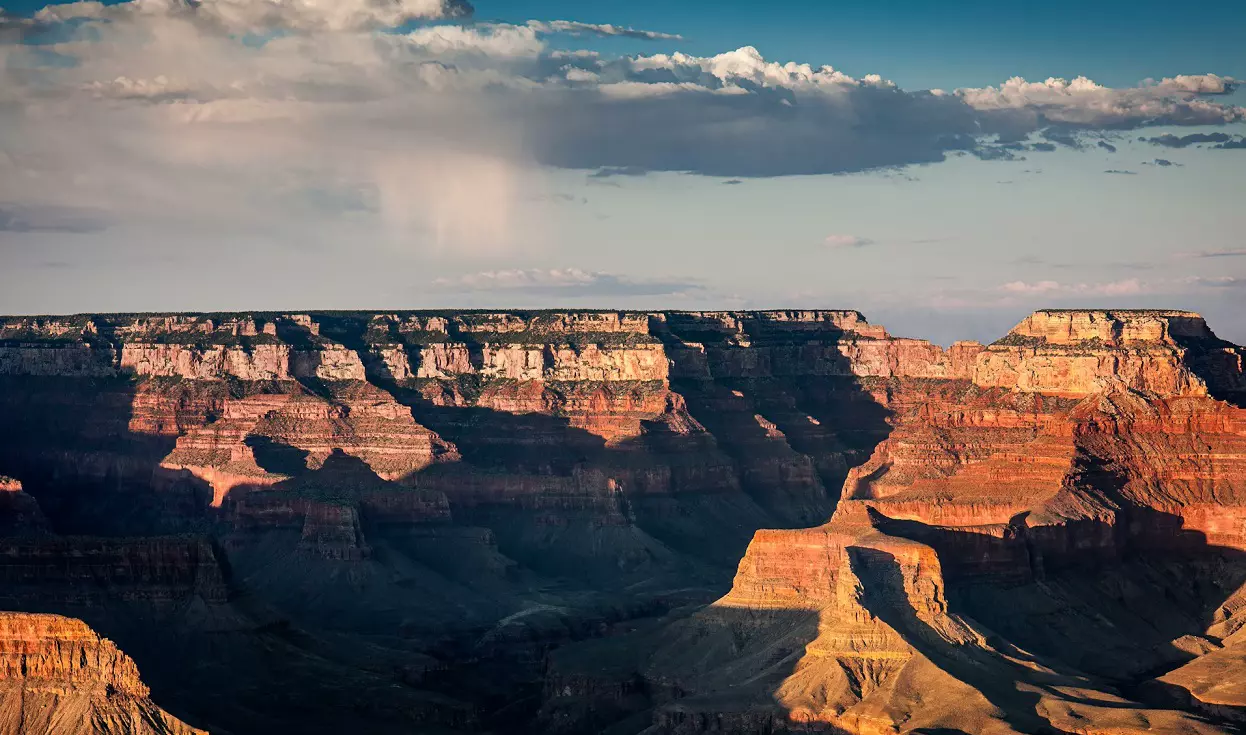
Grand Canyon is unmatched throughout the world for the vistas it offers to visitors on the rim. It is not the deepest canyon in the world. Both the Barranca del Cobre in northern Mexico and Hell’s Canyon in Idaho are deeper. But Grand Canyon is known for its overwhelming size and its intricate and colorful landscape. Geologically it is significant because of the thick sequence of ancient rocks that are beautifully preserved and exposed in the walls of the canyon. These rock layers record much of the early geologic history of the North American continent. Grand Canyon is also one of the most spectacular examples of erosion in the world.
Hiking Guide at Grand Canyon National Park
Hiking in Grand Canyon National Park is one of the most unforgettable outdoor experiences in the United States. Located in northern Arizona, the park features dramatic cliffs, layered red rock formations, and the powerful Colorado River cutting through the canyon. Whether you’re a beginner looking for a short scenic walk or an experienced hiker planning a multi-day adventure, the Grand Canyon offers trails for every skill level.
Best Time for Hiking
The canyon has extreme seasonal conditions, so timing matters.
Spring (March–May)
- Mild temperatures on the rim
- Wildflowers blooming
- Popular hiking season
Fall (September–November)
- Cooler weather after summer heat
- Fewer crowds than summer
- Excellent visibility for photography
Summer (June–August)
- Extremely hot inside the canyon (often above 40°C / 104°F)
- Early morning hikes recommended
Winter (December–February)
- Snow possible on the rim
- Quieter trails but colder temperatures
Popular Hiking Trails
1. Bright Angel Trail
One of the most famous trails in the park, Bright Angel Trail starts at the South Rim and descends deep into the canyon.
Highlights
- Shaded sections
- Water stations along parts of the trail
- Spectacular canyon views
Distance options
- 3 miles round trip to 1.5 Mile Resthouse
- 6 miles round trip to 3 Mile Resthouse
- 12 miles round trip to Plateau Point
Difficulty: Moderate to strenuous
2. South Kaibab Trail
The South Kaibab Trail offers some of the most breathtaking views because it follows a ridgeline rather than the inner canyon.
Popular stops
- Ooh Aah Point (1.8 miles round trip)
- Cedar Ridge (3 miles round trip)
- Skeleton Point (6 miles round trip)
Difficulty: Moderate to hard
Important: No water available along this trail.
3. Rim Trail
The Rim Trail is perfect for visitors who want amazing views without hiking down into the canyon.
Features
- Mostly flat and paved sections
- Wheelchair accessible areas
- Multiple viewpoints along the rim
Distance: Up to 13 miles if walking the full trail
Difficulty: Easy
Essential Hiking Tips
1. Bring plenty of water
Dehydration is the most common problem. Rangers recommend at least 3–4 liters per person per day.
2. Start early
Summer temperatures inside the canyon can be dangerously hot by midday.
3. Wear proper gear
- Hiking boots with good grip
- Sun hat and sunscreen
- Lightweight breathable clothing
4. Know your limits
Going down is easy—coming back up is much harder.
5. Check trail conditions
Visit the official park website or ranger stations for current updates.
Safety Warning
Every year, many hikers require rescue due to heat exhaustion, dehydration, or overexertion. If you’re planning to hike to the bottom of the canyon and back in one day, make sure you are extremely well-prepared and physically fit.
✅ Quick tip: Many experienced hikers say the best short hike in the park is South Kaibab Trail to Ooh Aah Point at sunrise—the lighting over the canyon is incredible.
Basic Visit Recommendations
I recommend that you plan your trip and the areas you would like to see and then go and relax and make a day of it. Go and see all that is in the area and enjoy it. You spend more quality time and learn and see more than you could ever imagine.
Grand Canyon is heavily visited for most of the year and it is imperative to plan ahead for lodging, backcountry permits, or mule trips. Persons planning day visits only should arrive early in the day as parking is limited. Write the park in advance to request a Trip Planner (or Backcountry Trip Planner if you are planning to backpack).
Grand Canyon National Park is in a remote part of the country. Here are a few tips.
- Bring an extra set of car keys – it could be a long wait for a locksmith.
- Film is available at both rims, but the closest camera repair is in Flagstaff, Williams or Page, Arizona.
- There is an automobile mechanic on the South Rim, but you may experience delays waiting for parts.
- Distances are deceiving in this part of the country: it may look like you can visit three parks in one day, but the reality is often different.
- Keep your gas tank full the next gas station may be quite some distance down the road.
- Carry water in your car, particularly during summer months.
Biking at Grand Canyon National Park
Biking is one of the best ways to explore Grand Canyon National Park, especially along the South Rim. With paved greenway paths, scenic roads closed to most cars, and breathtaking canyon views, cycling allows visitors to experience the park at a relaxed pace while covering more ground than walking.
Best Places to Bike in the Grand Canyon
1. Hermit Road
Hermit Road is one of the most popular cycling routes in the park. From March to November, this road is closed to private vehicles, making it perfect for bikes.
Highlights
- Stunning overlooks along the canyon edge
- Less traffic compared to main park roads
- Access to famous viewpoints like Hopi Point and Pima Point
Distance: About 7 miles (11 km) one way
Difficulty: Moderate
2. Grand Canyon Greenway Trail
The Greenway Trail is a paved multi-use path designed for cyclists and pedestrians.
Why it’s great
- Car-free biking
- Smooth paved surface
- Connects major visitor areas along the South Rim
Distance: Over 13 miles (21 km) of connected trails
Difficulty: Easy to moderate
3. South Rim Village to Yaki Point
This route takes cyclists through forested areas and quiet roads leading to scenic viewpoints.
Highlights
- Beautiful desert forest landscapes
- Fewer crowds than main viewpoints
- Great photography spots
Distance: Around 6 miles (10 km) round trip
Difficulty: Easy
Bike Rentals in the Park
Visitors who don’t bring their own bike can rent one near the South Rim. A popular option is:
- Bright Angel Bicycles
They offer:
- Standard bikes and e-bikes
- Guided bike tours
- Helmets and safety gear
Important Biking Rules
- Bikes are not allowed below the rim on hiking trails.
- Cyclists must yield to pedestrians and shuttle buses.
- Always ride on designated roads or greenway trails.
- Helmets are strongly recommended.
Tips for an Amazing Ride
🚴 Start early – mornings have cooler temperatures and softer light.
🌅 Ride during sunset – canyon colors become spectacular.
💧 Carry water – the desert climate can quickly cause dehydration.
📸 Stop often – many viewpoints appear unexpectedly along the route.
✅ Pro tip: One of the most memorable rides is Hermit Road at sunset. The road curves along the canyon edge, offering dramatic views with far fewer crowds than the main visitor areas.
Bus Tours at the Grand Canyon
Free Park Shuttle Buses
The National Park Service operates a free shuttle bus system around the South Rim that connects major viewpoints and visitor areas.
Popular routes include:
- Hermits Rest (Red Route) – Travels along a 7-mile scenic road from Grand Canyon Village to Hermits Rest with stops at nine overlooks.
- Village Route (Blue Route) – Connects lodges, campgrounds, and the visitor center.
- Kaibab Rim Route (Orange Route) – Stops at locations such as Yaki Point and the South Kaibab Trailhead.
🚌 The Hermit Road shuttle round trip takes about 80 minutes without stopping, though most visitors hop off at scenic viewpoints along the way.
Air Tours (Helicopter & Airplane)
Air tours provide a completely different perspective of the canyon, allowing visitors to see areas that are difficult to reach on foot.
Helicopter Tours
One of the most popular ways to experience the canyon from the sky is with companies such as:
- Papillon Grand Canyon Helicopters
Typical helicopter tour details:
- Duration: 25–50 minutes
- Departure: South Rim airport (about 3 miles outside the park)
- Highlights: Kaibab Forest, Colorado River, and massive rock formations
Prices generally start around $289 per person depending on the route and flight time.
Camping at Grand Canyon National Park
Camping at Grand Canyon National Park is one of the best ways to experience the park’s incredible landscapes, star-filled skies, and peaceful natural surroundings. Visitors can choose between developed campgrounds on the rim or backcountry camping deep inside the canyon.
Campgrounds on the South Rim
Mather Campground
This is the largest and most popular campground in the park.
Features
- Located in Grand Canyon Village
- Tent and RV sites available
- Restrooms, water stations, and picnic tables
Good for
- First-time visitors
- Families
- Easy access to South Rim viewpoints
Reservations can be made through the park’s official camping system.
Desert View Campground
This smaller campground is located near the East Entrance of the park.
Highlights
- Quieter than Mather Campground
- Beautiful canyon views nearby
- Close to the famous Desert View Watchtower
Good for
- Visitors seeking a more peaceful camping experience
North Rim Campground
North Rim Campground
The North Rim offers a cooler and quieter camping experience compared to the busy South Rim.
Features
- Higher elevation (about 8,000 ft / 2,438 m)
- Cooler temperatures in summer
- Beautiful forests and wildlife
⚠️ The North Rim is open seasonally (mid-May to mid-October) due to winter snow.
Backcountry Camping
For experienced adventurers, backcountry camping inside the canyon is unforgettable.
Popular backcountry campgrounds include:
- Bright Angel Campground
- Indian Garden Campground (now called Havasupai Gardens)
- Sites along the Colorado River
Important rules:
- A backcountry permit is required
- Permits must be reserved in advance
- Hikers must carry enough water and supplies
Camping Tips
🔥 Bring warm clothing – nights can be cold even in summer.
🌌 Look at the stars – the Grand Canyon has some of the darkest skies in the U.S.
🐿️ Store food safely – wildlife such as squirrels and ravens can steal food.
💧 Carry plenty of water – the desert climate is very dry.
📅 Reserve early – campsites often fill months in advance.
✅ Pro tip: Sunset and sunrise at the canyon rim are magical. If you camp overnight, you’ll experience these moments before the daytime crowds arrive.
Fishing at Grand Canyon National Park
Fishing in the park requires an Arizona State fishing license. Licenses are available at Canyon Village Marketplace in Grand Canyon Village on the South Rim. Call: 928-638-2234 or 928-638-2262. Licenses are also available at Marble Canyon Lodge, located 2.5 hours north from the South Rim, near Lees Ferry. Licenses are not available at the North Rim. Make sure you know the regulations before you fish. Most fishing opportunities require an overnight backcountry use permit.
Food / Supplies
Groceries and supplies are available on the South Rim at Babbitt’s General Store (both in Grand Canyon Village and at Desert View). There is a small camper store on the North Rim, adjacent to the North Rim Campground.
Weather of Grand Canyon National Park
The South Rim is 7,000 feet above sea level, which means snow in winter and cool nights even in summer. Inner canyon hiking (below the rim) is another story, however: summer temperatures along the Colorado River at the canyon bottom can reach 120* F. The North Rim is 8,000 feet above sea level and can receive snow throughout most of the year.
Weather is particularly changeable in spring and fall; visitors should be prepared for a variety of climates.
See the Weather Page for current conditions, forecasts and other weather data.
40 FAQs About Grand Canyon National Park (With Answers)
1. Where is Grand Canyon National Park located?
Grand Canyon National Park is located in northern Arizona, USA, about 60 miles north of the city of Williams.
2. How big is the Grand Canyon?
The canyon is approximately 277 miles (446 km) long, up to 18 miles (29 km) wide, and over 1 mile (1.6 km) deep.
3. When was Grand Canyon National Park established?
It officially became a national park in 1919.
4. Why is the Grand Canyon famous?
The canyon is famous for its massive size, dramatic landscapes, and colorful rock layers formed over millions of years.
5. What river runs through the Grand Canyon?
The Colorado River flows through the canyon and helped carve it over millions of years.
6. What is the best time to visit the Grand Canyon?
The best times are spring (March–May) and fall (September–November) when temperatures are mild and crowds are smaller.
7. Is the Grand Canyon open all year?
Yes, the South Rim is open year-round, while the North Rim usually opens from mid-May to mid-October.
8. How much does it cost to enter the park?
The standard entrance fee is about $35 per vehicle, valid for seven days.
9. Which rim is most popular?
The South Rim receives about 90% of park visitors due to its accessibility and facilities.
10. What is the difference between the South Rim and North Rim?
The South Rim is more developed and easier to access, while the North Rim is quieter, higher in elevation, and more remote.
11. Can you hike to the bottom of the Grand Canyon?
Yes, experienced hikers can descend to the canyon floor using trails like Bright Angel Trail.
12. How long does it take to hike to the bottom?
Most hikers take two days to go down and back safely.
13. Is it possible to hike to the bottom and back in one day?
It is possible but extremely challenging and recommended only for very fit hikers.
14. Are there easy hiking trails?
Yes, the Rim Trail offers easy walking paths with spectacular views.
15. Can you bike in the Grand Canyon?
Yes, biking is allowed on designated roads and paved greenway trails along the South Rim.
16. Are helicopter tours available?
Yes, several companies offer helicopter and airplane tours over the canyon.
17. Can you take a guided bus tour?
Yes, guided bus tours operate inside the park and from nearby cities.
18. Are ranger programs available?
Yes, park rangers offer guided walks, educational talks, and evening programs.
19. Can visitors go rafting in the canyon?
Yes, rafting trips along the Colorado River range from one day to multi-week adventures.
20. Is stargazing good at the Grand Canyon?
Yes, the park is known for extremely dark skies, making it excellent for stargazing.
21. Can you camp at the Grand Canyon?
Yes, several campgrounds are available, including Mather Campground.
22. Do you need reservations for camping?
Yes, reservations are highly recommended, especially during peak seasons.
23. Are there lodges inside the park?
Yes, several lodges are located along the South Rim.
24. Can you camp inside the canyon?
Yes, but you need a backcountry permit.
25. Are RVs allowed in the park?
Yes, RV camping is available in designated campgrounds.
26. How far is the Grand Canyon from Las Vegas?
The South Rim is about 275 miles (443 km) from Las Vegas, roughly a 4.5-hour drive.
27. How far is the Grand Canyon from Phoenix?
The drive from Phoenix to the Grand Canyon takes about 3.5 hours.
28. Are there shuttle buses inside the park?
Yes, the park operates free shuttle buses to major viewpoints.
29. Can you drive your own car inside the park?
Yes, but some scenic roads restrict private vehicles during peak seasons.
30. Is public transportation available to the park?
Yes, train and shuttle services operate from nearby towns.
31. Is hiking in Grand Canyon dangerous?
Hiking can be dangerous due to heat, dehydration, and steep trails.
32. How much water should hikers bring?
Park rangers recommend at least 3–4 liters per person per day.
33. Are there dangerous animals in the Grand Canyon?
Wildlife such as rattlesnakes, mountain lions, and scorpions live in the park, but encounters are rare.
34. What should visitors pack?
Visitors should bring water, sunscreen, hats, sturdy shoes, and snacks.
35. Is the canyon safe for children?
Yes, but children should be supervised near cliffs and steep trails.
36. How old is the Grand Canyon?
The canyon itself formed about 5–6 million years ago, but the rocks inside are nearly 2 billion years old.
37. How many people visit the Grand Canyon each year?
More than 5 million visitors visit annually.
38. Can you see the Grand Canyon from space?
Yes, astronauts can see the canyon from orbit due to its massive size.
39. What colors can you see in the canyon?
The canyon displays reds, oranges, browns, and purples, especially during sunrise and sunset.
40. Why does the canyon change color?
The rock layers reflect sunlight differently depending on time of day, weather, and season.