Shenandoah National Park Weather by Month
Nestled along the crest of the Blue Ridge Mountains in Virginia, Shenandoah National Park offers a wide range of weather conditions throughout the year. Each month brings its own charm—from snowy winter landscapes to vibrant fall foliage—making it a year-round destination. Here’s a detailed month-by-month guide to help you plan your visit.
Shenandoah National Park Weather by Month
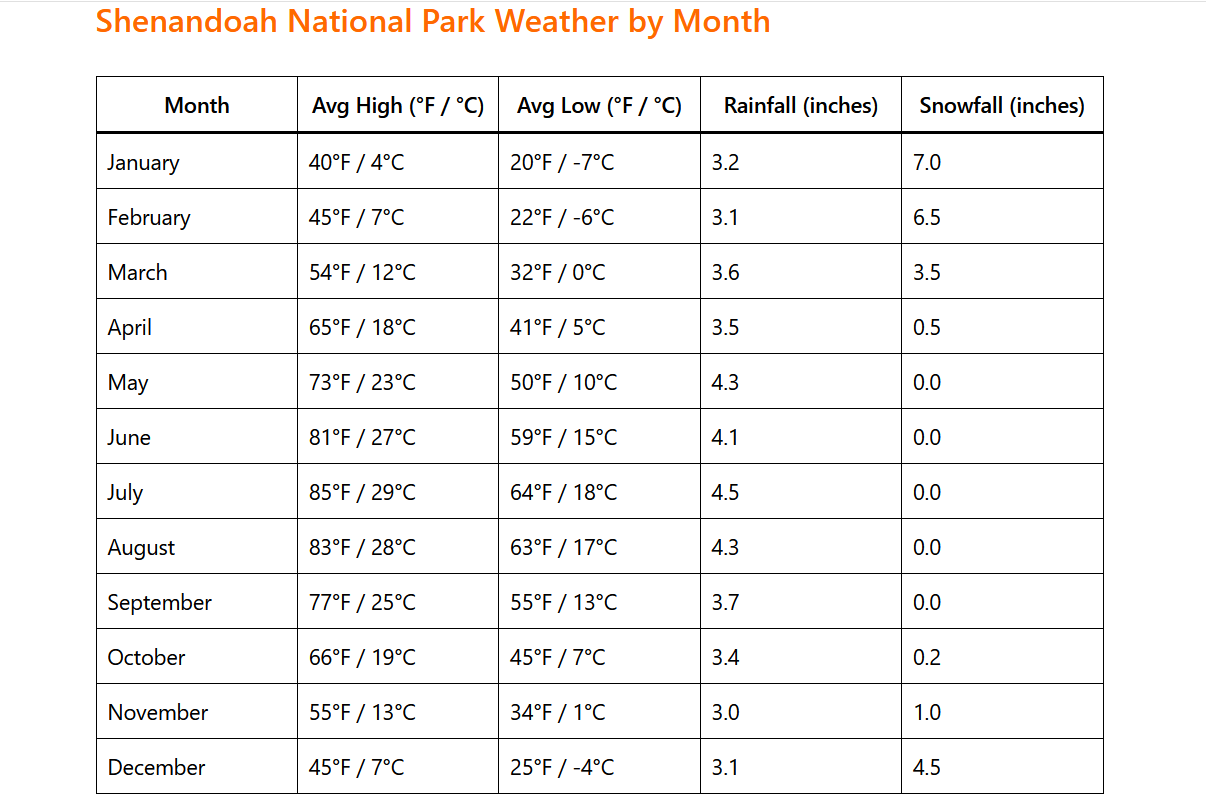
| Month | Avg High (°F / °C) | Avg Low (°F / °C) | Rainfall (inches) | Snowfall (inches) |
|---|---|---|---|---|
| January | 40°F / 4°C | 20°F / -7°C | 3.2 | 7.0 |
| February | 45°F / 7°C | 22°F / -6°C | 3.1 | 6.5 |
| March | 54°F / 12°C | 32°F / 0°C | 3.6 | 3.5 |
| April | 65°F / 18°C | 41°F / 5°C | 3.5 | 0.5 |
| May | 73°F / 23°C | 50°F / 10°C | 4.3 | 0.0 |
| June | 81°F / 27°C | 59°F / 15°C | 4.1 | 0.0 |
| July | 85°F / 29°C | 64°F / 18°C | 4.5 | 0.0 |
| August | 83°F / 28°C | 63°F / 17°C | 4.3 | 0.0 |
| September | 77°F / 25°C | 55°F / 13°C | 3.7 | 0.0 |
| October | 66°F / 19°C | 45°F / 7°C | 3.4 | 0.2 |
| November | 55°F / 13°C | 34°F / 1°C | 3.0 | 1.0 |
| December | 45°F / 7°C | 25°F / -4°C | 3.1 | 4.5 |
January
- Average Temperature: -7°C to 4°C (20°F to 40°F)
- Conditions: Cold and often snowy, especially at higher elevations
- What to Expect: Quiet trails, icy conditions, and limited services
- Tip: Ideal for solitude seekers and winter photography
February
- Average Temperature: -6°C to 7°C (22°F to 45°F)
- Conditions: Still wintery with occasional snowstorms
- What to Expect: Frozen waterfalls and fewer visitors
- Tip: Check road closures, especially along Skyline Drive
March
- Average Temperature: 0°C to 12°C (32°F to 54°F)
- Conditions: Transition to spring, unpredictable weather
- What to Expect: Melting snow, muddy trails, early blooms
- Tip: Bring waterproof boots for hiking
April
- Average Temperature: 5°C to 18°C (41°F to 65°F)
- Conditions: Mild with frequent rain showers
- What to Expect: Wildflowers begin to bloom, waterfalls at their peak
- Tip: Great month for nature lovers and photographers
May
- Average Temperature: 10°C to 23°C (50°F to 73°F)
- Conditions: Pleasant and increasingly warm
- What to Expect: Lush greenery, active wildlife
- Tip: One of the best months for hiking and camping
June
- Average Temperature: 15°C to 27°C (59°F to 81°F)
- Conditions: Warm and humid
- What to Expect: Full summer conditions, occasional thunderstorms
- Tip: Start hikes early to avoid heat and crowds
July
- Average Temperature: 18°C to 29°C (64°F to 85°F)
- Conditions: Hot and humid
- What to Expect: Peak tourist season, hazy mountain views
- Tip: Stay hydrated and plan for afternoon storms
August
- Average Temperature: 17°C to 28°C (63°F to 83°F)
- Conditions: Similar to July, slightly less crowded late in the month
- What to Expect: Lush forests, frequent thunderstorms
- Tip: Good time for stargazing on clear nights
September
- Average Temperature: 13°C to 25°C (55°F to 77°F)
- Conditions: Cooler, less humid
- What to Expect: Early fall colors begin to appear
- Tip: Excellent hiking weather with fewer bugs
October
- Average Temperature: 7°C to 19°C (45°F to 66°F)
- Conditions: Crisp and cool
- What to Expect: Peak fall foliage—one of the most popular times to visit
- Tip: Book accommodations early due to high demand
November
- Average Temperature: 1°C to 13°C (34°F to 55°F)
- Conditions: Chilly with increasing chances of frost
- What to Expect: Leafless trees, quieter trails
- Tip: Great for peaceful hikes and scenic drives
December
- Average Temperature: -4°C to 7°C (25°F to 45°F)
- Conditions: Cold, occasional snow
- What to Expect: Winter begins, some facilities close
- Tip: Dress in layers and check park alerts before visiting
20 helpful FAQs about weather in Shenandoah National Park
1. What is the best time to visit Shenandoah National Park for good weather?
Spring (April–May) and fall (September–October) offer the most comfortable temperatures and scenic beauty.
2. Does Shenandoah National Park get snow?
Yes, especially in winter months (December–February), with higher elevations receiving more snowfall.
3. How cold does it get in winter?
Temperatures can drop below 20°F (-7°C), particularly along higher elevations like Skyline Drive.
4. Is summer too hot for hiking Shenandoah National Park ?
Summer can be hot and humid, with temperatures reaching the mid-80s°F (around 29°C), but early mornings are ideal.
5. Does it rain a lot in Shenandoah National Park?
Rainfall is fairly consistent year-round, with slightly wetter months in late spring and summer.
6. Are thunderstorms common in Shenandoah National Park?
Yes, especially in summer afternoons. They are usually brief but can be intense.
7. How does elevation affect the weather?
Higher elevations are typically 5–10°F cooler and windier than lower areas.
8. When is peak fall foliage season?
Usually mid to late October, depending on weather conditions.
9. Is spring a good time to visit Shenandoah National Park?
Yes, spring brings wildflowers, waterfalls, and mild temperatures, though trails can be muddy.
10. Are winters crowded?
No, winter is the least crowded season due to cold weather and occasional road closures.
11. Can Skyline Drive close due to weather?
Yes, snow, ice, or storms can temporarily close sections of Skyline Drive.
12. What should I wear when visiting Shenandoah National Park?
Layered clothing is best due to changing conditions, especially at different elevations.
13. Is humidity high in the park?
Yes, especially in summer, contributing to hazy mountain views.
14. When are waterfalls most impressive?
In early spring (March–April) due to snowmelt and rainfall.
15. Does Shenandoah experience fog?
Yes, fog is common, particularly in the mornings and at higher elevations.
16. Is it safe to hike during rain?
Light rain is manageable, but avoid hiking during thunderstorms due to lightning risk.
17. How windy does it get?
Ridgetop areas can be quite windy, especially in winter and during storms.
18. Are there weather differences across the park?
Yes, the park spans 100+ miles along the Blue Ridge Mountains, so conditions can vary.
19. What month has the least rain in Shenandoah National Park?
Typically October or November, though rainfall is fairly evenly distributed.
20. Do I need to check the weather before visiting Shenandoah National Park?
Absolutely. Weather can change quickly, so always check forecasts and park alerts before your trip.
Final Thoughts
Weather in Shenandoah National Park varies significantly by elevation and season. Spring and fall are generally the best times to visit for mild temperatures and scenic beauty, while summer offers full access to trails and facilities. Winter, though quieter, requires preparation for cold and potential closures.