

Sedona, Arizona is stunning year-round—towering red rock formations, endless blue skies, and some of the best hiking in the Southwest. But depending on when you visit, the weather can feel completely different. This month-by-month guide breaks down temperatures, rainfall, and what to expect each season, helping you choose the perfect time for your trip.
Sedona Weather Overview
- Climate type: High desert, semi-arid
- Altitude: ~4,350 ft (1,326 m)
- Seasons: Mild winters, warm summers, short monsoon season
- Best overall months: March–May & September–November
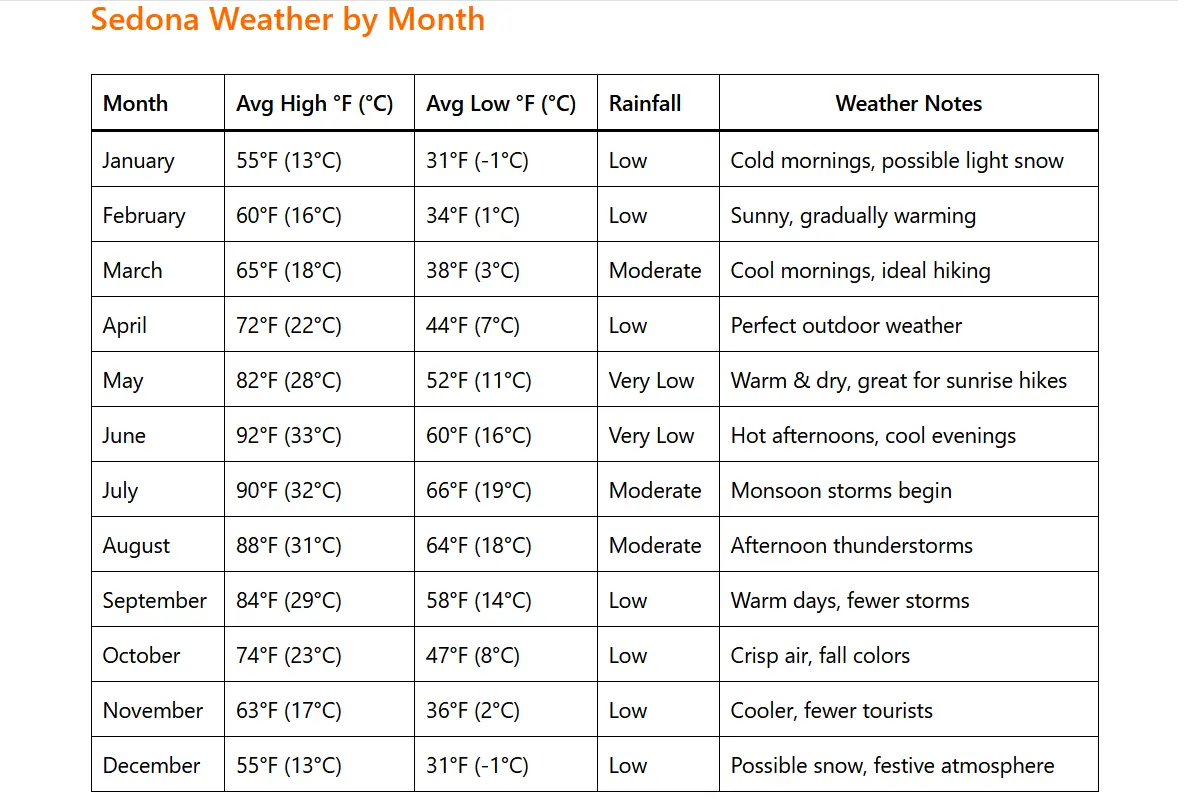
Sedona Weather by Month
| Month | Avg High °F (°C) | Avg Low °F (°C) | Rainfall | Weather Notes |
|---|---|---|---|---|
| January | 55°F (13°C) | 31°F (-1°C) | Low | Cold mornings, possible light snow |
| February | 60°F (16°C) | 34°F (1°C) | Low | Sunny, gradually warming |
| March | 65°F (18°C) | 38°F (3°C) | Moderate | Cool mornings, ideal hiking |
| April | 72°F (22°C) | 44°F (7°C) | Low | Perfect outdoor weather |
| May | 82°F (28°C) | 52°F (11°C) | Very Low | Warm & dry, great for sunrise hikes |
| June | 92°F (33°C) | 60°F (16°C) | Very Low | Hot afternoons, cool evenings |
| July | 90°F (32°C) | 66°F (19°C) | Moderate | Monsoon storms begin |
| August | 88°F (31°C) | 64°F (18°C) | Moderate | Afternoon thunderstorms |
| September | 84°F (29°C) | 58°F (14°C) | Low | Warm days, fewer storms |
| October | 74°F (23°C) | 47°F (8°C) | Low | Crisp air, fall colors |
| November | 63°F (17°C) | 36°F (2°C) | Low | Cooler, fewer tourists |
| December | 55°F (13°C) | 31°F (-1°C) | Low | Possible snow, festive atmosphere |
🌸 Spring (March – May)
Spring is one of the best times to visit Sedona. Wildflowers bloom, temperatures are pleasant, and hiking conditions are ideal.
March
- Average High: 60–70°F (16–21°C)
- Average Low: 35–40°F (2–4°C)
- Crisp mornings, sunny afternoons
- Occasional light rain
March is perfect for hiking popular trails like Cathedral Rock and Devil’s Bridge Trail without extreme heat.
April
- Average High: 70–75°F (21–24°C)
- Low rainfall
- Longer daylight hours
April is considered peak season due to ideal temperatures and blooming desert plants.
May
- Average High: 80–85°F (27–29°C)
- Warm but not yet intensely hot
- Very dry conditions
May is excellent for early morning hikes and sunset photography at Bell Rock.
Best for: Hiking, photography, jeep tours, and outdoor dining.
☀️ Summer (June – August)
Summer in Sedona is warm, but the elevation keeps it cooler than much of Arizona.
June
- Average High: 90–95°F (32–35°C)
- Dry heat
- Cool evenings
Ideal for sunrise hikes and stargazing experiences.
July
- Monsoon season begins
- Afternoon thunderstorms common
- Average High: 90°F (32°C)
Short but dramatic storms bring lightning shows over the red rocks.
August
- Continued monsoon activity
- Higher humidity
- Slightly cooler than June
While afternoons can be stormy, mornings are typically sunny and great for exploring Slide Rock State Park.
Travel Tip: Always carry water and avoid hiking midday.
🍂 Fall (September – November)
Fall rivals spring as the most comfortable season in Sedona.
September
- Warm early in the month (mid-80s°F / 29°C)
- Storms taper off
Great for mountain biking and scenic drives.
October
- Average High: 70–75°F (21–24°C)
- Crisp evenings
- Peak fall colors along Oak Creek Canyon
October is arguably the most popular month due to perfect hiking weather.
November
- Average High: 60–65°F (16–18°C)
- Cooler nights
- Fewer crowds
Excellent for peaceful sightseeing and spa retreats.
Best for: Comfortable hiking temperatures and scenic photography.
❄️ Winter (December – February)
Winter is Sedona’s quietest season—and surprisingly beautiful.
December
- Average High: 50–60°F (10–15°C)
- Occasional light snowfall
Snow dusting the red rocks creates stunning contrasts.
January
- Coldest month
- Highs around 55°F (13°C)
- Freezing nights possible
A peaceful time to explore art galleries and vortex sites.
February
- Gradual warming
- More sunshine
- Fewer tourists than spring
Ideal for budget travelers seeking lower hotel rates.
Bonus: Snow-covered views near Red Rock State Park are unforgettable.
🧳 Best Time to Visit Sedona
- Best Overall Weather: April, May, October
- Fewest Crowds: January & February
- Best Budget Months: Winter season
- Best for Outdoor Adventure: Spring & Fall
🌡️ Sedona Weather Overview by Season
| Season | Temperature Range | Crowds | Best For |
|---|---|---|---|
| Spring | 60–85°F | High | Hiking & wildflowers |
| Summer | 85–95°F | Moderate | Storm photography & swimming |
| Fall | 60–80°F | High | Scenic drives & biking |
| Winter | 50–60°F | Low | Quiet escapes & snow views |
20 FAQs about Sedona Weather
1. What is the best month to visit Sedona for good weather?
April, May, and October offer the most comfortable temperatures with mild days and cool evenings.
2. Does Sedona get snow?
Yes, Sedona gets light snowfall during winter, especially in December and January. Snow usually melts quickly but creates stunning red rock views.
3. How hot does Sedona get in summer?
Summer highs typically reach 90–95°F (32–35°C), but the higher elevation makes it cooler than Phoenix.
4. Is Sedona cooler than Phoenix?
Yes. Because Sedona sits about 3,000 feet higher than Phoenix, temperatures are generally 10–15°F cooler.
5. When is monsoon season in Sedona?
Monsoon season usually runs from July through early September, bringing afternoon thunderstorms and dramatic skies.
6. What is the coldest month in Sedona?
January is typically the coldest month, with daytime highs around 55°F (13°C) and freezing nighttime temperatures.
7. What is the rainiest month in Sedona?
July and August tend to receive the most rainfall due to monsoon storms.
8. Is Sedona humid?
No, Sedona has a dry desert climate most of the year. Humidity increases slightly during monsoon season.
9. What should I wear in Sedona?
Dress in layers. Mornings and evenings can be cool, even in summer, while afternoons may be warm.
10. Is Sedona too hot for hiking in summer?
Midday hiking can be very hot in summer. Early morning or sunset hikes are recommended.
11. How windy is Sedona?
Sedona is generally not very windy, though spring months may bring occasional breezy days.
12. Does Sedona have four seasons?
Yes. Sedona experiences distinct spring, summer, fall, and winter seasons.
13. What is Sedona like in October?
October offers perfect hiking weather with daytime highs in the 70s°F (21–24°C) and cool, crisp evenings.
14. Is winter a good time to visit Sedona?
Yes, if you prefer fewer crowds and lower hotel prices. The weather is cooler but still pleasant for sightseeing.
15. How much sunshine does Sedona get?
Sedona averages over 300 sunny days per year, making it a great year-round destination.
16. Are thunderstorms dangerous in Sedona?
Monsoon storms can bring lightning and flash floods. Always check weather forecasts before hiking.
17. What is the weather like in Sedona in March?
March is mild with highs in the 60s°F (16–20°C) and cool mornings—ideal for hiking.
18. Can you swim in Sedona during summer?
Yes. Popular swimming spots like Slide Rock State Park are great for cooling off in summer.
19. When are Sedona’s wildflowers in bloom?
Wildflowers typically bloom from late March through April, depending on rainfall.
20. What month has the fewest crowds in Sedona?
January and February generally see the fewest tourists, making it ideal for a peaceful visit.
Final Thoughts
Sedona is truly a year-round destination. Whether you want blooming wildflowers, dramatic monsoon skies, golden autumn leaves, or snow-dusted red rocks, each month offers a unique experience.
If you’re planning hiking-heavy days, aim for spring or fall. If you prefer fewer crowds and lower prices, winter might be your perfect season.