

Pinnacles National Park experiences a Mediterranean climate with mild, wetter winters and hot, dry summers. Temperatures vary considerably throughout the year, making each season feel distinct. Winter and early spring bring greener landscapes and cooler hiking conditions, while summer delivers long sunny days and very little rainfall.
This month-by-month guide is based on your provided weather data and includes temperatures in both Celsius (°C) and Fahrenheit (°F).
Pinnacles National Park Weather by Month
Click the image below to view the full-size version.
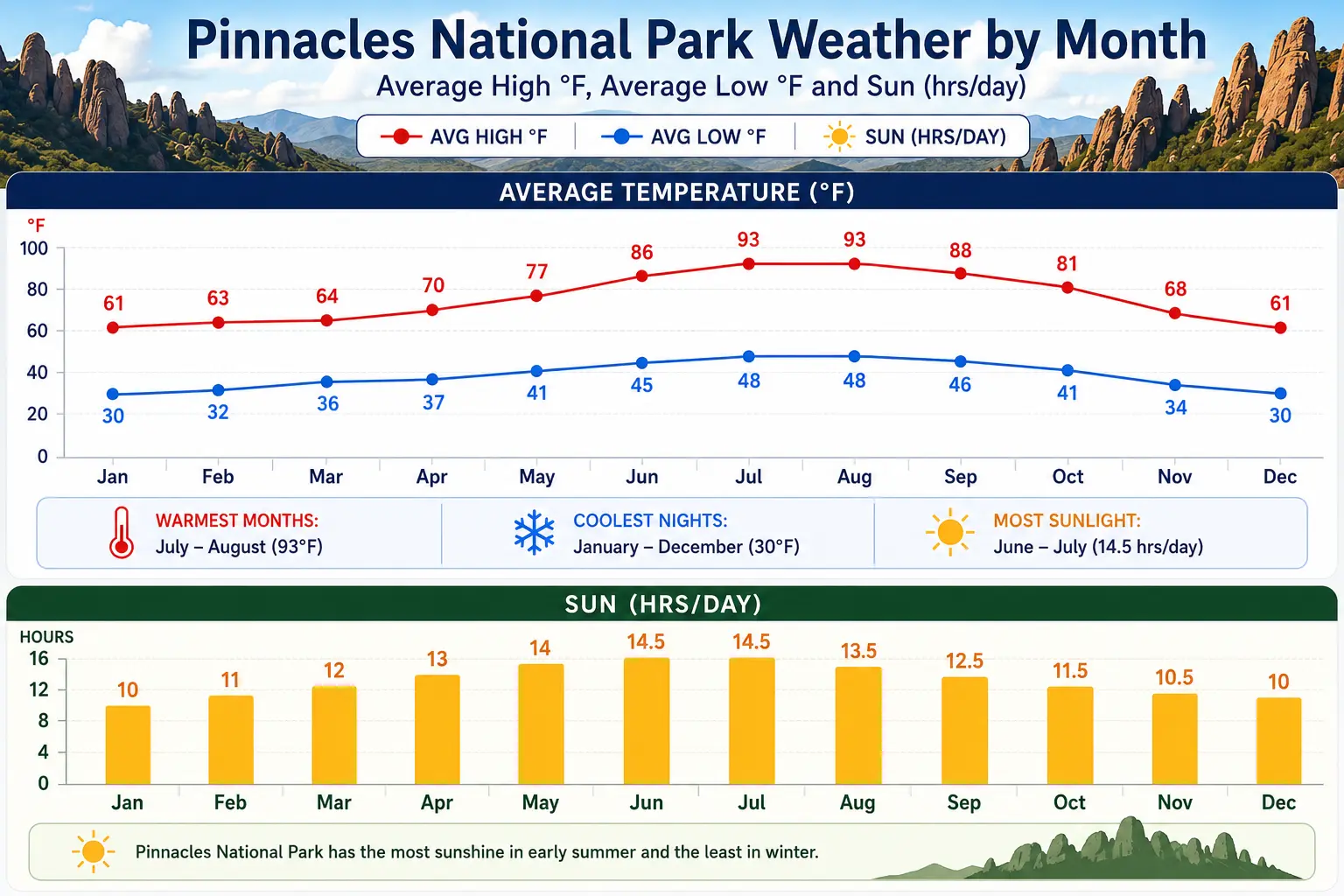
January – Cool and Wet
- Average high: 16°C (61°F)
- Average low: -1°C (30°F)
- Rainfall: 82 mm (3.23 in)
- Daylight: 10 hours
January is one of the wettest months at Pinnacles National Park and creates a noticeably different atmosphere compared with the warmer seasons. Winter rainfall helps restore green vegetation across the hills and valleys, making the landscape feel fresher and more colorful.
Because visitor numbers are usually lower during this period, trails often feel quieter and more relaxing. Cooler daytime temperatures make hiking comfortable, although early mornings can be chilly.
Best for: Hiking without crowds, winter scenery, and photography.
February – Mild Winter Conditions
- Average high: 17°C (63°F)
- Average low: 0°C (32°F)
- Rainfall: 74.8 mm (2.94 in)
- Daylight: 11 hours
February continues the winter pattern but introduces slightly warmer temperatures and longer daylight. Rain remains common enough to maintain green scenery throughout the park while creating pleasant hiking conditions.
The combination of mild weather and fewer visitors makes February attractive for travelers who prefer outdoor exploration without summer heat.
Best for: Comfortable hiking, scenic drives, and peaceful outdoor experiences.
March – Spring Begins
- Average high: 18°C (64°F)
- Average low: 2°C (36°F)
- Rainfall: 75.3 mm (2.96 in)
- Daylight: 12 hours
March marks the transition into spring as temperatures slowly rise and daylight noticeably increases. Rainfall remains relatively high, helping maintain vibrant landscapes and encouraging seasonal growth.
This month often feels refreshing for visitors because temperatures remain cool enough for active outdoor days while providing more sunshine than winter.
Best for: Spring hiking, sightseeing, and seasonal scenery.
April – Pleasant Hiking Weather
- Average high: 21°C (70°F)
- Average low: 3°C (37°F)
- Rainfall: 26.3 mm (1.04 in)
- Daylight: 13 hours
April is often considered one of the most comfortable months to visit Pinnacles National Park. Rain decreases significantly while temperatures become warmer and more predictable.
Longer daylight allows visitors to spend more time outdoors, and the combination of cooler mornings and mild afternoons creates excellent hiking conditions.
Best for: Long hikes, family visits, and balanced weather.
May – Warm and Dry
- Average high: 25°C (77°F)
- Average low: 5°C (41°F)
- Rainfall: 11.7 mm (0.46 in)
- Daylight: 14 hours
May brings warmer weather and marks the beginning of the dry season. Rain becomes uncommon and skies are often clear, creating ideal conditions for outdoor exploration.
Temperatures remain pleasant without reaching summer extremes, making this one of the most enjoyable months for visitors.
Best for: Outdoor adventures, hiking, and photography.
June – Start of Summer Heat
- Average high: 30°C (86°F)
- Average low: 7°C (45°F)
- Rainfall: 2.4 mm (0.09 in)
- Daylight: 14.5 hours
June introduces true summer conditions with noticeably hotter afternoons and almost no rainfall. Clear skies and extended daylight make it possible to explore more of the park during a single visit.
Morning activities are usually the most comfortable before temperatures rise.
Best for: Early hikes, scenic viewpoints, and summer travel.
July – Hottest Month
- Average high: 34°C (93°F)
- Average low: 9°C (48°F)
- Rainfall: 0.8 mm (0.03 in)
- Daylight: 14.5 hours
July is among the hottest and driest months of the year. Afternoon temperatures can become intense, and visitors should prepare for strong sun exposure.
Despite the heat, the long daylight hours make early morning and evening activities especially enjoyable.
Best for: Sunrise hiking and sunny weather experiences.
August – Continued Summer Heat
- Average high: 34°C (93°F)
- Average low: 9°C (48°F)
- Rainfall: 1.6 mm (0.06 in)
- Daylight: 13.5 hours
August continues the dry summer pattern with consistently hot days and almost no rainfall. Vegetation becomes drier and the landscape takes on warmer golden tones.
Visitors often choose to explore earlier in the day to avoid peak afternoon temperatures.
Best for: Summer adventures and dry weather travel.
September – Warm with Slight Cooling
- Average high: 31°C (88°F)
- Average low: 8°C (46°F)
- Rainfall: 5.6 mm (0.22 in)
- Daylight: 12.5 hours
September remains warm but begins transitioning away from peak summer heat. Temperatures become slightly more manageable while maintaining plenty of sunshine.
This month offers a good balance between warm weather and improved hiking comfort.
Best for: Outdoor activities and late-summer visits.
October – Comfortable Fall Weather
- Average high: 27°C (81°F)
- Average low: 5°C (41°F)
- Rainfall: 18.1 mm (0.71 in)
- Daylight: 11.5 hours
October delivers some of the most comfortable conditions of the year. Temperatures become cooler and occasional rainfall returns.
The fall season creates pleasant conditions for exploring trails and spending full days outdoors.
Best for: Hiking, sightseeing, and moderate temperatures.
November – Cooler and Greener
- Average high: 20°C (68°F)
- Average low: 1°C (34°F)
- Rainfall: 37.8 mm (1.49 in)
- Daylight: 10.5 hours
November signals the return of cooler conditions and increasing rainfall. The park begins shifting toward greener winter scenery.
Visitor numbers often decrease, making the park feel quieter and more peaceful.
Best for: Relaxed travel and cool-weather hiking.
December – Winter Returns
- Average high: 16°C (61°F)
- Average low: -1°C (30°F)
- Rainfall: 65.9 mm (2.59 in)
- Daylight: 10 hours
December brings shorter days and cooler weather while rainfall increases again. Seasonal changes create a calmer atmosphere and greener surroundings.
Visitors who prefer quieter travel experiences may enjoy this time of year, especially for photography and leisurely hikes.
Best for: Winter landscapes, peaceful trails, and off-season visits.
| Month | Avg High (°F/°C) | Avg Low (°F/°C) | Rainfall (inches) | Sun (hrs/day) |
|---|---|---|---|---|
| January | 61°F / 16°C | 30°F / -1°C | 3.23 | 10 |
| February | 63°F / 17°C | 32°F / 0°C | 2.94 | 11 |
| March | 64°F / 18°C | 36°F / 2°C | 2.96 | 12 |
| April | 70°F / 21°C | 37°F / 3°C | 1.04 | 13 |
| May | 77°F / 25°C | 41°F / 5°C | 0.46 | 14 |
| June | 86°F / 30°C | 45°F / 7°C | 0.09 | 14.5 |
| July | 93°F / 34°C | 48°F / 9°C | 0.03 | 14.5 |
| August | 93°F / 34°C | 48°F / 9°C | 0.06 | 13.5 |
| September | 88°F / 31°C | 46°F / 8°C | 0.22 | 12.5 |
| October | 81°F / 27°C | 41°F / 5°C | 0.71 | 11.5 |
| November | 68°F / 20°C | 34°F / 1°C | 1.49 | 10.5 |
| December | 61°F / 16°C | 30°F / -1°C | 2.59 | 10 |
Best Time to Visit Pinnacles National Park
- Best overall weather: April–May and October
- Warmest months: July–August
- Wettest months: January and March
- Longest daylight: June–July (14.5 hours)
- Lowest rainfall: July
For the most comfortable combination of temperatures, daylight, and outdoor conditions, spring and fall are generally the best seasons to visit Pinnacles NP.
20 FAQs About Pinnacles National Park Weather
1. What is the weather like at Pinnacles National Park year-round?
Pinnacles National Park has a Mediterranean climate with cool, wetter winters and hot, dry summers. Winter temperatures are mild, while summer afternoons can become very hot.
2. What is the best month to visit Pinnacles National Park?
April, May, and October are often considered the best months because they combine comfortable temperatures, lower rainfall, and excellent hiking conditions.
3. What is the hottest month in Pinnacles National Park?
July and August are typically the hottest months, with average daytime highs reaching around 34°C (93°F).
4. What is the coldest month in Pinnacles National Park?
January and December are usually the coldest months, with average overnight lows dropping to around -1°C (30°F).
5. Does Pinnacles National Park get snow?
Snow is extremely rare at Pinnacles National Park. Winter snowfall averages are minimal and usually do not affect visitor activities.
6. What is the rainiest month in Pinnacles National Park?
January generally receives the most rainfall, averaging around 82 mm (3.23 inches).
7. Is summer a good time to visit Pinnacles National Park?
Summer is ideal for visitors who enjoy sunshine and dry weather, but afternoon temperatures can become intense, so early morning activities are recommended.
8. What is spring weather like in Pinnacles National Park?
Spring offers mild temperatures, greener landscapes, and longer daylight hours, making it one of the most popular seasons to visit.
9. How hot does Pinnacles National Park get in summer?
Daytime highs during July and August commonly reach 34°C (93°F) and exposed areas may feel warmer.
10. Can you hike in Pinnacles National Park during winter?
Yes. Winter is considered a great hiking season because cooler temperatures make outdoor activities more comfortable.
11. When is the driest month at Pinnacles National Park?
July is usually the driest month with average rainfall of only 0.8 mm (0.03 inches).
12. Does weather vary between day and night at Pinnacles National Park?
Yes. Temperatures can change significantly between daytime and nighttime, especially in spring and winter.
13. What should I wear at Pinnacles National Park?
Layered clothing works best year-round. Summer visitors should bring sun protection, while winter visitors may want warmer layers for mornings and evenings.
14. Is Pinnacles National Park crowded during certain seasons?
Spring and fall tend to attract more visitors due to pleasant weather, while winter usually feels quieter.
15. How much daylight does Pinnacles National Park receive?
Daylight ranges from approximately 10 hours in winter to around 14.5 hours in early summer.
16. Is Pinnacles National Park good for photography?
Yes. Winter and spring provide greener scenery, while summer offers bright skies and dramatic rock formations.
17. What is fall weather like at Pinnacles National Park?
Fall temperatures become more comfortable than summer and rainfall slowly begins to return.
18. Are mornings cooler than afternoons in Pinnacles National Park?
Yes. Morning temperatures can feel noticeably cooler throughout most of the year.
19. Can weather affect hiking conditions at Pinnacles National Park?
Yes. Summer heat and occasional winter rain can influence trail comfort and timing.
20. What is the overall best season for hiking at Pinnacles National Park?
Spring and fall are generally considered the best hiking seasons because of moderate temperatures, comfortable daylight hours, and pleasant trail conditions.