

Olympic National Park experiences dramatic seasonal weather changes throughout the year, ranging from rainy winters and heavy mountain snow to warm, dry summers. The park’s diverse geography includes alpine mountains, rainforests, lakes, and coastline, which means conditions can vary significantly depending on elevation.
This monthly weather guide includes average temperatures in both Celsius and Fahrenheit, rainfall, daylight hours, and estimated snowfall in inches for higher elevations such as Hurricane Ridge.
Olympic National Park Weather Overview
- Warmest months: July and August
- Coldest months: December through February
- Wettest month: November
- Driest month: July
- Snow season: November through April
- Best hiking weather: July to September
Olympic National Park Weather by Month
You can click the image below to view the full-size weather chart for Olympic NP.
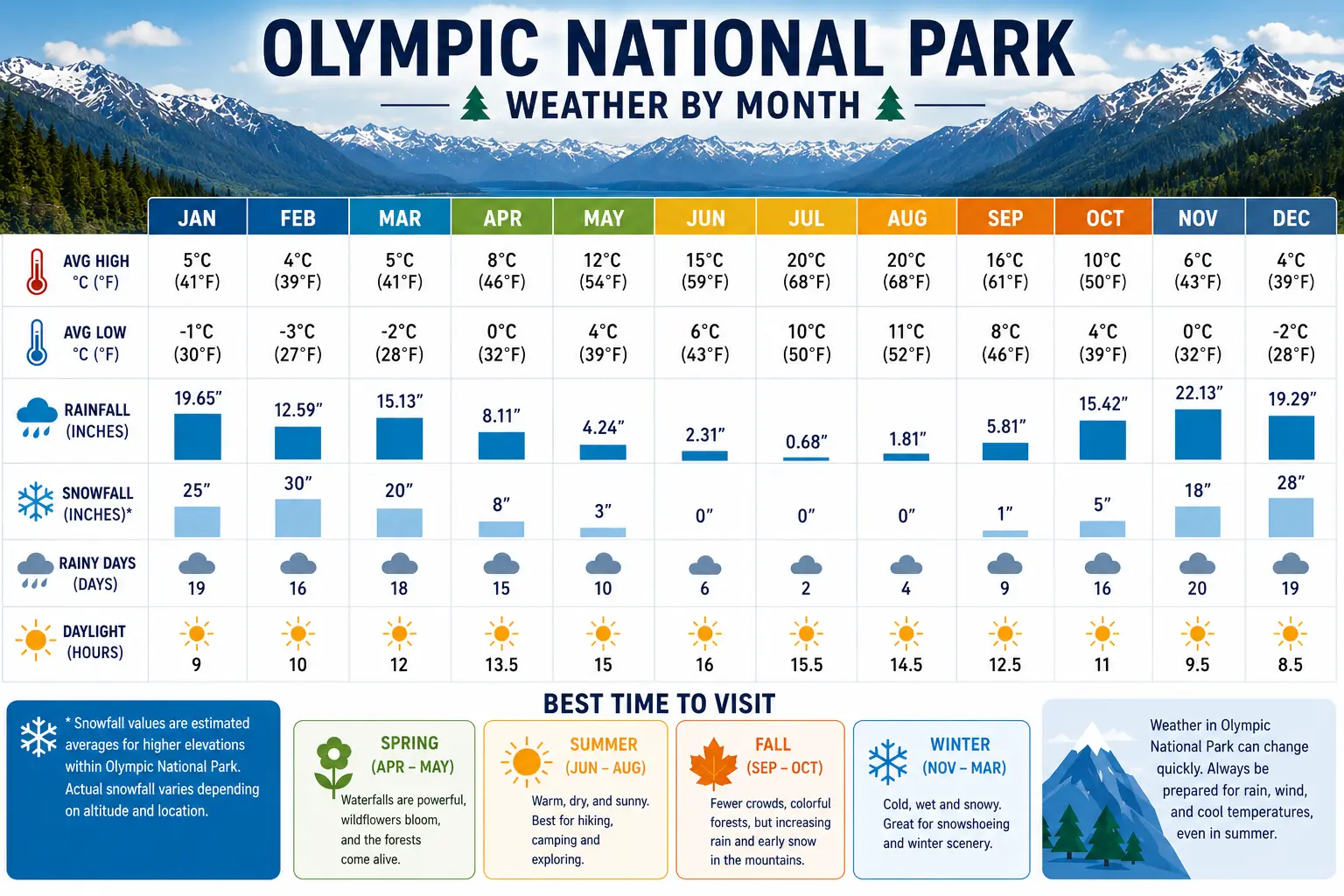
January
- Average high: 5°C (41°F)
- Average low: -1°C (30°F)
- Rainfall: 499.2 mm
- Snowfall: 25 inches
- Rainy days: 19
- Daylight: 9 hours
January is one of the coldest and wettest months in Olympic National Park. Heavy snow is common in mountain areas, especially around Hurricane Ridge, creating excellent winter recreation conditions.
February
- Average high: 4°C (39°F)
- Average low: -3°C (27°F)
- Rainfall: 319.8 mm
- Snowfall: 30 inches
- Rainy days: 16
- Daylight: 10 hours
February remains cold with frequent snowfall in higher elevations. Snow-covered mountain landscapes make this a beautiful time for snowshoeing and winter photography.
March
- Average high: 5°C (41°F)
- Average low: -2°C (28°F)
- Rainfall: 384.4 mm
- Snowfall: 20 inches
- Rainy days: 18
- Daylight: 12 hours
March begins the transition toward spring, although mountain snow remains deep across alpine regions.
April
- Average high: 8°C (46°F)
- Average low: 0°C (32°F)
- Rainfall: 205.9 mm
- Snowfall: 8 inches
- Rainy days: 15
- Daylight: 13.5 hours
Spring arrives gradually in April. Lower elevations become greener while snow continues melting in the mountains.
May
- Average high: 12°C (54°F)
- Average low: 4°C (39°F)
- Rainfall: 107.7 mm
- Snowfall: 3 inches
- Rainy days: 10
- Daylight: 15 hours
May offers mild weather, fewer rainy days, and improving hiking conditions throughout much of the park.
June
- Average high: 15°C (59°F)
- Average low: 6°C (43°F)
- Rainfall: 58.7 mm
- Snowfall: 0 inches
- Rainy days: 6
- Daylight: 16 hours
June marks the beginning of the dry season with comfortable temperatures and long daylight hours.
July
- Average high: 20°C (68°F)
- Average low: 10°C (50°F)
- Rainfall: 17.3 mm
- Snowfall: 0 inches
- Rainy days: 2
- Daylight: 15.5 hours
July is one of the best months to visit Olympic National Park thanks to warm temperatures, sunny weather, and minimal rainfall.
August
- Average high: 20°C (68°F)
- Average low: 11°C (52°F)
- Rainfall: 46 mm
- Snowfall: 0 inches
- Rainy days: 4
- Daylight: 14.5 hours
August continues the warm, dry summer weather pattern and is ideal for hiking, camping, and scenic drives.
September
- Average high: 16°C (61°F)
- Average low: 8°C (46°F)
- Rainfall: 147.4 mm
- Snowfall: 1 inch
- Rainy days: 9
- Daylight: 12.5 hours
September brings cooler temperatures and fewer crowds while still offering good hiking conditions.
October
- Average high: 10°C (50°F)
- Average low: 4°C (39°F)
- Rainfall: 391.6 mm
- Snowfall: 5 inches
- Rainy days: 16
- Daylight: 11 hours
October becomes wetter and cooler, with the first significant mountain snowfalls of the season.
November
- Average high: 6°C (43°F)
- Average low: 0°C (32°F)
- Rainfall: 562 mm
- Snowfall: 18 inches
- Rainy days: 20
- Daylight: 9.5 hours
November is typically the wettest month of the year. Heavy rain and increasing snowfall dominate higher elevations.
December
- Average high: 4°C (39°F)
- Average low: -2°C (28°F)
- Rainfall: 490 mm
- Snowfall: 28 inches
- Rainy days: 19
- Daylight: 8.5 hours
December brings classic winter weather with cold temperatures, heavy rain, and substantial snowfall in the mountains.
Olympic National Park Monthly Weather Table
| Month | Avg High | Avg Low | Rainfall (inches) | Snowfall (inches) | Daylight |
|---|---|---|---|---|---|
| Jan | 5°C (41°F) | -1°C (30°F) | 19.7 in | 25 in | 9 hrs |
| Feb | 4°C (39°F) | -3°C (27°F) | 12.6 in | 30 in | 10 hrs |
| Mar | 5°C (41°F) | -2°C (28°F) | 15.1 in | 20 in | 12 hrs |
| Apr | 8°C (46°F) | 0°C (32°F) | 8.1 in | 8 in | 13.5 hrs |
| May | 12°C (54°F) | 4°C (39°F) | 4.2 in | 3 in | 15 hrs |
| Jun | 15°C (59°F) | 6°C (43°F) | 2.3 in | 0 in | 16 hrs |
| Jul | 20°C (68°F) | 10°C (50°F) | 0.7 in | 0 in | 15.5 hrs |
| Aug | 20°C (68°F) | 11°C (52°F) | 1.8 in | 0 in | 14.5 hrs |
| Sep | 16°C (61°F) | 8°C (46°F) | 5.8 in | 1 in | 12.5 hrs |
| Oct | 10°C (50°F) | 4°C (39°F) | 15.4 in | 5 in | 11 hrs |
| Nov | 6°C (43°F) | 0°C (32°F) | 22.1 in | 18 in | 9.5 hrs |
| Dec | 4°C (39°F) | -2°C (28°F) | 19.3 in | 28 in | 8.5 hrs |
Best Time to Visit Olympic National Park
- Best for Hiking: July through September offers the warmest and driest conditions with the least rainfall.
- Best for Snow Activities: December through March is ideal for snowshoeing, winter hiking, and snowy mountain scenery.
- Best for Waterfalls and Rainforests: April and May provide lush green landscapes and strong waterfall flows due to spring snowmelt and rainfall.
Final Thoughts
Olympic National Park offers year-round beauty and constantly changing weather conditions. Summer provides the most reliable hiking weather, while winter transforms the mountains into a snowy wonderland. Understanding the monthly climate can help travelers choose the perfect season for their adventure.
20 FAQs About Olympic National Park Weather
1. What is the best month to visit Olympic National Park?
July and August are usually considered the best months to visit because the weather is warm, dry, and ideal for hiking and camping.
2. Does Olympic National Park get snow?
Yes. Higher elevations such as Hurricane Ridge receive heavy snowfall from late fall through early spring.
3. What is the warmest month in Olympic National Park?
July and August are typically the warmest months, with average highs around 20°C (68°F).
4. What is the coldest month in Olympic NP?
February is often the coldest month, with average lows near -3°C (27°F).
5. How much rain does Olympic National Park get?
The park receives significant rainfall, especially from October through March. November is usually the wettest month.
6. Does it rain every day in Olympic National Park?
Not every day, but rain is very common during fall and winter, particularly in rainforest areas.
7. What is the driest month in Olympic National Park?
July is generally the driest month, with very little rainfall.
8. Is Olympic National Park good for winter travel?
Yes. Winter offers beautiful snowy scenery, snowshoeing, and skiing opportunities at Hurricane Ridge.
9. Can you visit Olympic National Park in winter?
Yes, but weather conditions can affect road access, especially in mountain areas during snowstorms.
10. What should I wear in Olympic National Park?
Layered clothing is recommended year-round because temperatures and weather can change quickly.
11. Is summer crowded in Olympic National Park?
Yes. July and August are peak tourist months with the largest crowds and busiest campgrounds.
12. When does snow melt in Olympic National Park?
Snow usually begins melting in spring, but some high-elevation trails may remain snow-covered into early summer.
13. What is the weather like in spring?
Spring is cool and wet, with blooming wildflowers, powerful waterfalls, and fewer crowds.
14. Is Olympic National Park foggy?
Yes. Coastal and rainforest regions can experience frequent fog, especially during cooler months.
15. Does Olympic National Park have different climates?
Yes. The park includes alpine, rainforest, coastal, and lowland climates, creating varied weather conditions.
16. What is the rainiest season in Olympic National Park?
Fall and winter are the rainiest seasons, especially from October through January.
17. How many daylight hours does Olympic National Park get in summer?
During June and July, the park receives up to 16 hours of daylight.
18. Is Hurricane Ridge open year-round?
Hurricane Ridge is generally open year-round, but temporary winter closures can occur because of snow and weather conditions.
19. Are summers hot in Olympic National Park?
No. Summers are usually mild and comfortable rather than extremely hot.
20. What is the best season for hiking in Olympic National Park?
Summer and early fall provide the best hiking conditions due to warm temperatures and lower rainfall.