

Nestled in the mountains of western Montana, Missoula experiences a four-season climate with cold winters, warm summers, and beautiful transitional seasons. Because the city sits in a valley surrounded by mountains, the weather can change quickly and often differs slightly from other parts of Montana.
This month-by-month guide will help you understand temperature trends, precipitation, and seasonal conditions if you’re planning a trip or considering living in Missoula.
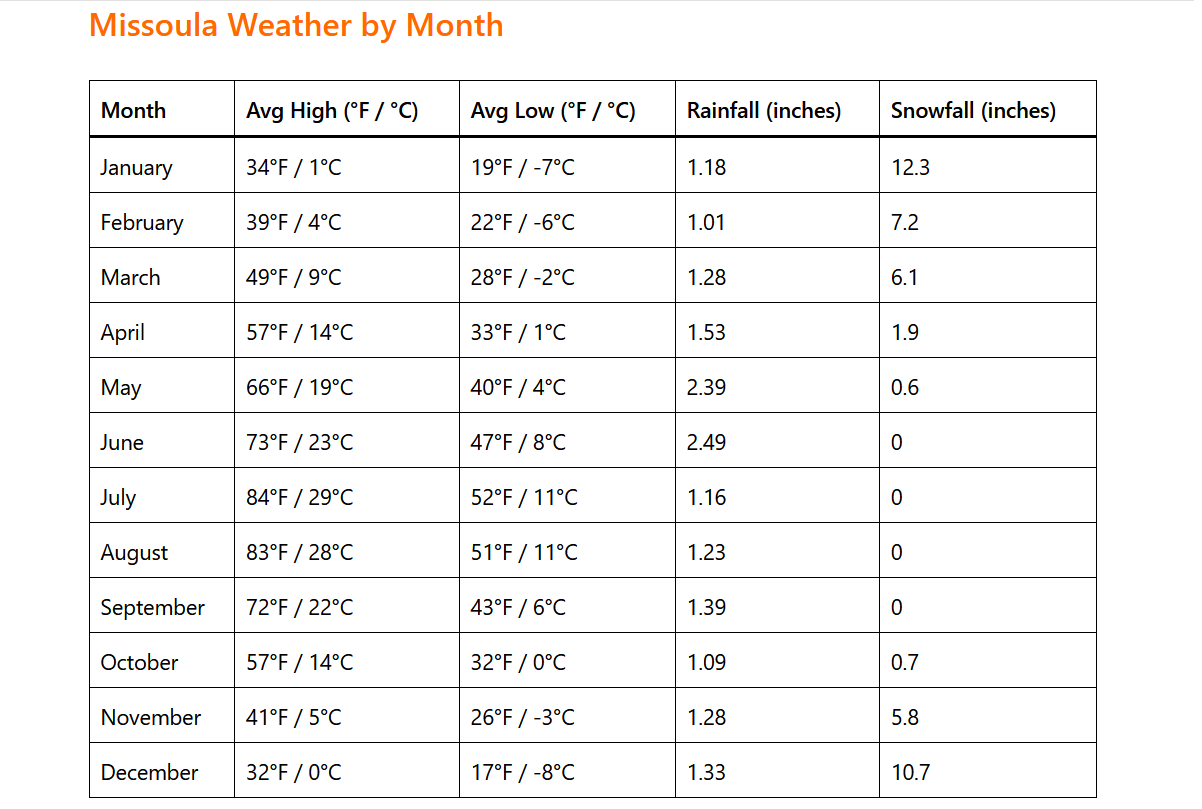
Missoula Weather by Month
| Month | Avg High (°F / °C) | Avg Low (°F / °C) | Rainfall (inches) | Snowfall (inches) |
|---|---|---|---|---|
| January | 34°F / 1°C | 19°F / -7°C | 1.18 | 12.3 |
| February | 39°F / 4°C | 22°F / -6°C | 1.01 | 7.2 |
| March | 49°F / 9°C | 28°F / -2°C | 1.28 | 6.1 |
| April | 57°F / 14°C | 33°F / 1°C | 1.53 | 1.9 |
| May | 66°F / 19°C | 40°F / 4°C | 2.39 | 0.6 |
| June | 73°F / 23°C | 47°F / 8°C | 2.49 | 0 |
| July | 84°F / 29°C | 52°F / 11°C | 1.16 | 0 |
| August | 83°F / 28°C | 51°F / 11°C | 1.23 | 0 |
| September | 72°F / 22°C | 43°F / 6°C | 1.39 | 0 |
| October | 57°F / 14°C | 32°F / 0°C | 1.09 | 0.7 |
| November | 41°F / 5°C | 26°F / -3°C | 1.28 | 5.8 |
| December | 32°F / 0°C | 17°F / -8°C | 1.33 | 10.7 |
January – Deep Winter
January is typically the coldest month in Missoula.
Average conditions
- Average high: ~32°F (0°C)
- Average low: ~18°F (-8°C)
- Snowfall: Frequent
Snow blankets the valley and surrounding mountains, making it a great time for skiing and snowboarding in nearby resorts. However, temperature inversions can trap cold air in the valley, causing foggy days.
February – Cold but Brighter
Winter continues through February, though daylight hours start increasing.
Average conditions
- Average high: ~38°F (3°C)
- Average low: ~21°F (-6°C)
Snow is still common, but sunny days appear more often. Outdoor winter recreation remains popular.
March – Early Signs of Spring
March is a transition month in Missoula.
Average conditions
- Average high: ~47°F (8°C)
- Average low: ~28°F (-2°C)
Snow begins melting, and you may experience a mix of rain, snow, and sunshine. Hiking trails start reopening toward the end of the month.
April – Spring Arrives
April brings noticeable warming and greener landscapes.
Average conditions
- Average high: ~57°F (14°C)
- Average low: ~34°F (1°C)
Rain showers are common, helping trees and wildflowers bloom across the valley.
May – Pleasant and Green
May is one of the most beautiful months in Missoula.
Average conditions
- Average high: ~67°F (19°C)
- Average low: ~42°F (6°C)
Snow has mostly disappeared from the valley, and outdoor activities like biking, hiking, and river floating become popular.
June – Early Summer
June marks the start of Missoula’s warm season.
Average conditions
- Average high: ~75°F (24°C)
- Average low: ~48°F (9°C)
Long daylight hours and comfortable temperatures make it ideal for exploring parks, trails, and rivers.
July – Warmest Month
July is the hottest and sunniest month of the year.
Average conditions
- Average high: ~85°F (29°C)
- Average low: ~52°F (11°C)
Rain is rare, and skies are usually clear. Festivals, outdoor concerts, and river recreation are common.
August – Warm and Dry
August stays warm but slightly cooler toward the end of the month.
Average conditions
- Average high: ~84°F (29°C)
- Average low: ~51°F (11°C)
Wildfire smoke can occasionally affect air quality during dry years.
September – Early Fall
September is widely considered one of the best months in Missoula.
Average conditions
- Average high: ~72°F (22°C)
- Average low: ~41°F (5°C)
The weather is comfortable, crowds thin out, and early fall colors begin appearing in the surrounding mountains.
October – Colorful Autumn
October brings cooler temperatures and vibrant fall foliage.
Average conditions
- Average high: ~57°F (14°C)
- Average low: ~32°F (0°C)
Frost becomes common, and occasional early snowstorms may occur by late October.
November – Start of Winter
Winter begins returning to Missoula.
Average conditions
- Average high: ~42°F (6°C)
- Average low: ~25°F (-4°C)
Snowfall becomes more frequent, and days grow noticeably shorter.
December – Snowy Holiday Season
December is cold, festive, and often snowy.
Average conditions
- Average high: ~33°F (1°C)
- Average low: ~19°F (-7°C)
The city lights up with holiday decorations, and snow creates a classic winter atmosphere.
Quick Climate Summary
| Season | Weather Characteristics |
|---|---|
| Winter (Dec–Feb) | Cold, snowy, occasional valley inversions |
| Spring (Mar–May) | Variable weather, rain showers, blooming trees |
| Summer (Jun–Aug) | Warm, sunny, dry with cool nights |
| Fall (Sep–Nov) | Crisp air, colorful foliage, gradual cooling |
Best Time to Visit Missoula
- June – September: Warm weather and outdoor activities
- September – October: Beautiful fall colors and fewer crowds
- December – February: Ideal for winter sports nearby
FAQs About Missoula Weather
1. What type of climate does Missoula have?
Missoula has a humid continental climate with four distinct seasons, including cold snowy winters and warm sunny summers.
2. What is the coldest month in Missoula?
January is usually the coldest month, with average lows around 19°F (-7°C).
3. What is the hottest month in Missoula?
July is typically the warmest month, with average highs around 84–85°F (29°C).
4. Does Missoula get a lot of snow?
Yes, Missoula receives around 40–50 inches of snow annually, mainly between November and March.
5. When does it start snowing in Missoula?
Snow can begin as early as October, but regular snowfall usually starts in November.
6. When does winter end in Missoula?
Winter conditions often last until March, though spring weather usually becomes noticeable by April.
7. What is spring weather like in Missoula?
Spring is mild but unpredictable, with a mix of rain, sunshine, and occasional late snowstorms.
8. Is summer in Missoula hot?
Summers are warm but rarely extreme. Daytime temperatures usually range between 75°F and 90°F (24–32°C).
9. Does Missoula have humid summers?
No, summers are generally dry with low humidity, making the warm temperatures feel comfortable.
10. What is the rainiest month in Missoula?
May and June usually receive the most rainfall during the year.
11. Does Missoula experience extreme weather?
Extreme weather is uncommon, but the area may occasionally experience winter storms, heat waves, or wildfire smoke in late summer.
12. How much rainfall does Missoula get each year?
Missoula receives around 17 inches (430 mm) of rain annually, which is relatively low compared to many U.S. cities.
13. Does Missoula experience temperature inversions?
Yes, winter temperature inversions can trap cold air in the valley, sometimes causing fog and colder conditions.
14. What is fall weather like in Missoula?
Autumn is cool and dry, with beautiful fall foliage and crisp temperatures, especially in September and October.
15. Is Missoula windy?
Missoula is generally less windy than many parts of Montana, thanks to the surrounding mountains.
16. What is the best time to visit Missoula for good weather?
The best weather usually occurs between June and September, when days are warm and sunny.
17. Can wildfire smoke affect Missoula weather?
Yes, wildfire smoke from regional fires can occasionally affect air quality during late summer.
18. How long does snow stay on the ground in Missoula?
Snow can remain on the ground for several weeks during winter, especially in January and February.
19. Does Missoula get thunderstorms?
Thunderstorms are possible during late spring and summer, though they are usually brief.
20. What are the average yearly temperatures in Missoula?
The annual average temperature in Missoula is around 46°F (8°C).