

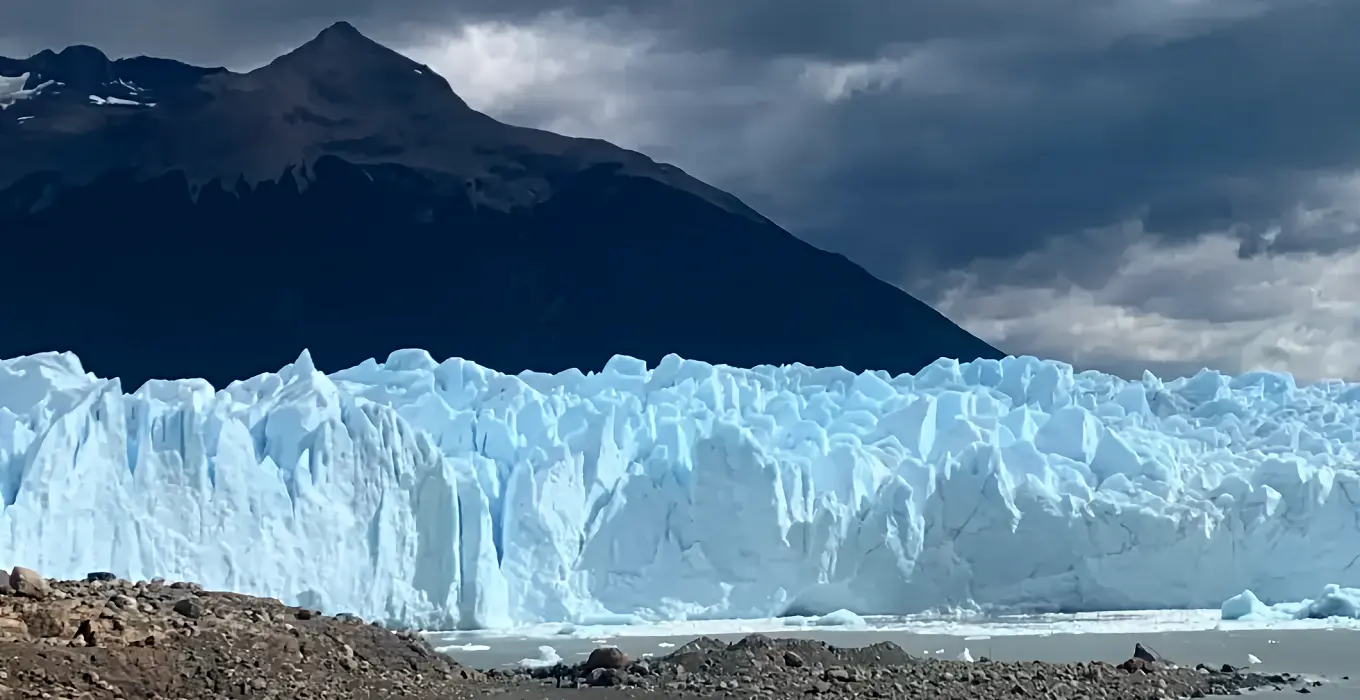
Los Glaciares National Park is one of the most spectacular protected areas in the world. Located in the Santa Cruz Province of southern Patagonia, Argentina, this UNESCO World Heritage Site covers 726,927 hectares of ancient forests, turquoise lakes, and massive ice fields. The park is home to 47 glaciers, including the famous Perito Moreno Glacier — one of the few advancing glaciers left on the planet.
Unlike many glaciers around the world that are rapidly retreating due to climate change, Perito Moreno maintains a remarkable state of equilibrium. It advances roughly 2 meters per day, and visitors can witness enormous chunks of ice breaking off and crashing into the waters of Lake Argentino — a phenomenon known as calving that draws hundreds of thousands of visitors each year.
Where Is Los Glaciares National Park?
Los Glaciares National Park sits along the border between Argentina and Chile in the southern Andes. The park stretches approximately 170 kilometers from north to south and is divided into two main sections:
The Southern Sector is accessed from the town of El Calafate, located 80 kilometers east of the park entrance. This section is home to Perito Moreno Glacier, Upsala Glacier, and Spegazzini Glacier. El Calafate serves as the main tourism hub with an international airport (FTE) receiving direct flights from Buenos Aires, Ushuaia, and Bariloche.
The Northern Sector is accessed from the village of El Chaltén, a 3-hour drive from El Calafate. This area is known as the trekking capital of Argentina, offering trails to Mount Fitz Roy (3,405 m) and Cerro Torre (3,128 m), two of the most iconic peaks in Patagonia.
The Glaciers: What You Need to Know
Perito Moreno Glacier
Perito Moreno is the undisputed star of Los Glaciares National Park. This massive wall of ice rises 60 meters above the surface of Lake Argentino and extends 30 kilometers back to the Southern Patagonian Ice Field — the third-largest reserve of fresh water on Earth after Antarctica and Greenland.
Key facts about Perito Moreno Glacier:
- Ice wall height: 60 meters above water level (with another 120 meters underwater)
- Width at the front: 5 kilometers
- Total length: 30 kilometers
- Average advance rate: approximately 2 meters per day
- Surface area: 250 square kilometers
- Age of the ice: some sections are estimated at 20,000 years old
The park has built an extensive network of steel walkways and viewing platforms on the Magallanes Peninsula, directly facing the glacier. From these platforms, visitors stand just 400 meters from the ice wall — close enough to hear the deep groaning sounds the glacier makes as it moves, and to feel the rush of air when massive ice blocks calve into the lake.
Upsala Glacier
Once the largest glacier in South America, Upsala has been retreating significantly in recent decades but remains an impressive sight at 53.7 kilometers long. It can only be accessed by boat from the western arm of Lake Argentino.
Spegazzini Glacier
Though less well-known, Spegazzini boasts the tallest ice wall in the park, reaching up to 135 meters above the waterline. It is typically visited as part of the same boat tour that includes Upsala.
Best Tours and Activities
Walkway Visit (Pasarelas)
The most accessible way to experience Perito Moreno is through the walkway system. These elevated steel platforms offer multiple viewpoints at different heights and distances from the glacier face. The full circuit takes approximately 1.5 hours and is suitable for visitors of all ages and fitness levels. No guide is required for the walkways, though guided options are available.
Minitrekking on the Glacier
For those looking for more adventure, minitrekking takes visitors directly onto the surface of Perito Moreno Glacier. After a short boat ride across Brazo Rico, participants strap on crampons and spend approximately 1.5 hours walking on the ice, exploring crevasses, seracs, and ice-blue lagoons. No previous experience is required, though participants must be between the ages of 10 and 65.
Big Ice (Extended Trekking)
Big Ice is a more demanding trek that goes deeper into the glacier for approximately 3.5 hours on the ice. This option is for visitors between 18 and 50 years old who want a more immersive glacier experience, including views of massive ice formations, moulins (vertical drainage tunnels), and panoramic views of the ice field.
Boat Tours
Several nautical excursions depart from Puerto Bandera, located 47 kilometers west of El Calafate. The most popular boat tour visits Upsala and Spegazzini glaciers in a full-day excursion that navigates through floating icebergs in the milky-blue waters of Lake Argentino. A shorter boat safari brings visitors directly to the south face of Perito Moreno Glacier.
Most visitors book Los Glaciares National Park tours through local operators based in El Calafate, which typically include transportation, guides, and park entry logistics.


El Chaltén: Trekking Capital
The northern section of the park around El Chaltén offers world-class trekking that is completely free of charge — no permits or guides required for the main trails. The two most popular routes are:
- Laguna de los Tres (Fitz Roy viewpoint): 25 km round trip, 8–10 hours, moderate to challenging difficulty
- Laguna Torre (Cerro Torre viewpoint): 18 km round trip, 6–7 hours, moderate difficulty
Park Entry Fees and Practical Information
Los Glaciares National Park charges an entry fee that must be paid at the park entrance. Fees are updated annually and vary for Argentine residents, Mercosur citizens, and international visitors. As of the 2024–2025 season, international visitor fees are approximately $25–35 USD, payable in Argentine pesos or by credit card.
Important practical details:
- Park hours: 8:00 AM to 6:00 PM (southern sector), trails accessible from 7:00 AM in El Chaltén
- Nearest airport: El Calafate Airport (FTE), with daily flights from Buenos Aires (3.5 hours)
- Distance from El Calafate to Perito Moreno Glacier: 80 km (approximately 1 hour 15 minutes by road)
- Distance from El Calafate to El Chaltén: 220 km (approximately 3 hours by road)
- Cell phone coverage: Limited to no coverage inside the park
- Facilities: Restaurant and restrooms available at the Perito Moreno walkway area
Best Time to Visit
Los Glaciares National Park is open year-round, but the optimal visiting season runs from October through April, when temperatures are milder and daylight hours extend well past 9:00 PM.
- Peak season (December–February): Summer in the Southern Hemisphere. Warmest temperatures (5–20°C / 41–68°F), longest days, and the highest tourist volume. Book tours and accommodations well in advance.
- Shoulder season (October–November and March–April): Fewer crowds, lower prices, and beautiful autumn colors in March. Temperatures range from 2–15°C (36–59°F).
- Winter (May–September): Many services are reduced or closed. Snow covers the trails in El Chaltén, but the Perito Moreno walkways remain open. Temperatures can drop to -10°C (14°F), and daylight is limited to about 8 hours.
What to Pack
Patagonian weather is notoriously unpredictable, with all four seasons potentially occurring in a single day. Regardless of the time of year, visitors should bring:
- Waterproof outer layer (jacket and pants)
- Multiple warm layers (fleece, thermal base layers)
- Sturdy hiking boots with ankle support
- Sunglasses with UV protection (essential — glacier reflection intensifies sunlight)
- Sunscreen (SPF 50+ recommended due to thin ozone layer in Patagonia)
- Windproof hat and gloves
- Refillable water bottle
History of the Park
Los Glaciares was established as a national park in 1937 by the Argentine government, making it one of the oldest national parks in South America. It was designated a UNESCO World Heritage Site in 1981, recognized for its exceptional natural beauty and its importance as a glaciological and geomorphological site.
The park’s name comes from the extensive glacial system that covers approximately 30% of its total area. This ice originates from the Southern Patagonian Ice Field, which straddles the border with Chile and feeds glaciers on both sides of the Andes.
Perito Moreno Glacier was named after Francisco Pascasio Moreno, a 19th-century Argentine explorer and naturalist who played a crucial role in surveying and mapping Patagonia. Moreno’s explorations helped establish Argentina’s territorial claims in the region, and his later donation of lands to the state contributed to the creation of the country’s national park system.
Conservation and Environmental Status
Los Glaciares faces growing environmental pressures from climate change. While Perito Moreno has maintained its equilibrium, many of the park’s other glaciers — including Upsala and Viedma — have experienced significant retreat over the past several decades. Scientists continue to monitor ice mass balance across the Southern Patagonian Ice Field, which contains an estimated 12,363 square kilometers of ice.
The park also plays a critical role in protecting the biodiversity of the Andean-Patagonian forest. Notable wildlife includes the Andean condor, guanacos, pumas, the endangered huemul (South Andean deer, which appears on Argentina’s national coat of arms), and the Magellanic woodpecker — the largest woodpecker species in South America.
Getting There
Most international visitors fly into Buenos Aires (EZE) and then take a domestic flight to El Calafate (FTE). Flight time is approximately 3.5 hours, with multiple daily departures operated by Aerolíneas Argentinas and FlyBondi.
From El Calafate, options for reaching the park include:
- Organized tours: Most tours include round-trip transportation from El Calafate hotels
- Rental car: Route 11 is a paved, well-maintained road from El Calafate to the glacier
- Public bus: Regular bus service runs to both the Perito Moreno walkways and El Chaltén
El Calafate itself offers a wide range of accommodations, restaurants, and services. The town has grown significantly as a tourist destination and now features options ranging from budget hostels to luxury lodges with lake views.