

Kobuk Valley National Park is one of Alaska’s most remote and fascinating wilderness destinations. Located north of the Arctic Circle, the park is famous for its massive sand dunes, caribou migrations, wild rivers, and untouched Arctic landscapes. Because of its northern location, weather conditions can change dramatically throughout the year.
If you are planning a trip, understanding Kobuk Valley National Park weather by month is essential. Temperatures, daylight hours, snow conditions, and accessibility vary significantly between seasons.
Kobuk Valley National Park Temperatures by Month
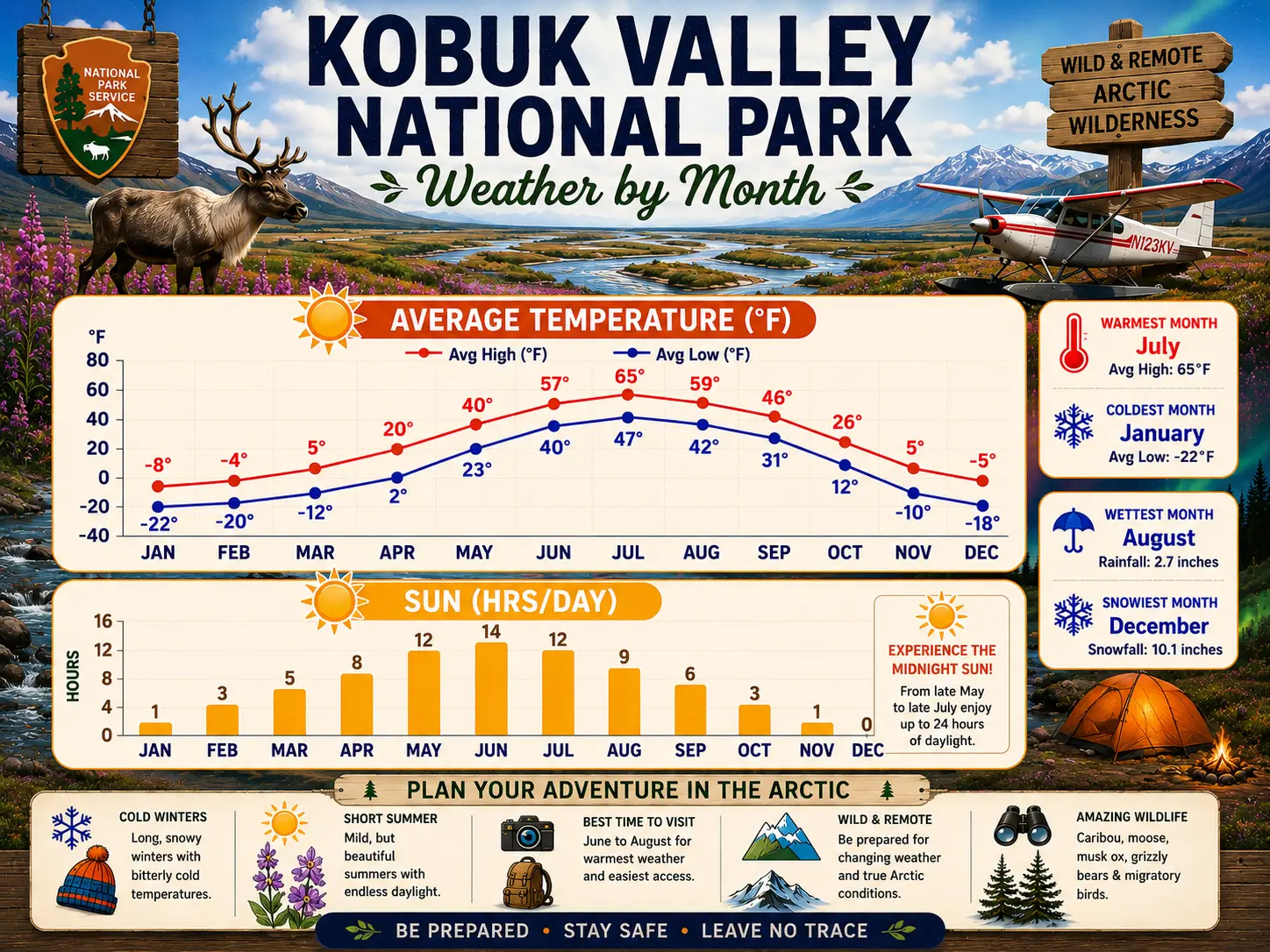
You can click the image below to view the full-size weather chart for Kobuk Valley NP.
January Weather
January is the coldest month of the year.
- Average high: -8°F (-22°C)
- Average low: -22°F (-30°C)
- Heavy snow cover
- Very limited daylight
Winter dominates the landscape, with frozen rivers and deep snow throughout the region. Travel is extremely difficult and generally limited to experienced winter adventurers using snowmobiles or bush planes.
What to Expect
- Arctic conditions
- Frequent snowstorms
- Extremely cold wind chills
- Potential northern lights viewing
February Weather
February remains intensely cold, though daylight slowly increases.
- Average high: -4°F (-20°C)
- Average low: -20°F (-29°C)
Snow continues to blanket the park, and temperatures remain dangerous for unprepared visitors.
Best For
- Aurora viewing
- Winter photography
- Arctic survival experiences
March Weather
March brings slightly milder conditions and more sunlight.
- Average high: 5°F (-15°C)
- Average low: -12°F (-24°C)
Snow still dominates the terrain, but longer days improve travel opportunities.
Highlights
- Brighter skies
- Better visibility
- Excellent winter scenery
April Weather
April marks the transition toward spring.
- Average high: 20°F (-7°C)
- Average low: 2°F (-17°C)
Snow begins melting in some lower elevations, though winter conditions persist across most of the park.
Conditions
- Mixed snow and ice
- Longer daylight hours
- Variable weather patterns
May Weather
May is one of the biggest transition months.
- Average high: 40°F (4°C)
- Average low: 23°F (-5°C)
Spring thaw accelerates, rivers begin opening, and wildlife activity increases.
Why Visit in May?
- Emerging greenery
- Migrating wildlife
- Fewer insects than summer
June Weather
June brings the beginning of the short Arctic summer.
- Average high: 57°F (14°C)
- Average low: 40°F (4°C)
The park experiences nearly continuous daylight thanks to the midnight sun.
Popular Activities
- Hiking
- Wildlife viewing
- River trips
- Photography
Mosquitoes become increasingly active during this month.
July Weather
July is the warmest month in Kobuk Valley National Park.
- Average high: 65°F (18°C)
- Average low: 47°F (8°C)
This is peak travel season because temperatures are relatively mild and rivers are fully accessible.
Summer Features
- Warmest weather of the year
- Green tundra landscapes
- High mosquito activity
- Best hiking conditions
August Weather
August remains relatively warm but signals the beginning of fall.
- Average high: 59°F (15°C)
- Average low: 42°F (6°C)
Rain becomes more common, and tundra vegetation begins changing color.
Highlights
- Beautiful autumn colors
- Caribou migration opportunities
- Cooler evenings
September Weather
September is one of the best months for photography.
- Average high: 46°F (8°C)
- Average low: 31°F (-1°C)
Fall colors peak early in the month, while frost and occasional snow return later.
Ideal For
- Scenic landscapes
- Wildlife observation
- Cooler hiking weather
October Weather
Winter starts returning quickly in October.
- Average high: 26°F (-3°C)
- Average low: 12°F (-11°C)
Snowfall becomes frequent, and daylight decreases rapidly.
Conditions
- Early winter storms
- Frozen rivers beginning to form
- Colder hiking conditions
November Weather
November is dark, cold, and snowy.
- Average high: 5°F (-15°C)
- Average low: -10°F (-23°C)
The park enters deep winter once again.
Travel Notes
- Limited accessibility
- Harsh Arctic weather
- Excellent northern lights potential
December Weather
December brings polar winter conditions.
- Average high: -5°F (-21°C)
- Average low: -18°F (-28°C)
Long nights and severe cold define the season.
Best Features
- Snow-covered Arctic landscapes
- Aurora borealis opportunities
- Remote wilderness solitude
Kobuk Valley National Park Weather by Month
| Month | Avg High (°F) | Avg Low (°F) | Sun (hrs/day) | Snowfall (inches) |
|---|---|---|---|---|
| January | -8 | -22 | 1 | 8.5 |
| February | -4 | -20 | 3 | 7.2 |
| March | 5 | -12 | 5 | 6.8 |
| April | 20 | 2 | 8 | 4.5 |
| May | 40 | 23 | 12 | 2.0 |
| June | 57 | 40 | 14 | 0.0 |
| July | 65 | 47 | 12 | 0.0 |
| August | 59 | 42 | 9 | 0.0 |
| September | 46 | 31 | 6 | 1.2 |
| October | 26 | 12 | 3 | 7.0 |
| November | 5 | -10 | 1 | 9.3 |
| December | -5 | -18 | 0 | 10.1 |
Best Time to Visit Kobuk Valley National Park
The best time to visit depends on your interests:
| Season | Best For |
|---|---|
| June–July | Hiking, river trips, warm weather |
| August–September | Fall colors, wildlife viewing |
| Winter Months | Northern lights, Arctic adventures |
Most visitors choose June through August because temperatures are milder and access is easier.
FAQs About Kobuk Valley National Park Weather
1. What is the best time to visit Kobuk Valley National Park?
The best time to visit is from June through August when temperatures are milder, rivers are accessible, and daylight is nearly continuous.
2. How cold does Kobuk Valley National Park get in winter?
Winter temperatures can fall below -20°F (-29°C), with wind chills making conditions even colder.
3. What is the warmest month in Kobuk Valley National Park?
July is typically the warmest month, with average highs around 65°F (18°C).
4. Does it snow year-round in Kobuk Valley National Park?
Snow can occur during most months, but significant snowfall mainly happens from September through May.
5. What is the coldest month in the park?
January is generally the coldest month, with average lows near -22°F (-30°C).
6. How much daylight does the park get in summer?
During June and early July, the park experiences nearly 24 hours of daylight due to the Midnight Sun.
7. Does Kobuk Valley National Park experience polar night?
The park does not experience complete polar night, but winter days are extremely short with very limited sunlight.
8. Is summer weather predictable in Kobuk Valley National Park?
No. Summer weather can change rapidly, with sunshine, rain, and cold winds all possible within the same day.
9. How rainy is Kobuk Valley National Park?
The park is relatively dry compared to many regions, though rainfall is most common during July and August.
10. Are mosquitoes bad during summer?
Yes. Mosquitoes can be extremely active from June through August, especially near wetlands and rivers.
11. Can you see the northern lights in Kobuk Valley National Park?
Yes. Aurora borealis viewing is possible from late fall through early spring on clear nights.
12. What should I pack for summer weather?
Visitors should bring waterproof layers, warm clothing, hiking boots, insect repellent, and rain gear.
13. What should I pack for winter weather?
Winter travelers need Arctic-grade insulated clothing, snow gear, emergency supplies, and extreme cold-weather equipment.
14. Does the park experience strong winds?
Yes. Arctic winds can make temperatures feel much colder throughout the year.
15. Is September a good time to visit?
Yes. September offers beautiful fall tundra colors, cooler hiking weather, and fewer mosquitoes.
16. How hot does it get in summer?
Temperatures occasionally rise above 70°F (21°C), though warm days are usually brief.
17. Can weather affect access to the park?
Absolutely. Bush plane flights and river travel can be delayed or canceled due to fog, storms, or strong winds.
18. Are there thunderstorms in Kobuk Valley National Park?
Thunderstorms are rare but can occur during the warmer summer months.
19. What season has the most snowfall?
Late fall and early winter typically bring the heaviest snowfall accumulations.
20. Is climate change affecting Kobuk Valley National Park weather?
Yes. Rising Arctic temperatures are affecting permafrost, river conditions, wildlife patterns, and seasonal weather trends in the region.
Final Thoughts
Weather in Kobuk Valley National Park is highly seasonal and can be extreme at any time of year. Summer offers the most accessible conditions, while winter provides a true Arctic wilderness experience. Careful planning, proper gear, and awareness of rapidly changing weather are essential for any trip to this remote Alaska national park.