

Located on Alaska’s rugged southern coast near Seward, Kenai Fjords National Park has a cool, maritime climate shaped by the Gulf of Alaska. Expect frequent rain, cloudy skies, and relatively mild temperatures compared to Alaska’s interior. Here’s a month-by-month breakdown to help you plan your visit.
Kenai Fjords National Park Temperatures by Month
You can click the image below to view the full-size weather chart for Kenai Fjords National Park.
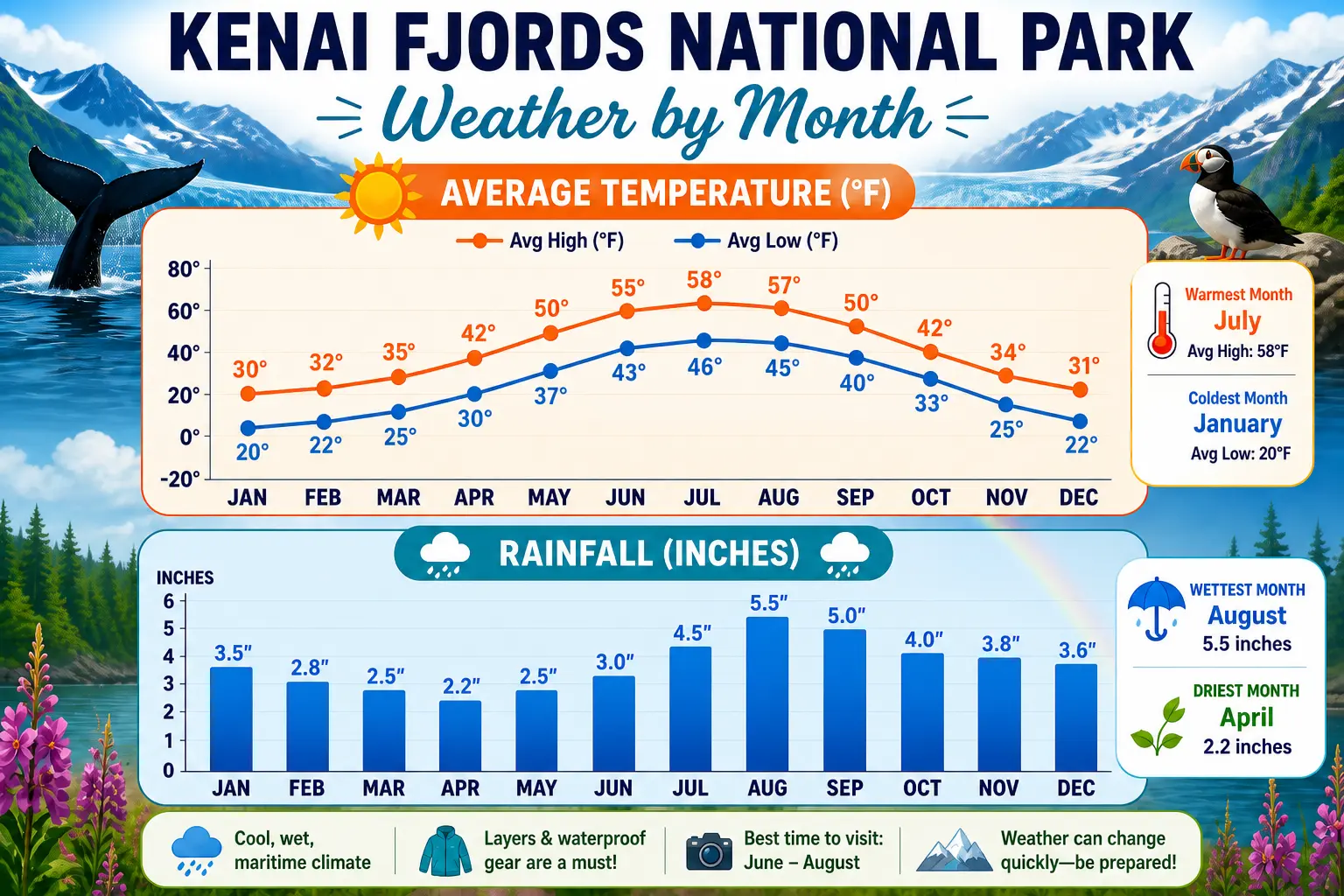
January
- Avg High: 30°F (-1°C)
- Avg Low: 20°F (-7°C)
- Conditions: Cold, dark, and snowy
January is deep winter. Snow blankets the park, and daylight is limited. Most visitor services are closed, but it’s a quiet time for backcountry exploration if you’re experienced.
February
- Avg High: 32°F (0°C)
- Avg Low: 22°F (-6°C)
- Conditions: Cold with increasing daylight
Snow continues, but slightly longer days make outdoor activities like skiing more feasible.
March
- Avg High: 35°F (2°C)
- Avg Low: 25°F (-4°C)
- Conditions: Late winter, improving visibility
Snow remains, but clearer skies are more common. Wildlife begins to stir.
April
- Avg High: 42°F (6°C)
- Avg Low: 30°F (-1°C)
- Conditions: Transition to spring
Snow starts melting at lower elevations. Rain becomes more frequent than snow.
May
- Avg High: 50°F (10°C)
- Avg Low: 37°F (3°C)
- Conditions: Cool and increasingly wet
Visitor season begins. Wildlife activity increases, and boat tours start operating.
June
- Avg High: 55°F (13°C)
- Avg Low: 43°F (6°C)
- Conditions: Mild, rainy, long daylight hours
One of the best months to visit. Expect lush scenery, active glaciers, and abundant wildlife.
July
- Avg High: 58°F (14°C)
- Avg Low: 46°F (8°C)
- Conditions: Warmest and wettest month
Peak tourist season. Frequent (rain), but excellent conditions for kayaking and cruises.
August
- Avg High: 57°F (14°C)
- Avg Low: 45°F (7°C)
- Conditions: Wet and slightly cooler
Still a great time for wildlife viewing, especially marine life like whales and sea otters.
September
- Avg High: 50°F (10°C)
- Avg Low: 40°F (4°C)
- Conditions: Cooler, fewer crowds
Fall colors appear. Rain remains common, and some services begin to close.
October
- Avg High: 42°F (6°C)
- Avg Low: 33°F (1°C)
- Conditions: Cold, increasing snow
Winter begins returning. Rain mixes with snow, especially at higher elevations.
November
- Avg High: 34°F (1°C)
- Avg Low: 25°F (-4°C)
- Conditions: Snowy and dark
Limited daylight and frequent snowstorms. Most facilities are closed.
December
- Avg High: 31°F (-1°C)
- Avg Low: 22°F (-6°C)
- Conditions: Cold, snowy, very short days
A true winter environment. Best suited for experienced adventurers.
| Month | Avg High (°F) | Avg Low (°F) | Rainfall (inches) | Snowfall (inches) |
|---|---|---|---|---|
| January | 30 | 20 | 3.5 | 35 |
| February | 32 | 22 | 2.8 | 28 |
| March | 35 | 25 | 2.5 | 25 |
| April | 42 | 30 | 2.2 | 15 |
| May | 50 | 37 | 2.5 | 5 |
| June | 55 | 43 | 3.0 | 0 |
| July | 58 | 46 | 4.5 | 0 |
| August | 57 | 45 | 5.5 | 0 |
| September | 50 | 40 | 5.0 | 2 |
| October | 42 | 33 | 4.0 | 10 |
| November | 34 | 25 | 3.8 | 20 |
| December | 31 | 22 | 3.6 | 30 |
Notes:
- Rainfall peaks in late summer (July–September).
- Snowfall is highest in winter, especially January–March.
- Transitional months (April, October) can have a mix of rain and snow.
Key Weather Takeaways
- Wet Climate: Kenai Fjords is part of a temperate rainforest—rain is common year-round.
- Mild Summers: Rarely exceeds 60°F (15°C), even in peak season.
- Snowy Winters: Heavy snowfall, especially from November to March.
- Best Time to Visit: June–August for wildlife, accessibility, and milder conditions.
20 FAQs about weather at Kenai Fjords National Park
1. What is the weather like in Kenai Fjords National Park?
Kenai Fjords has a cool, maritime climate with frequent rain, mild summers, and snowy winters.
2. What is the best time to visit Kenai Fjords National Park for good weather?
The best weather is typically from June to August, with milder temperatures and longer daylight hours.
3. Does it rain a lot in Kenai Fjords National Park?
Yes, the park is part of a temperate rainforest, so rain is common year-round, especially in late summer.
4. What is the warmest month in Kenai Fjords National Park?
July is usually the warmest month, with average highs around 58°F (14°C).
5. What is the coldest month in Kenai Fjords National Park?
January is typically the coldest, with temperatures often dropping below 20°F (-6°C).
6. Does Kenai Fjords National Park get snow?
Yes, the park receives significant snowfall, especially from November through March.
7. Can you visit Kenai Fjords National Park in winter?
Yes, but access is limited. Winter visits require preparation for snow, cold, and reduced services.
8. How much rainfall does Kenai Fjords National Park get?
Rainfall varies by month but generally ranges from 2 to 5.5 inches per month.
9. Is Kenai Fjords National Park foggy?
Yes, fog is common, especially along the coast and near glaciers.
10. How windy is Kenai Fjords National Park?
Coastal winds can be strong, particularly during storms and in exposed marine areas.
11. What should I wear for Kenai Fjords National Park weather?
Layered clothing, waterproof gear, and sturdy footwear are essential due to changing conditions.
12. Are summers hot in Kenai Fjords National Park?
No, summers are cool and mild, rarely exceeding 60°F (15°C).
13. What is spring weather like in Kenai Fjords National Park?
Spring (April–May) is a transition period with melting snow and increasing rainfall.
14. What is fall weather like in Kenai Fjords National Park?
Fall (September–October) brings cooler temperatures, frequent rain, and fewer crowds.
15. Does Kenai Fjords National Park have long daylight hours?
Yes, in summer, daylight can last up to 18–20 hours per day.
16. How dark is winter in Kenai Fjords National Park?
Winter days are short, with only a few hours of daylight in December and January.
17. Is Kenai Fjords National Park weather predictable?
No, weather can change quickly, especially due to coastal and glacial influences.
18. Does the ocean affect the weather in Kenai Fjords National Park?
Yes, the nearby Gulf of Alaska moderates temperatures and increases humidity and precipitation.
19. Is it possible to see glaciers in all weather conditions?
Yes, but visibility may be reduced during rain, fog, or storms.
20. When is the driest time to visit Kenai Fjords National Park?
Spring (especially April) tends to be slightly drier compared to late summer months.