

Indiana Dunes National Park sits along the southern shore of Lake Michigan, and its weather is heavily influenced by the lake. That means cooler springs, milder falls, lake-effect snow in winter, and refreshing breezes in summer. If you’re planning a visit, understanding the month-by-month weather will help you pick the best time for hiking, beach days, or photography.
Indiana Dunes National Park Weather by Month
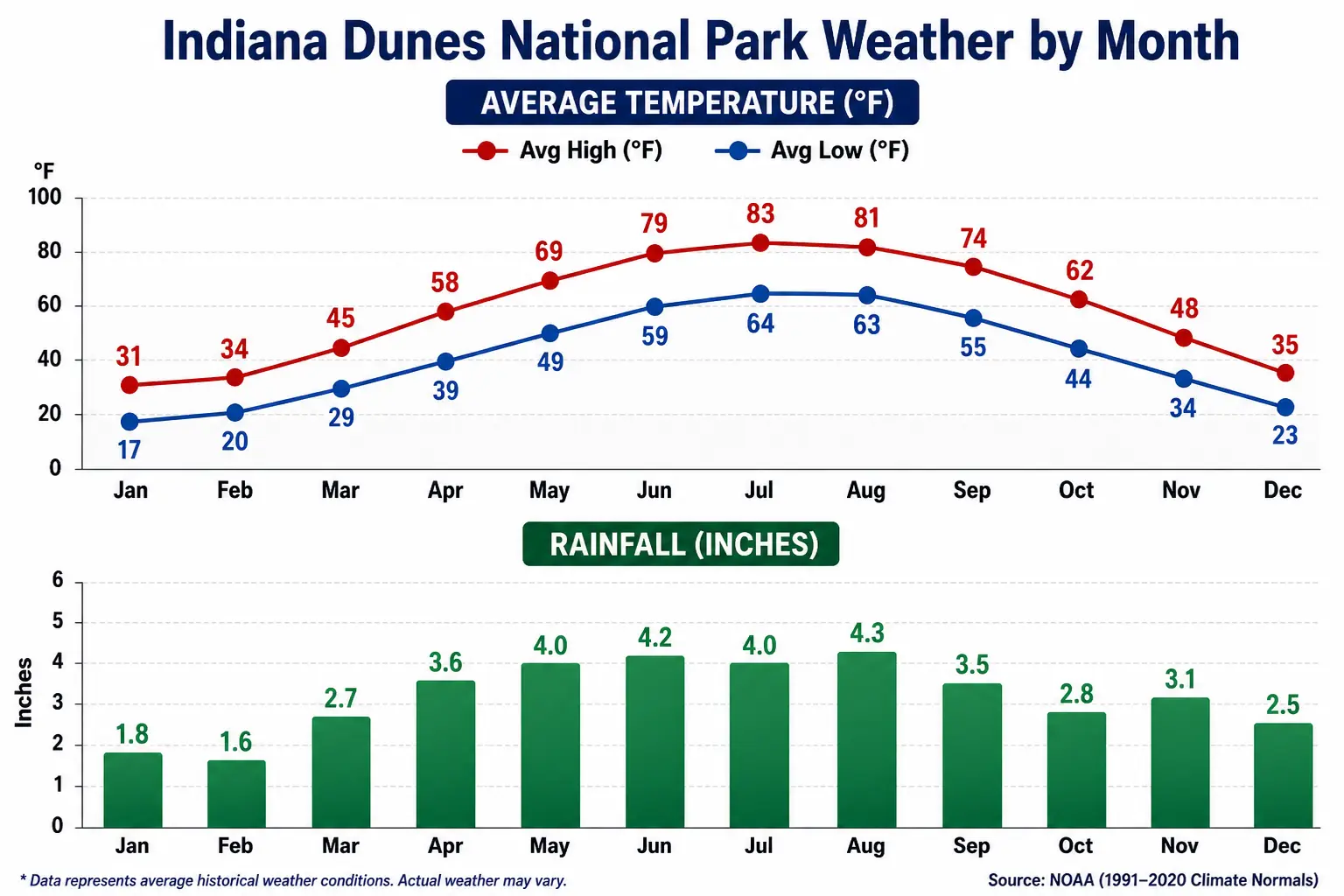
You can click the image below to view the full-size weather chart for Indiana Dunes National Park.
January
Winter is in full swing. Temperatures typically range from -8°C to 1°C (18°F to 34°F). Snow is common due to lake-effect systems, and the dunes often look like a frozen coastal landscape.
Best for: Snowshoeing, quiet scenic views
Watch for: Strong winds and icy trails
February
Very similar to January, but slightly longer daylight hours. Temperatures stay cold at -7°C to 2°C (19°F to 36°F). Snowfall continues, sometimes heavy.
Best for: Winter photography
Watch for: Wind chill from Lake Michigan
March
A transitional month. Temperatures rise to -2°C to 8°C (28°F to 46°F). Snow begins to melt, but conditions can still be unpredictable.
Best for: Early spring hikes
Watch for: Muddy trails and sudden cold snaps
April
Spring arrives slowly. Expect 4°C to 14°C (40°F to 58°F). Rain becomes more frequent, and vegetation starts to bloom.
Best for: Birdwatching (migration season)
Watch for: Rainy, chilly days
May
One of the most pleasant months, with temperatures between 10°C and 20°C (50°F to 68°F). The park becomes greener, but Lake Michigan keeps the air cooler than inland areas.
Best for: Hiking and wildlife viewing
Watch for: Cool lake breezes
June
Early summer brings 16°C to 25°C (60°F to 77°F). It’s warm but not overly hot, making it ideal for outdoor activities.
Best for: Hiking, biking, and early beach visits
Watch for: Occasional thunderstorms
July
The warmest month. Temperatures range from 19°C to 28°C (66°F to 82°F), sometimes higher. The lake moderates extreme heat, making it more comfortable than inland cities.
Best for: Swimming, beach days
Watch for: Humidity and crowded beaches
August
Similar to July, with temperatures around 18°C to 27°C (65°F to 81°F). Water temperatures are at their warmest.
Best for: Water activities and sunsets over Lake Michigan
Watch for: Late-summer storms
September
Arguably one of the best months to visit. Temperatures cool to 14°C to 24°C (57°F to 75°F). Crowds decrease, and conditions are comfortable.
Best for: Hiking, photography
Watch for: Occasional cool evenings
October
Fall colors take over. Expect 8°C to 18°C (46°F to 64°F). Crisp air and fewer visitors make it a favorite month.
Best for: Fall foliage and scenic walks
Watch for: Rapid temperature drops
November
Late fall turns colder, with 2°C to 10°C (36°F to 50°F). Trees lose leaves, and the park becomes quieter.
Best for: Solitude and wildlife spotting
Watch for: Gray skies and chilly winds
December
Winter returns. Temperatures drop to -4°C to 4°C (25°F to 39°F). Snow begins accumulating again, especially with lake-effect patterns.
Best for: Peaceful winter landscapes
Watch for: Snowstorms and icy conditions
| Month | Avg High (°F) | Avg Low (°F) | Rainfall (inches) | Snowfall (inches) |
|---|---|---|---|---|
| January | 31 | 17 | 1.8 | 20.0 |
| February | 34 | 20 | 1.6 | 14.0 |
| March | 45 | 29 | 2.7 | 5.0 |
| April | 58 | 39 | 3.6 | 1.0 |
| May | 69 | 49 | 4.0 | 0.0 |
| June | 79 | 59 | 4.2 | 0.0 |
| July | 83 | 64 | 4.0 | 0.0 |
| August | 81 | 63 | 4.3 | 0.0 |
| September | 74 | 55 | 3.5 | 0.0 |
| October | 62 | 44 | 2.8 | 0.2 |
| November | 48 | 34 | 3.1 | 3.0 |
| December | 35 | 23 | 2.5 | 12.0 |
Notes:
- Wettest months: Late spring through summer (May–August)
- Snowiest months: January and February due to lake-effect snow from Lake Michigan
- Driest period: Winter months tend to have lower precipitation overall (though more snow)
Best Time to Visit
- Summer (June–August): Ideal for beaches and swimming
- Fall (September–October): Best overall weather and scenery
- Spring (April–May): Great for birdwatching
- Winter (December–February): Quiet but cold and snowy
Weather Tips for Visitors
- Lake Effect Matters: Temperatures near Lake Michigan can feel cooler than forecasts suggest.
- Layer Up: Weather can change quickly, especially in spring and fall.
- Check Conditions: Trails may be sandy, muddy, or icy depending on the season.
20 FAQs about the weather at Indiana Dunes National Park
1. What is the weather like at Indiana Dunes National Park?
The park has a humid continental climate with cold winters, warm summers, and moderate precipitation year-round.
2. How does Lake Michigan affect the weather?
Lake Michigan moderates temperatures, making summers cooler and winters slightly milder, while also causing lake-effect snow.
3. What is the hottest month at Indiana Dunes National Park?
July is typically the hottest month, with average highs around the low 80s °F.
4. What is the coldest month?
January is usually the coldest, with average lows in the teens °F.
5. When is the best time to visit for good weather?
September and October offer comfortable temperatures, fewer crowds, and beautiful scenery.
6. Does it snow a lot in the park?
Yes, especially in winter due to lake-effect snow, with January often being the snowiest month.
7. How much rainfall does the park get annually?
The park receives around 35–40 inches of precipitation per year, fairly evenly distributed.
8. What are summers like?
Summers are warm and humid, with temperatures typically between 70°F and 85°F, ideal for beach activities.
9. Are thunderstorms common?
Yes, thunderstorms are frequent in late spring and summer.
10. Is spring a good time to visit?
Spring can be unpredictable, with cool temperatures and rain, but it’s great for birdwatching.
11. How windy is the park?
It can be quite windy, especially near the lakeshore, where breezes are stronger.
12. Does the park experience extreme weather?
Occasionally, the area can experience strong storms, heatwaves, or winter blizzards.
13. What is fall weather like?
Fall is mild and pleasant, with crisp air and colorful foliage.
14. Is humidity high in the summer?
Yes, humidity levels can be high during summer months.
15. When does snow typically start?
Snow usually begins in late November or December.
16. Are winters harsh?
Winters can be cold and snowy, but the lake can slightly moderate extreme temperatures.
17. What should I wear when visiting?
Layered clothing is recommended year-round due to changing conditions.
18. Is the lake water warm for swimming?
Water temperatures are warmest in July and August but can still feel cool.
19. Does fog occur in the park?
Yes, fog can form near Lake Michigan, especially during seasonal transitions.
20. Can weather change quickly?
Yes, conditions can shift rapidly, so it’s important to check forecasts before visiting.