


Iceland’s weather is famously unpredictable, but understanding the monthly climate can help you plan the perfect trip. Despite its name, Iceland has a relatively mild climate thanks to the Gulf Stream, though conditions change quickly throughout the year. Below is a month-by-month breakdown of Iceland’s weather, temperatures, daylight, and travel highlights.
Iceland Weather by Month
January
- Average temperature: -3°C to 2°C (27°F to 36°F)
- Daylight: ~4–5 hours
- Weather: Cold, snowy, windy
January is the heart of winter in Iceland. Expect snow-covered landscapes, icy roads, and frequent storms. This is one of the best months for Northern Lights viewing, but driving can be challenging.
Best for: Northern Lights, winter photography, ice caves
February
- Average temperature: -2°C to 3°C (28°F to 37°F)
- Daylight: ~7–10 hours
- Weather: Cold with snow and occasional rain
February is slightly brighter than January but still very wintry. Weather remains unstable, with snowstorms and strong winds possible.
Best for: Northern Lights, glacier tours
March
- Average temperature: -2°C to 4°C (28°F to 39°F)
- Daylight: ~10–13 hours
- Weather: Cold, mix of snow and rain
March marks the transition from winter to spring. Snow is still common, but longer daylight hours make travel easier.
Best for: Northern Lights (early March), fewer tourists
April
- Average temperature: 0°C to 7°C (32°F to 45°F)
- Daylight: ~13–16 hours
- Weather: Unpredictable, melting snow, rain
Spring begins, but winter can linger. Roads gradually reopen, and landscapes start to thaw.
Best for: Budget travel, early spring scenery
May
- Average temperature: 4°C to 10°C (39°F to 50°F)
- Daylight: ~16–20 hours
- Weather: Mild, occasional rain
May brings greener landscapes and more stable weather. Snow is mostly gone in lowland areas.
Best for: Hiking at lower elevations, fewer crowds
June
- Average temperature: 8°C to 15°C (46°F to 59°F)
- Daylight: Nearly 24 hours (Midnight Sun)
- Weather: Cool, relatively dry
June is one of the best months to visit Iceland. The Midnight Sun allows for sightseeing at any hour.
Best for: Road trips, photography, hiking
July
- Average temperature: 10°C to 17°C (50°F to 63°F)
- Daylight: 20–24 hours
- Weather: Mild, occasional rain
July is the warmest and most popular month. High demand means higher prices and more tourists.
Best for: Festivals, Highlands access, camping
August
- Average temperature: 9°C to 15°C (48°F to 59°F)
- Daylight: ~16–18 hours
- Weather: Mild, increasing rain
August remains excellent for travel, with slightly cooler temperatures and fewer crowds than July.
Best for: Hiking, whale watching, puffin viewing (early August)
September
- Average temperature: 5°C to 11°C (41°F to 52°F)
- Daylight: ~12–14 hours
- Weather: Cooler, more rain and wind
Autumn arrives with changing colors and fewer tourists. Northern Lights season begins late in the month.
Best for: Photography, Northern Lights, shoulder-season travel
October
- Average temperature: 2°C to 7°C (36°F to 45°F)
- Daylight: ~8–11 hours
- Weather: Windy, rain, early snow
October is unpredictable, with increasing storms and possible snow in northern areas.
Best for: Northern Lights, dramatic landscapes
November
- Average temperature: -1°C to 4°C (30°F to 39°F)
- Daylight: ~5–8 hours
- Weather: Cold, snow and rain
Winter starts to settle in. Roads may close, and travel requires flexibility.
Best for: Northern Lights, winter scenery
December
- Average temperature: -2°C to 3°C (28°F to 37°F)
- Daylight: ~4–5 hours
- Weather: Cold, snowy, festive
December is dark but magical, with Christmas lights and snow-covered towns.
Best for: Winter holidays, ice caves, Northern Lights
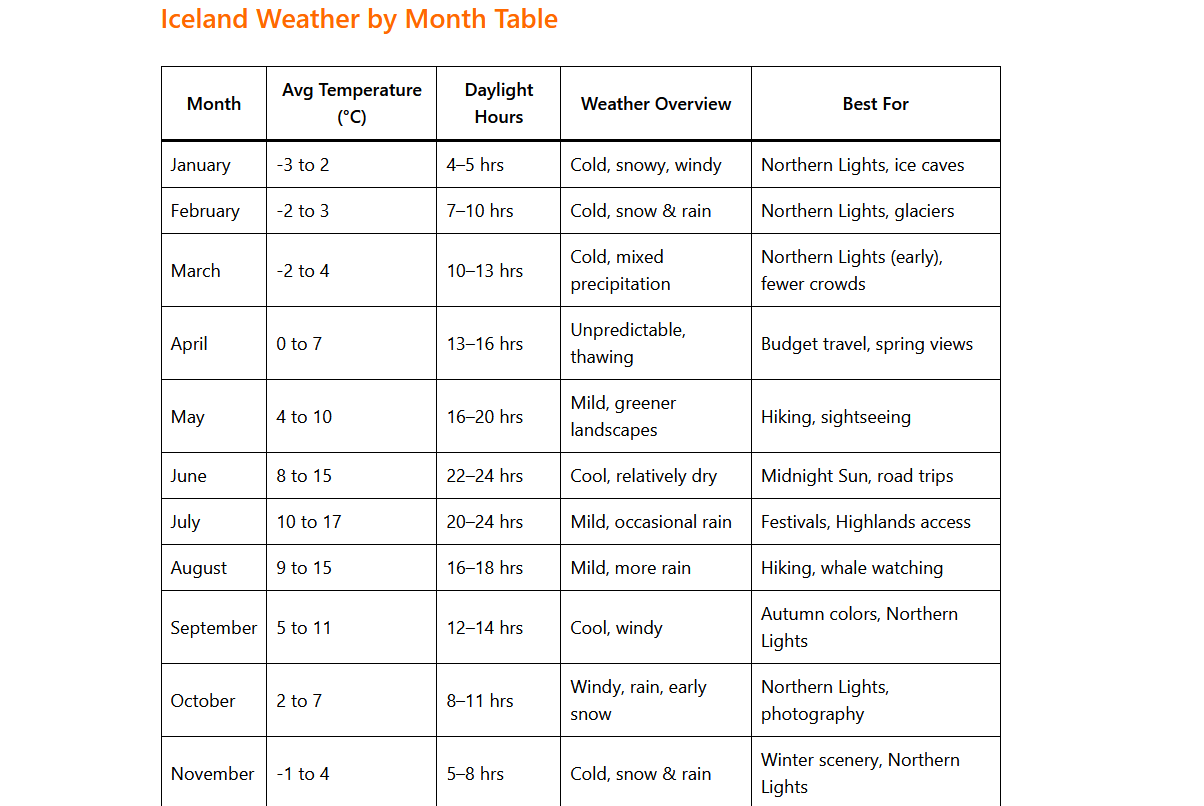
Iceland Weather by Month Table
| Month | Avg Temperature (°C) | Daylight Hours | Weather Overview | Best For |
|---|---|---|---|---|
| January | -3 to 2 | 4–5 hrs | Cold, snowy, windy | Northern Lights, ice caves |
| February | -2 to 3 | 7–10 hrs | Cold, snow & rain | Northern Lights, glaciers |
| March | -2 to 4 | 10–13 hrs | Cold, mixed precipitation | Northern Lights (early), fewer crowds |
| April | 0 to 7 | 13–16 hrs | Unpredictable, thawing | Budget travel, spring views |
| May | 4 to 10 | 16–20 hrs | Mild, greener landscapes | Hiking, sightseeing |
| June | 8 to 15 | 22–24 hrs | Cool, relatively dry | Midnight Sun, road trips |
| July | 10 to 17 | 20–24 hrs | Mild, occasional rain | Festivals, Highlands access |
| August | 9 to 15 | 16–18 hrs | Mild, more rain | Hiking, whale watching |
| September | 5 to 11 | 12–14 hrs | Cool, windy | Autumn colors, Northern Lights |
| October | 2 to 7 | 8–11 hrs | Windy, rain, early snow | Northern Lights, photography |
| November | -1 to 4 | 5–8 hrs | Cold, snow & rain | Winter scenery, Northern Lights |
| December | -2 to 3 | 4–5 hrs | Cold, snowy, festive | Ice caves, winter holidays |
Iceland Weather FAQs
1. What is the coldest month in Iceland?
January is typically the coldest month, with temperatures often ranging from -3°C to 2°C (27°F to 36°F), along with snow and strong winds.
2. What is the warmest month in Iceland?
July is the warmest month, with average temperatures between 10°C and 17°C (50°F to 63°F), though it can still feel cool due to wind.
3. Does Iceland have extreme weather?
Iceland rarely experiences extreme temperatures, but it is known for sudden weather changes, strong winds, and frequent storms, especially in winter.
4. When is the best time to visit Iceland for good weather?
June through August offers the most stable weather, warmer temperatures, and long daylight hours, making it ideal for sightseeing and road trips.
5. Does it snow in Iceland all year?
Snow is common from October to April, especially in northern and higher-altitude areas. Snow is rare in summer, except on glaciers.
6. How much daylight does Iceland get in summer?
From late May to mid-July, Iceland experiences nearly 24 hours of daylight due to the Midnight Sun.
7. How much daylight does Iceland get in winter?
In December and January, daylight can be as short as 4–5 hours per day, particularly around the winter solstice.
8. When is the best time to see the Northern Lights in Iceland?
The best time is from late September to early April, when nights are dark and skies are clear.
9. Is Iceland very windy?
Yes, wind is one of Iceland’s most noticeable weather features and can make temperatures feel colder year-round.
10. What should I pack for Iceland’s weather?
Pack layered clothing, a waterproof jacket, sturdy shoes, gloves, and a hat—regardless of the season.
Final Thoughts
Iceland’s weather varies dramatically by month, but each season offers unique experiences. Whether you’re chasing the Northern Lights, hiking under the Midnight Sun, or exploring icy landscapes, planning around the monthly climate will help you make the most of your trip.
Tip: Always pack layers and be prepared for sudden weather changes—no matter the season.