

Hawaiʻi Volcanoes National Park is one of the most unique destinations in the world, where weather varies dramatically depending on elevation and location. From steamy coastal lava fields to cool volcanic summits, the park experiences a wide range of microclimates year-round. Understanding the weather by month can help you plan the best time for your visit.
Overview of the Climate
The park spans elevations from sea level to over 13,000 feet (including Mauna Loa), so temperatures and rainfall vary widely:
- Coastal areas: Warm, humid, and often dry
- Mid-elevation (Kīlauea summit): Mild but wet
- High elevations: Cold, windy, and sometimes near freezing
There are two main seasons:
- Dry season: April to October
- Wet season: November to March
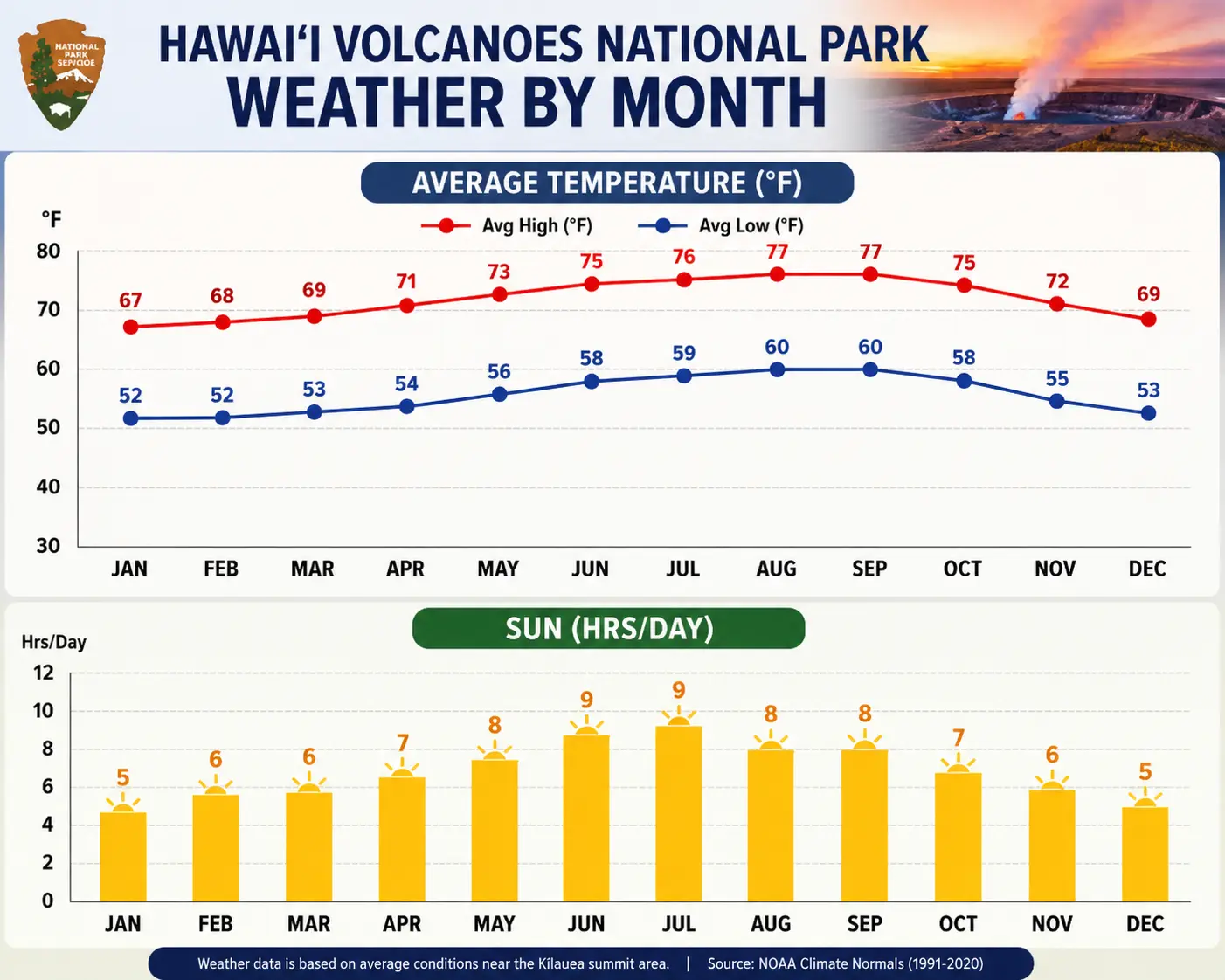
Hawai‘i Volcanoes National Park Weather by Month
You can click the image below to view the full-size weather chart for Hawai‘i Volcanoes NP.
January
- Temperature: 10–22°C (50–72°F)
- Conditions: One of the wettest months, especially around the summit
- Tips: Bring rain gear and warm layers
February
- Similar to January: cool, cloudy, and wet
- Occasional clear days offer great volcano views
March
- Rain begins to ease slightly
- Lush greenery from winter rains makes landscapes vibrant
April
- Transition into the dry season
- Warmer temperatures and fewer showers
May
- Pleasant weather with moderate rainfall
- Ideal for hiking and sightseeing
June
- Start of summer: drier and sunnier
- Temperatures rise, especially at lower elevations
July
- Warmest month of the year
- Dry conditions make it great for exploring lava fields
August
- Similar to July: warm, dry, and sunny
- Afternoon clouds may form at higher elevations
September
- Slight increase in humidity
- Still mostly dry and warm
October
- Transition month: rain begins to return
- Fewer crowds, making it a peaceful time to visit
November
- Start of the wet season
- Frequent rain showers, especially in the afternoon
December
- Cooler temperatures and higher rainfall
- Misty, dramatic landscapes around volcanic craters
| Month | Avg High (°F) | Avg Low (°F) | Rainfall (inches) | Sun (hrs/day) |
|---|---|---|---|---|
| January | 67 | 52 | 9.5 | 5 |
| February | 68 | 52 | 8.5 | 6 |
| March | 69 | 53 | 9.0 | 6 |
| April | 71 | 54 | 7.5 | 7 |
| May | 73 | 56 | 5.5 | 8 |
| June | 75 | 58 | 4.5 | 9 |
| July | 76 | 59 | 4.0 | 9 |
| August | 77 | 60 | 4.5 | 8 |
| September | 77 | 60 | 5.5 | 8 |
| October | 75 | 58 | 7.5 | 7 |
| November | 72 | 55 | 9.0 | 6 |
| December | 69 | 53 | 10.0 | 5 |
Quick insights:
- ☀️ Sunniest months: May–July
- 🌧️ Wettest months: November–March
- 🌤️ Best balance: April, May, September
What to Expect by Area
- Kīlauea Summit: Cool, often rainy—bring a jacket year-round
- Chain of Craters Road: Hot and dry near the coast
- Mauna Loa Summit: Cold, windy, and sometimes below freezing
Packing Tips
Regardless of the month, pack for changing conditions:
- Light clothing for warm areas
- Warm layers for higher elevations
- Rain jacket or poncho
- Sturdy hiking shoes
- Sunscreen and hat
Best Time to Visit
- Best overall weather: May to September
- Best for fewer crowds: April, May, October
- Best for lush scenery: March and November
20 helpful FAQs about weather in Hawaiʻi Volcanoes National Park:
General Weather Questions
1. What is the overall climate like?
The park has a tropical climate with significant variation due to elevation, ranging from warm coastal weather to cool, misty summit conditions.
2. Does the park have seasons?
Yes—there’s a dry season (April–October) and a wet season (November–March).
3. Is it hot year-round?
Not everywhere. Coastal areas are warm, but higher elevations like Kīlauea can be cool or even chilly.
4. How cold does it get?
At the summit, temperatures can drop to around 40–50°F (4–10°C), especially at night.
Rain & Humidity
5. Does it rain a lot?
Yes, especially around the summit where rainfall is frequent year-round.
6. What are the wettest months?
November through March typically see the most rainfall.
7. Can it rain and be sunny at the same time?
Yes, passing showers are common, and sunshine often follows quickly.
8. Is humidity high?
Yes, especially in lower elevations and rainforest areas.
Sunshine & Visibility
9. When is it the sunniest?
May through September generally have the most sunshine.
10. Will clouds affect volcano views?
Yes, clouds and fog can obscure crater views, especially in the afternoon.
11. What’s the best time of day for clear views?
Early morning usually offers the clearest conditions.
Temperature & Elevation
12. Why does the temperature vary so much?
The park spans from sea level to high elevations, creating multiple microclimates.
13. Is it colder at higher elevations?
Yes, places like Mauna Loa are much colder and windier than coastal areas.
14. Do I need warm clothes?
Yes—even in summer, a jacket is recommended for higher elevations.
Wind & Extreme Conditions
15. Is it windy?
It can be, especially at higher elevations and exposed lava fields.
16. Does it ever snow?
Snow is rare in visitor areas but can occur on high peaks like Mauna Loa.
17. Are there storms or extreme weather?
Severe weather is uncommon, but heavy rain and strong winds can occur during winter.
Travel & Packing
18. What should I pack for the weather?
Layers, a rain jacket, sunscreen, and sturdy shoes are essential.
19. Is weather predictable?
Not always—conditions can change quickly within the park.
20. What’s the best time to visit for good weather?
Late spring to early fall (May–September) offers the best combination of sunshine and lower rainfall.
Final Thoughts
Weather in Hawai‘i Volcanoes National Park is as dynamic as its volcanic landscape. You can experience sunshine, rain, and cool mountain air all in one day. Planning ahead by month ensures you’re ready for whatever nature brings—and helps you fully enjoy one of Earth’s most extraordinary environments.