

Guadalupe Mountains National Park is known for its dramatic elevation changes, rugged desert terrain, and surprisingly variable weather. Sitting in far West Texas near the New Mexico border, the park experiences everything from scorching summer heat to winter snow—sometimes within the same week. Understanding the month-by-month weather can help you plan the best time to visit, whether you’re hiking to Guadalupe Peak or exploring McKittrick Canyon.
Guadalupe Mountains National Park Temperatures by Month
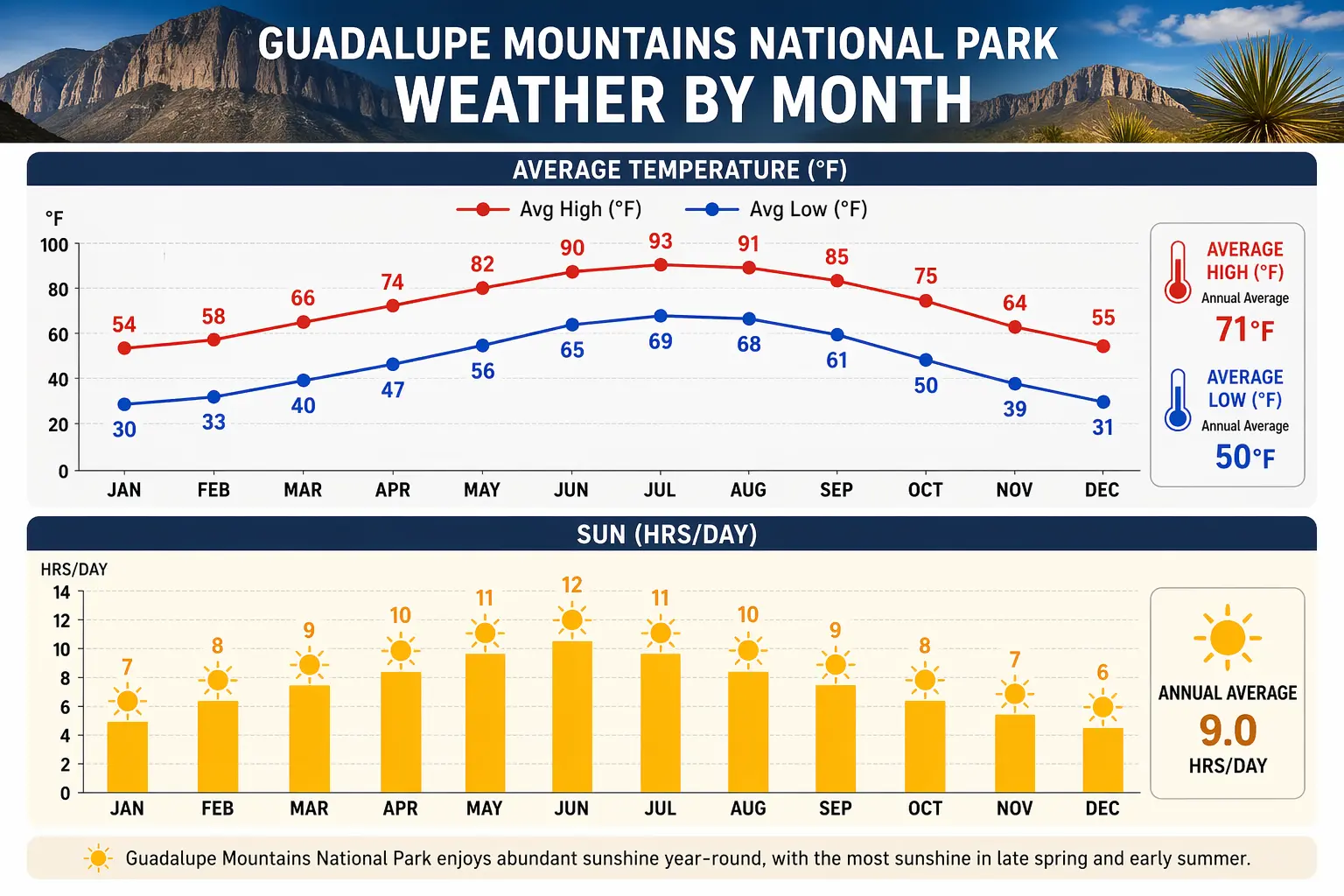
You can click the image below to view the full-size weather chart for Guadalupe Mountains NP.
January
January is one of the coldest months. Daytime highs average around 50–55°F (10–13°C), while nights often drop below freezing. Snow and ice are possible, especially at higher elevations. Winds can be strong, making it feel even colder.
Best for: Quiet trails, winter scenery
Watch out for: Icy conditions and sudden cold fronts
February
Conditions remain chilly but begin to stabilize slightly. Highs range from 55–60°F (13–16°C). Wind is still a major factor, especially on exposed ridges.
Best for: Fewer crowds and crisp hiking weather
Watch out for: Wind gusts and cold nights
March
Spring starts to emerge, with temperatures climbing to 65–70°F (18–21°C). However, March is notoriously windy in this region, sometimes with gusts over 50 mph.
Best for: Early spring hiking
Watch out for: Extreme wind conditions
April
April brings pleasant daytime temperatures around 70–80°F (21–27°C). Wildflowers may begin to bloom, especially after wet winters.
Best for: Scenic hikes and photography
Watch out for: Windy afternoons
May
One of the best months to visit. Highs reach 80–85°F (27–29°C), and conditions are generally stable. Nights are mild, making camping more comfortable.
Best for: Peak hiking season
Watch out for: Increasing heat toward the end of the month
June
Summer heat arrives quickly. Daytime highs often exceed 90°F (32°C), especially in lower elevations. Higher trails remain slightly cooler.
Best for: Early morning or high-elevation hikes
Watch out for: Heat exhaustion and dehydration
July
July is hot and marks the start of the monsoon season. Temperatures hover around 90–95°F (32–35°C), with afternoon thunderstorms becoming more common.
Best for: Dramatic skies and fewer crowds
Watch out for: Lightning, flash floods, and heat
August
Similar to July, with intense heat and frequent afternoon storms. Humidity increases slightly compared to earlier summer months.
Best for: Photography and storm watching
Watch out for: Flash flooding in canyons
September
Temperatures begin to drop slightly, averaging 80–85°F (27–29°C). Storms taper off toward the end of the month.
Best for: Transition into fall hiking
Watch out for: Residual heat early in the month
October
One of the most popular months to visit. Highs range from 70–75°F (21–24°C), and fall colors appear in McKittrick Canyon.
Best for: Fall foliage and comfortable hiking
Watch out for: Crowds during peak foliage weeks
November
Cooler temperatures return, with highs around 60–65°F (16–18°C). Nights can be cold, sometimes near freezing.
Best for: Quiet trails and mild daytime hikes
Watch out for: Cold evenings
December
Winter sets in again, with highs near 50–55°F (10–13°C). Snow is possible, especially at higher elevations like Guadalupe Peak.
Best for: Peaceful winter landscapes
Watch out for: Cold snaps and icy trails
| Month | Avg High (°F) | Avg Low (°F) | Rainfall (inches) | Sun (hrs/day) |
|---|---|---|---|---|
| January | 54 | 30 | 0.6 | 7 |
| February | 58 | 33 | 0.7 | 8 |
| March | 66 | 40 | 0.5 | 9 |
| April | 74 | 47 | 0.7 | 10 |
| May | 82 | 56 | 1.5 | 11 |
| June | 90 | 65 | 2.0 | 12 |
| July | 93 | 69 | 2.6 | 11 |
| August | 91 | 68 | 2.3 | 10 |
| September | 85 | 61 | 2.0 | 9 |
| October | 75 | 50 | 1.2 | 8 |
| November | 64 | 39 | 0.7 | 7 |
| December | 55 | 31 | 0.6 | 6 |
Notes:
- Sunshine peaks in late spring and early summer (May–June).
- Even during monsoon months (July–August), mornings are often sunny before afternoon storms.
- Winter has fewer daylight hours but still offers plenty of clear skies typical of desert climates.
- Rainfall peaks during the summer monsoon season (July–September).
- Snowfall is generally light but possible in winter, especially at higher elevations.
- Temperature swings can be significant due to elevation differences within the park.
20 FAQs about the weather at Guadalupe Mountains National Park
1. What is the best time of year to visit Guadalupe Mountains National Park?
Spring (April–May) and fall (October) offer the most comfortable temperatures and stable weather.
2. How hot does it get in summer?
Summer highs often reach 90–95°F (32–35°C), especially at lower elevations.
3. Does it snow in the Guadalupe Mountains National Park?
Yes, light snow can occur in winter, particularly at higher elevations like Guadalupe Peak.
4. How cold does it get in winter?
Winter nights frequently drop below freezing, with daytime highs around 50–55°F (10–13°C).
5. Is the park windy?
Yes—this is one of the windiest national parks in the U.S., especially in spring.
6. When is the windiest time of year?
March and April typically experience the strongest winds.
7. Does it rain a lot in Guadalupe Mountains National Park?
No, it’s generally dry, but rainfall increases during the summer monsoon season.
8. What months get the most rain?
July through September see the highest rainfall due to monsoon storms.
9. Are thunderstorms common in Guadalupe Mountains NP?
Yes, especially in summer afternoons. Storms can bring lightning and heavy rain.
10. Is flash flooding a risk?
Yes, particularly in canyons during heavy summer storms.
11. How much sunshine does the park get?
The park enjoys abundant sunshine year-round, averaging 6–12 hours per day.
12. What’s the weather like in spring?
Mild temperatures with blooming wildflowers, but often very windy.
13. What’s the weather like in fall?
Cool, pleasant, and one of the most popular times to visit.
14. Does elevation affect the weather?
Yes, higher elevations are cooler and can experience more extreme conditions.
15. Is it safe to hike in summer?
Yes, but early morning hikes are recommended to avoid extreme heat.
16. Do temperatures drop at night in Guadalupe Mountains National Park?
Yes, desert conditions cause significant temperature drops after sunset.
17. What should I pack for winter?
Warm layers, gloves, and wind protection are essential.
18. What should I pack for summer?
Light clothing, sun protection, and plenty of water.
19. Can weather change quickly?
Yes, conditions can shift rapidly, especially with wind and storms.
20. Where can I check current weather conditions?
You can check forecasts via the National Park Service or local weather services before visiting.
Final Thoughts
Weather in Guadalupe Mountains National Park is shaped heavily by elevation and wind. The best times to visit are typically April–May and October, when temperatures are moderate and conditions are more predictable. Summer can be harsh, while winter offers solitude but requires preparation.
If you’re planning a trip, it’s wise to check forecasts right before your visit—conditions here can change quickly.