

The weather in Great Smoky Mountains National Park varies dramatically throughout the year due to its diverse elevations, ranging from around 875 feet to over 6,600 feet. This creates multiple microclimates, meaning conditions can change quickly—even within a single day. Here’s a month-by-month breakdown to help you plan your visit.
Great Smoky Mountains National Park Temperatures by Month
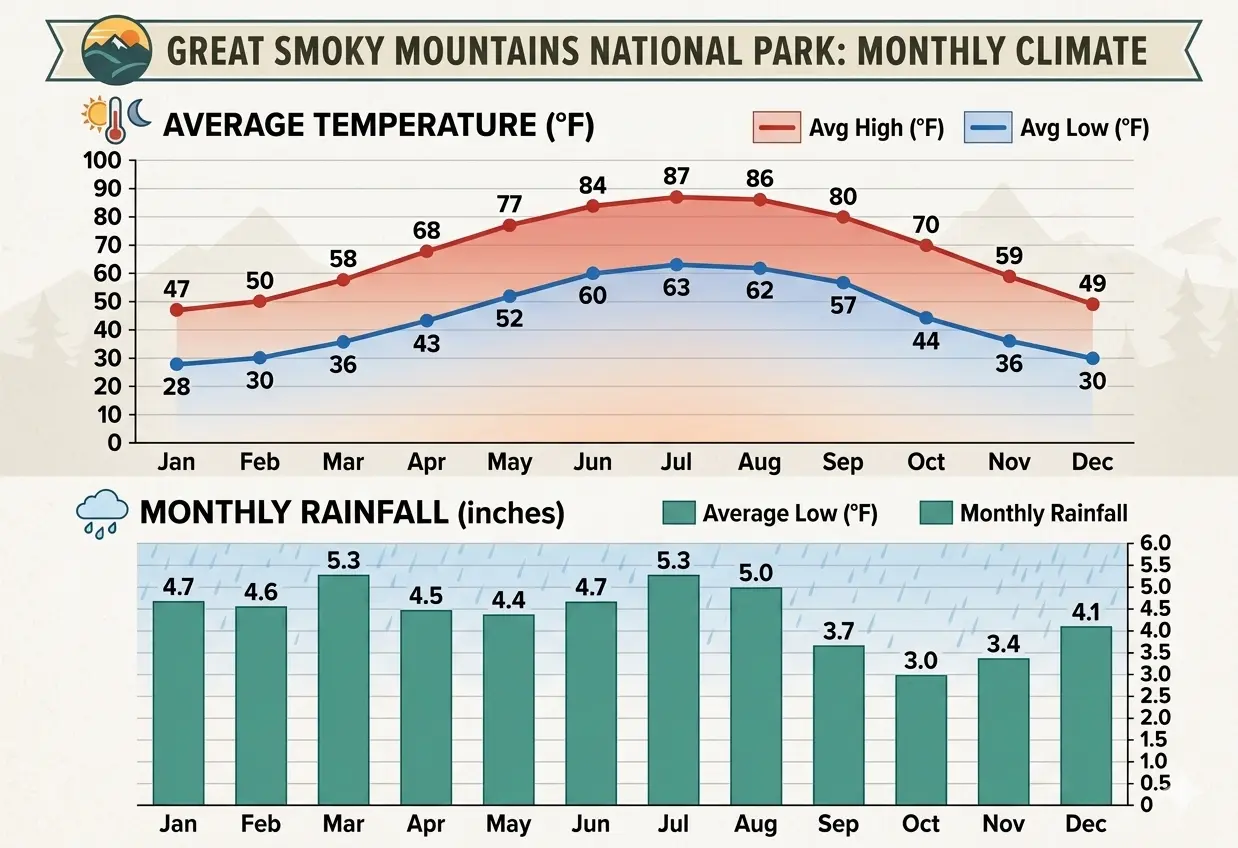
You can click the image below to view the full-size weather chart for Great Smoky Mountains NP.
January
Winter is at its peak. Expect cold temperatures, especially at higher elevations where snow and ice are common. Lower areas are milder but still chilly. Average highs range from 40–50°F (4–10°C), with lows often below freezing. Some roads may close due to snow.
February
Similar to January, but slightly milder toward the end of the month. Snowfall is still possible, especially in the mountains. It’s a quiet time to visit with fewer crowds and peaceful scenery.
March
Spring begins to emerge, though weather can be unpredictable. You may experience warm sunny days followed by sudden cold snaps. Wildflowers start blooming at lower elevations. Temperatures range from 50–60°F (10–15°C).
April
A beautiful but variable month. Rain is frequent, helping create the park’s signature misty atmosphere. Wildflower season is in full swing. Expect highs of 60–70°F (15–21°C), but bring layers.
May
One of the best months to visit. Mild temperatures (70–80°F / 21–27°C), lush greenery, and blooming flowers dominate. Rain showers are still common, but the weather is generally pleasant.
June
Summer begins with warm, humid conditions. Highs reach 80–85°F (27–29°C) in lower elevations. Afternoon thunderstorms are frequent, especially later in the month.
July
The hottest and most humid month. Temperatures can exceed 85°F (29°C), with high humidity levels. Thunderstorms are common in the afternoons. Higher elevations offer cooler relief.
August
Similar to July—hot, humid, and prone to storms. Mornings are usually clear, making them the best time for hiking. Wildlife is active, and the forest is dense and green.
September
A transitional month with slightly cooler temperatures and reduced humidity. Highs range from 70–80°F (21–27°C). It’s a great time for outdoor activities with fewer crowds than summer.
October
Fall foliage peaks, making this one of the most popular months. Crisp air and vibrant colors dominate the landscape. Temperatures range from 60–70°F (15–21°C), cooler at higher elevations.
November
Late fall brings cooler temperatures and fewer visitors. Trees lose their leaves, revealing mountain views. Highs drop to 50–60°F (10–15°C), and frost becomes more common.
December
Winter returns with colder temperatures and occasional snow. Holiday season brings a quiet charm to the park. Highs are around 40–50°F (4–10°C), with colder conditions in the mountains.
Great Smoky Mountains National Park Weather by Month
| Month | Avg High (°F) | Avg Low (°F) | Rainfall (inches) | Sun (hrs/day) |
|---|---|---|---|---|
| January | 47 | 28 | 4.7 | 4.5 |
| February | 50 | 30 | 4.6 | 5.2 |
| March | 58 | 36 | 5.3 | 6.0 |
| April | 68 | 43 | 4.5 | 7.1 |
| May | 77 | 52 | 4.4 | 8.2 |
| June | 84 | 60 | 4.7 | 9.1 |
| July | 87 | 63 | 5.3 | 9.5 |
| August | 86 | 62 | 5.0 | 8.8 |
| September | 80 | 57 | 3.7 | 7.8 |
| October | 70 | 44 | 3.0 | 6.9 |
| November | 59 | 36 | 3.4 | 5.5 |
| December | 49 | 30 | 4.1 | 4.3 |
Notes:
- Sunshine peaks in summer (June–July) but can be interrupted by afternoon thunderstorms.
- Spring and fall offer a great balance of comfortable temperatures and decent sunshine.
- Winter has the least sunlight, especially with more cloud cover and shorter days.
Key Weather Tips
- Elevation matters: Temperatures can drop 10–20°F as you climb higher.
- Rain is common year-round: The park is one of the wettest in the U.S.
- Layer your clothing: Conditions can shift quickly.
- Check road conditions in winter: Snow and ice may affect access.
20 FAQs about weather in Great Smoky Mountains National Park
General Weather Questions
- What is the weather like in Great Smoky Mountains National Park year-round?
The park experiences four distinct seasons, with mild winters at lower elevations and cooler conditions in higher. - Does the park have unpredictable weather?
Yes, weather can change quickly due to elevation differences and mountain conditions. - Why is it called the “Smoky” Mountains?
The “smoke” comes from natural fog caused by vegetation releasing moisture into the air.
Temperature & Seasons
- What is the hottest month in the park?
July is typically the hottest, with temperatures reaching the mid to upper 80s°F (30°C). - What is the coldest month?
January is usually the coldest, especially at higher elevations. - How much cooler are higher elevations?
Temperatures can be 10–20°F (5–11°C) cooler than lower areas. - When is the best weather for hiking?
Spring (April–May) and fall (September–October) offer the most comfortable conditions.
Rain & Humidity
- How much rain does the park get?
The park averages 50–80 inches of rain annually, depending on elevation. - What is the rainiest time of year?
Summer months (June–August) often have the most rainfall due to thunderstorms. - Does it rain every day?
Not every day, but rain is frequent year-round—brief showers are common. - Is the park humid?
Yes, especially in summer when humidity levels are high.
Snow & Winter Weather
- Does it snow in the Smoky Mountains?
Yes, especially at higher elevations, though snowfall is lighter in lower مناطق. - Are roads closed during winter?
Some roads may close temporarily due to snow and ice. - Is winter a good time to visit?
Yes, if you enjoy fewer crowds and quiet scenery, but be prepared for cold conditions.
Seasonal Highlights
- When is wildflower season?
Wildflowers bloom from March through May, peaking in April. - When is fall foliage at its best?
Typically mid-October to early November. - Is summer too hot to visit?
It can be hot and humid, but mornings and higher elevations are more comfortable.
Planning & Tips
- What should I wear in the park?
Layered clothing is best due to changing temperatures. - Are thunderstorms dangerous?
They can be, especially with lightning—avoid exposed areas during storms. - How can I check current weather conditions?
Use official park updates or weather apps before and during your visit.