

Great Basin National Park is known for its dramatic elevation changes—from desert valleys to the 13,063-foot summit of Wheeler Peak—which create highly variable weather throughout the year. Understanding the park’s monthly climate helps visitors plan everything from scenic drives to high-altitude hikes.
Below is a detailed, month-by-month breakdown of what to expect.
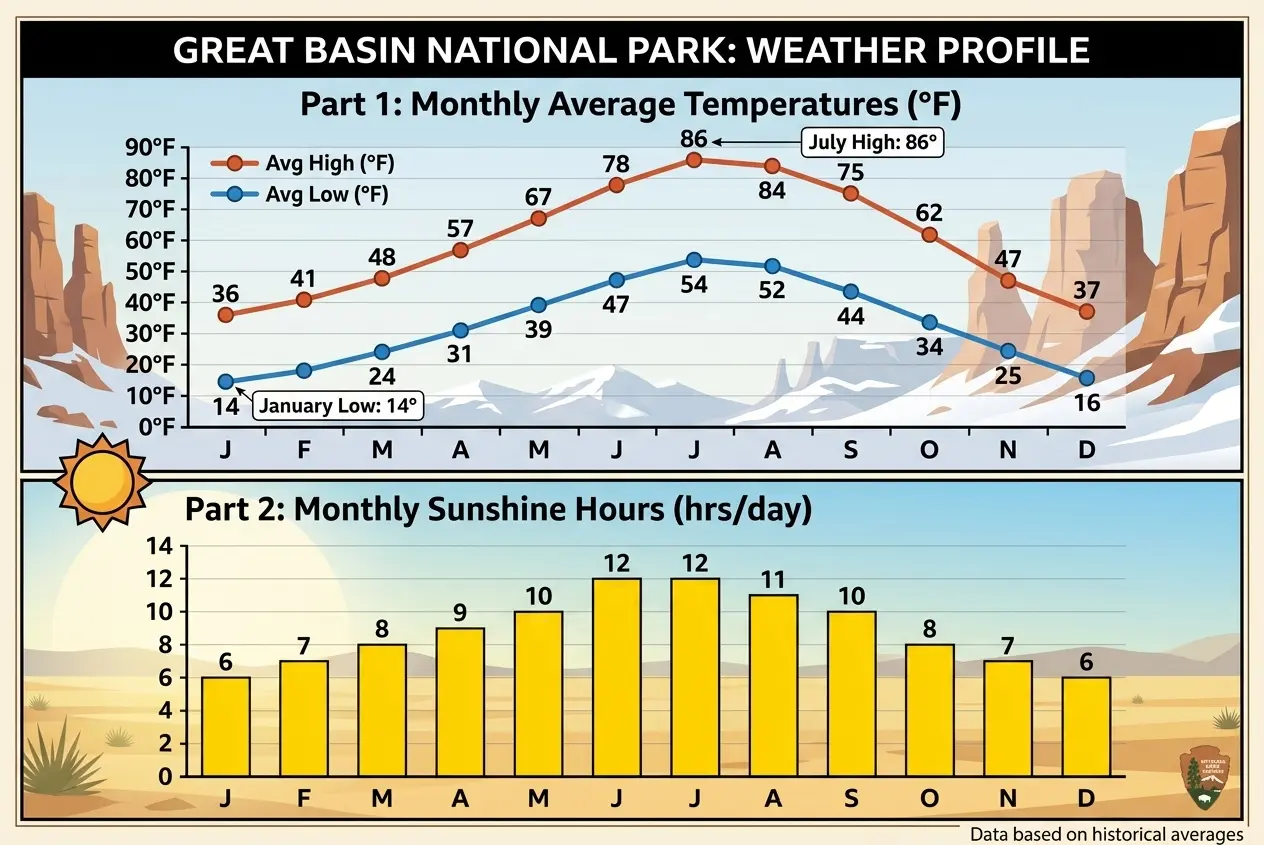
Great Basin National Park Temperatures by Month
You can click the image below to view the full-size weather chart for Great Basin National Park.
January
Winter is in full swing. Temperatures in the valleys hover around freezing during the day and drop well below at night. Higher elevations are blanketed in snow, making areas like Wheeler Peak Scenic Drive inaccessible. This is a quiet time ideal for solitude and snowshoeing.
Highlights:
- Snow-covered landscapes
- Limited access to higher elevations
- Excellent stargazing due to clear skies
February
Conditions remain cold and snowy, though days begin to lengthen slightly. Snowpack continues to build in the mountains, and winter recreation remains the primary activity.
Highlights:
- Deep snow at higher elevations
- Fewer crowds
- Crisp, clear nights
March
Early signs of spring appear in lower elevations, but winter still dominates the mountains. Snowstorms are still possible, and trails may be muddy or icy.
Highlights:
- Transitional weather
- Snow persists at higher altitudes
- Increasing daylight
April
Spring gradually takes hold in the valleys. Wildflowers may begin to bloom at lower elevations, but higher remain snow-covered.
Highlights:
- Mild daytime temperatures in valleys
- Snowmelt begins
- Mixed trail conditions
May
A beautiful time to visit, especially in lower areas. Snow starts melting more rapidly, though higher trails and roads may still be closed.
Highlights:
- Blooming wildflowers
- Comfortable temperatures
- Increasing accessibility
June
Early summer brings warmer temperatures and more open access. Wheeler Peak Scenic Drive typically opens this month, depending on snow conditions.
Highlights:
- Ideal hiking weather
- Most facilities open
- Snow lingering at high elevations
July
One of the warmest months, with hot days in the valleys and cooler temperatures in the mountains. Afternoon thunderstorms are common.
Highlights:
- Peak hiking season
- Occasional summer storms
- Excellent conditions for exploring alpine areas
August
Similar to July, but slightly more stable weather. Thunderstorms may still occur, especially in the afternoons.
Highlights:
- Warm days, cool nights
- Great for camping and hiking
- Clear mornings for scenic views
September
A favorite month for many visitors. Temperatures begin to cool, and crowds thin out. Early fall colors may appear at higher elevations.
Highlights:
- Pleasant temperatures
- Fewer visitors
- Early fall scenery
October
Fall is in full display, especially around groves of Bristlecone Pine and aspen trees. Snow can return to higher elevations by late October.
Highlights:
- Vibrant fall colors
- Cooler weather
- Possible early snowfall
November
Late fall transitions into winter. Many park facilities begin to close, and snowfall becomes more frequent.
Highlights:
- Quiet, off-season atmosphere
- Increasing snow at higher elevations
- Limited services
December
Winter fully returns. Snow blankets much of the park, especially in mountainous areas. Access is limited, but the scenery is serene.
Highlights:
- Snowy landscapes
- Excellent for winter solitude
- Cold temperatures throughout the park
Great Basin National Park Weather by Month
| Month | Avg High (°F) | Avg Low (°F) | Sun (hrs/day) | Snowfall (inches) |
|---|---|---|---|---|
| January | 36 | 14 | 6 | 8.0 |
| February | 41 | 18 | 7 | 6.5 |
| March | 48 | 24 | 8 | 5.0 |
| April | 57 | 31 | 9 | 2.0 |
| May | 67 | 39 | 10 | 0.5 |
| June | 78 | 47 | 12 | 0.0 |
| July | 86 | 54 | 12 | 0.0 |
| August | 84 | 52 | 11 | 0.0 |
| September | 75 | 44 | 10 | 0.2 |
| October | 62 | 34 | 8 | 1.5 |
| November | 47 | 25 | 7 | 4.0 |
| December | 37 | 16 | 6 | 7.0 |
Notes:
- Sunshine hours represent average daily sunlight, not total daylight length.
- Higher elevations near Wheeler Peak typically receive more snow and slightly less warmth.
- Summer months offer the most sunshine, though brief afternoon storms can still occur.
Final Thoughts
Weather in Great Basin varies dramatically with elevation and season. Summer offers the most accessibility, while spring and fall provide quieter, scenic experiences. Winter, though challenging, rewards visitors with peaceful solitude and striking снежные landscapes.
If you’re planning a trip, consider what kind of experience you want—lush wildflowers, alpine adventures, or snow-covered silence—and choose your month accordingly.
20 FAQs about weather in Great Basin National Park
General Weather Questions
1. What is the overall climate like in Great Basin National Park?
The park has a high-desert climate with hot summers, cold winters, and significant temperature variation by elevation.
2. Does the weather vary by elevation?
Yes—lower valleys are much warmer, while higher areas like Wheeler Peak are cooler and receive more snow.
3. What is the best time of year to visit for good weather?
Late spring through early fall (May–September) offers the most comfortable and accessible conditions.
4. How unpredictable is the weather?
Weather can change quickly, especially at higher elevations, so visitors should be prepared for sudden shifts.
Seasonal Weather Questions
5. How cold does it get in winter?
Winter temperatures often drop below freezing, especially at night and in higher elevations.
6. Does it snow in Great Basin National Park?
Yes, snowfall is common from late fall through early spring, particularly in mountainous areas.
7. How hot does it get in summer?
Summer highs can reach the mid-80s °F (29–30°C) in lower elevations, but it remains cooler in the mountains.
8. Are summers dry or humid?
Summers are generally dry, though brief afternoon thunderstorms can occur.
9. What is spring weather like?
Spring is a transitional season with mild temperatures in valleys and lingering snow at higher elevations.
10. What is fall weather like?
Fall brings cooler temperatures, fewer crowds, and beautiful foliage, especially among aspen trees.
Monthly & Daily Conditions
11. What is the coldest month?
January is typically the coldest month.
12. What is the warmest month?
July is usually the warmest month.
13. Does it rain often?
Rainfall is relatively low overall, with slightly higher precipitation during summer thunderstorms.
14. How much sunshine does the park get?
The park enjoys abundant sunshine year-round, especially in summer.
Travel & Activity Questions
15. Is winter a good time to visit?
It can be, but expect limited access to higher elevations and fewer services.
16. When is hiking season?
The best hiking conditions are from June through September.
17. Are roads affected by weather?
Yes, roads like the Wheeler Peak Scenic Drive may close due to snow.
18. Can I visit year-round?
Yes, but accessibility varies greatly depending on the season.
Planning & Safety Questions
19. What should I pack for changing weather?
Layered clothing is essential due to temperature swings between day and night.
20. Is the park good for stargazing in all seasons?
Yes—Great Basin National Park is famous for dark skies, though winter offers especially clear nights.