

Located about 70 miles west of Key West in the Gulf of Mexico, Dry Tortugas National Park has a tropical maritime climate characterized by warm temperatures, sunshine, and seasonal rainfall. Because it’s surrounded by water, temperatures are moderated year-round, but conditions can vary significantly by month—especially during hurricane season.
Here’s a detailed month-by-month breakdown to help you plan your visit.
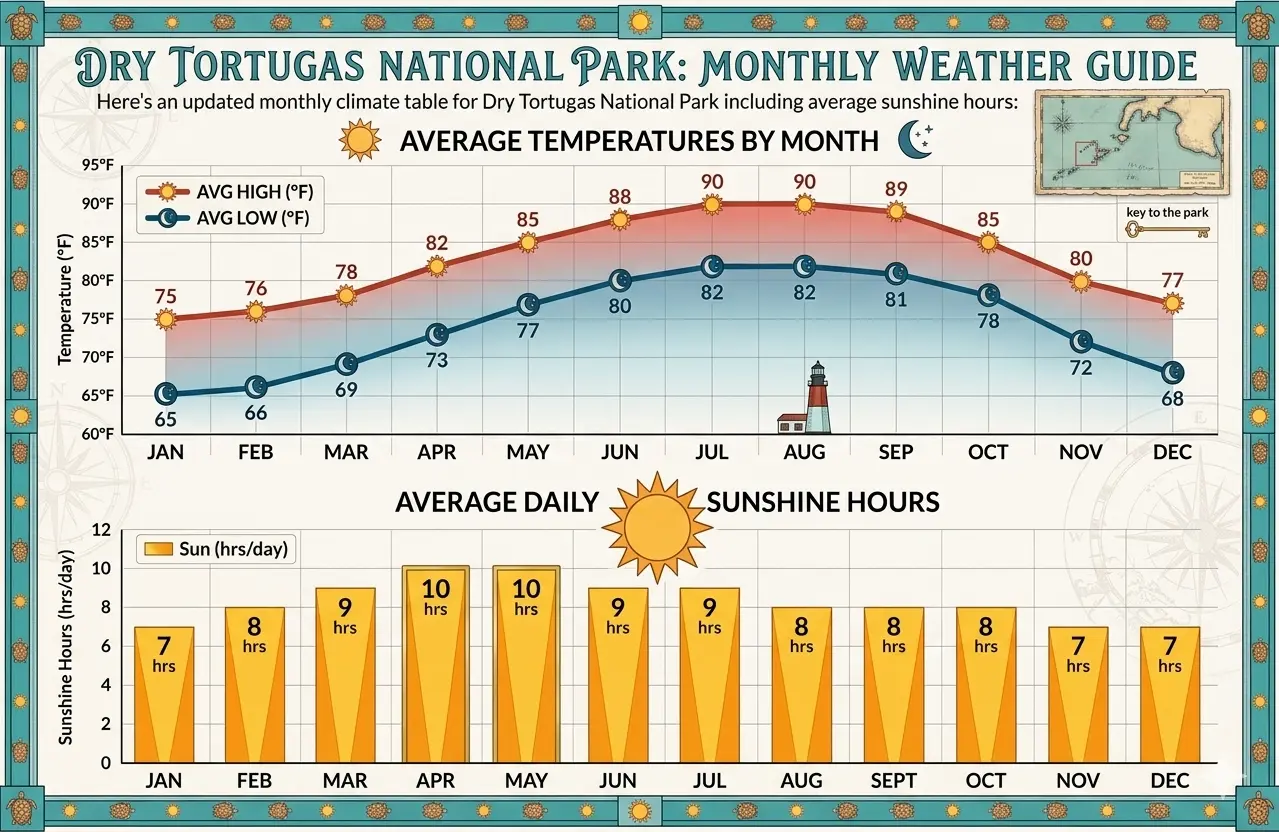
You can click the image below to view the full-size weather chart for Dry Tortugas National Park.
January
January is one of the coolest months, with daytime highs around 72–75°F (22–24°C) and cooler evenings. Rainfall is low, and humidity is comfortable. Waters can be slightly choppy, making ferry rides less smooth. Great for visitors who prefer mild weather and fewer crowds.
Best for: Sightseeing, photography, birdwatching
February
Conditions remain mild and dry, with temperatures similar to January. Winds can still be noticeable, especially on open water. This is peak season for migratory birds passing through the park.
Best for: Wildlife viewing, camping
March
Temperatures begin to warm slightly (mid-to-high 70s°F / ~25°C). Rain is still minimal, and winds start calming down. Water clarity improves, making snorkeling conditions better.
Best for: Snorkeling, exploring Fort Jefferson
April
One of the best months to visit. Temperatures reach the low 80s°F (27–28°C), humidity is still manageable, and rainfall remains low. The sea is typically calmer, offering smooth ferry or seaplane access.
Best for: All activities, especially swimming and snorkeling
May
Temperatures rise into the mid-80s°F (29–30°C), and humidity increases. Rain showers become more frequent but are usually short. The water is warm and clear.
Best for: Water activities, fewer crowds before summer
June
Summer begins with hot and humid conditions (high 80s°F / ~31°C). Rainfall increases, often in the form of afternoon thunderstorms. Hurricane season officially starts.
Best for: Early morning exploration, swimming
July
July is hot, humid, and wet. Temperatures hover around 89–91°F (32–33°C). Expect frequent rain showers and a higher chance of storms. Mosquitoes can also be more active.
Best for: Experienced travelers comfortable with heat and weather variability
August
Similar to July, with intense heat, high humidity, and frequent rainfall. This is peak hurricane season risk, and travel plans may be disrupted.
Best for: Budget travelers, but with caution due to storms
September
The most active month for hurricanes in the region. Expect heavy rain, high humidity, and temperatures around 88–90°F (31–32°C). Some tours may be canceled due to weather.
Best for: Not ideal—travel insurance recommended
October
Conditions start improving. Rainfall decreases, humidity begins to drop, and temperatures cool slightly into the mid-80s°F (29°C). Storm risk declines as the month progresses.
Best for: Transition season with fewer crowds
November
A return to drier, more comfortable weather. Temperatures range from 78–82°F (26–28°C). Winds may pick up slightly, but overall conditions are pleasant.
Best for: Relaxed visits, camping, kayaking
December
Cooler and dry again, with highs around 75–78°F (24–26°C). Occasional cold fronts can bring wind and rougher seas, but overall it’s a popular time to visit.
Best for: Holiday trips, mild weather escapes
| Month | Avg High (°F) | Avg Low (°F) | Rainfall (inches) | Sun (hrs/day) |
|---|---|---|---|---|
| January | 75 | 65 | 1.9 | 7 |
| February | 76 | 66 | 1.7 | 8 |
| March | 78 | 69 | 1.6 | 9 |
| April | 82 | 73 | 1.8 | 10 |
| May | 85 | 77 | 3.2 | 10 |
| June | 88 | 80 | 5.7 | 9 |
| July | 90 | 82 | 3.9 | 9 |
| August | 90 | 82 | 5.8 | 8 |
| September | 89 | 81 | 6.7 | 8 |
| October | 85 | 78 | 4.9 | 8 |
| November | 80 | 72 | 2.5 | 7 |
| December | 77 | 68 | 2.0 | 7 |
Quick insights:
- Sunniest period: March–May (up to ~10 hrs/day)
- Cloudier months: August–October due to storms
- Best balance: April offers high sun, low rain, and comfortable temps
Best Time to Visit
The ideal months are March through May, when you get:
- Warm but not oppressive temperatures
- Low rainfall
- Calm seas
- Excellent snorkeling visibility
If you want to avoid crowds, late October through early December is also a great window.
Final Tips
- Always check marine and weather forecasts before visiting, as access depends on sea conditions.
- Bring sun protection year-round—the tropical sun is intense even in winter.
- Hurricane season (June–November) can affect travel plans, so flexibility is key.
20 FAQs about Weather in Dry Tortugas National Park
General Weather Questions
- What is the climate like at Dry Tortugas National Park?
The park has a tropical maritime climate—warm, humid, and sunny most of the year. - Does the park experience all four seasons?
Not really. It mainly has a dry season (winter–spring) and a wet season (summer–fall). - What is the average temperature year-round?
Temperatures typically range from about 65°F to 90°F (18–32°C). - What is the best time of year to visit for good weather?
March through May offers the best mix of sunshine, calm seas, and low rainfall. - Is it always humid?
Yes, humidity is present year-round but is more intense during summer months.
Rain & Storms
- When is the rainy season at Dry Tortugas National Park?
The rainy season runs from June through October. - Which month gets the most rain at Dry Tortugas?
September is usually the wettest month. - Does it rain all day?
Rarely—most rain comes as short, intense showers or thunderstorms. - Are thunderstorms common?
Yes, especially in summer afternoons. - Can weather affect transportation to the park?
Absolutely—rough seas or storms can delay or cancel ferries and seaplanes.
Hurricanes & Extreme Weather
- Is Dry Tortugas affected by hurricanes?
Yes, it lies in a hurricane-prone region. - When is hurricane season?
From June 1 to November 30. - What is the peak hurricane month?
September has the highest risk. - Should I avoid visiting during hurricane season?
Not necessarily, but travel insurance and flexible plans are recommended.
Ocean & Water Conditions
- How is the water temperature throughout the year?
Water stays warm year-round, typically between 70°F and 86°F (21–30°C). - When is the ocean calmest?
Spring (March–May) usually has the calmest seas. - Is snorkeling affected by weather?
Yes—wind and waves can reduce visibility and safety.
Seasonal Differences
- What is winter like in the park?
Mild, dry, and breezy with occasional cold fronts. - What is summer like in the park?
Hot, humid, with frequent rain and storms. - Are there strong winds during the year?
Winds are strongest in winter and early spring, sometimes causing choppy seas.