

Located in southeastern Utah, Canyonlands National Park is known for its dramatic desert landscapes, towering mesas, and deep canyons carved by the Colorado River. The park’s weather varies significantly throughout the year, with hot summers, cold winters, and mild transitional seasons. Understanding the monthly weather patterns can help you plan the best time to visit.
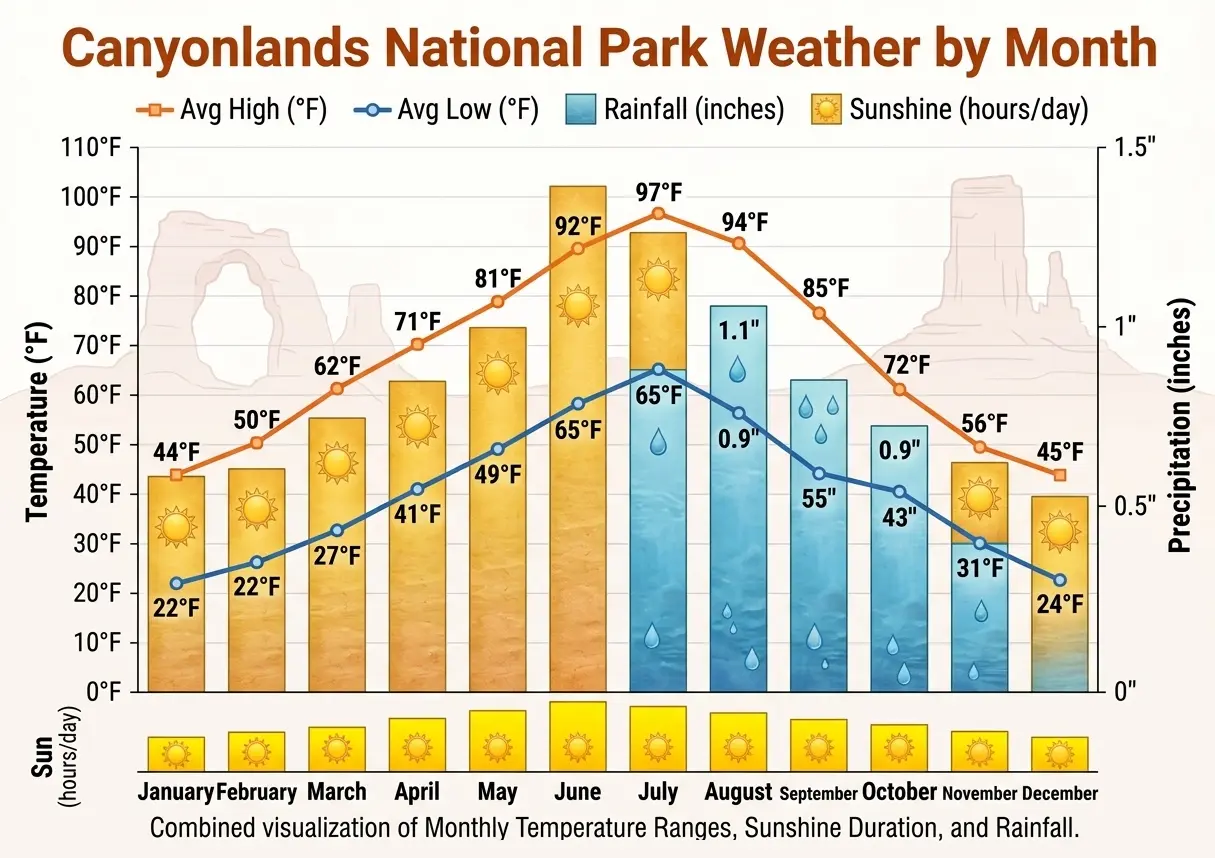
Canyonlands National Park Weather by Month
| Month | Avg High (°F / °C) | Avg Low (°F / °C) | Rainfall (inches) | Sun (hours/day) |
|---|---|---|---|---|
| January | 44°F / 7°C | 22°F / -6°C | 0.7 | 6 |
| February | 50°F / 10°C | 27°F / -3°C | 0.6 | 7 |
| March | 62°F / 17°C | 34°F / 1°C | 0.8 | 8 |
| April | 71°F / 22°C | 41°F / 5°C | 0.7 | 10 |
| May | 81°F / 27°C | 49°F / 9°C | 0.6 | 11 |
| June | 92°F / 33°C | 58°F / 14°C | 0.4 | 12 |
| July | 97°F / 36°C | 65°F / 18°C | 0.9 | 11 |
| August | 94°F / 34°C | 63°F / 17°C | 1.1 | 10 |
| September | 85°F / 29°C | 55°F / 13°C | 0.8 | 9 |
| October | 72°F / 22°C | 43°F / 6°C | 0.9 | 8 |
| November | 56°F / 13°C | 31°F / -1°C | 0.7 | 7 |
| December | 45°F / 7°C | 24°F / -4°C | 0.8 | 6 |
January
January is one of the coldest months in Canyonlands. Daytime highs average around 40–45°F (4–7°C), while nighttime temperatures often drop below freezing. Snow is possible, especially at higher elevations like the Island in the Sky district. The park is quiet, making it ideal for solitude seekers, but some roads may be icy.
February
February remains cold, though slightly warmer than January. Highs reach the mid-40s°F (7–9°C). Snowfall is still possible, but days begin to lengthen. This is a peaceful time to visit, though you’ll need to prepare for cold mornings and chilly winds.
March
Spring begins to emerge in March. Temperatures range from 55–65°F (13–18°C) during the day. Nights can still be cold, but snow becomes less common. Wildflowers may begin to bloom late in the month, especially after wet winters.
April
April is one of the best months to visit. Daytime temperatures climb to 65–75°F (18–24°C), offering comfortable hiking conditions. Nights are cool but manageable. Occasional spring storms may bring rain, which can temporarily affect dirt roads.
May
May offers warm and pleasant weather, with highs between 75–85°F (24–29°C). It’s a popular time for outdoor activities like hiking and camping. However, crowds begin to increase as the summer season approaches.
June
Summer heat starts to intensify in June. Temperatures often reach 90°F (32°C) or higher during the day. Early morning and evening are the best times for outdoor activities. Hydration becomes critical due to the dry desert climate.
July
July is one of the hottest months, with temperatures frequently exceeding 95°F (35°C). This is also the start of the monsoon season, bringing brief but intense afternoon thunderstorms. Flash floods can occur in canyons, so caution is necessary.
August
August continues the hot trend, with highs in the mid-90s°F (35°C). Monsoon storms remain common, especially in the afternoons. While the rain can cool things down temporarily, humidity increases slightly compared to earlier summer months.
September
September marks the transition into fall. Temperatures drop to a more comfortable 80–90°F (27–32°C). Thunderstorms decrease, and conditions become ideal for hiking and exploring. Crowds begin to thin out.
October
October is widely considered one of the best months to visit Canyonlands. Daytime temperatures range from 65–75°F (18–24°C), with crisp, cool nights. The weather is stable, skies are clear, and the fall colors add beauty to the landscape.
November
November brings cooler temperatures, with highs around 50–60°F (10–16°C). Nights can be cold, sometimes dipping below freezing. The park becomes quieter, offering a more peaceful experience.
December
December is cold and occasionally snowy. Daytime highs average 40–45°F (4–7°C), similar to January. While not the most popular time to visit, it offers a unique and tranquil desert winter experience.
Best Time to Visit
The most favorable months are April, May, September, and October, when temperatures are mild and conditions are ideal for outdoor activities. Summer is best suited for early risers who can avoid midday heat, while winter appeals to those seeking solitude and cooler scenery.
20 helpful FAQs about weather at Canyonlands National Park:
1. What is the best time of year to visit Canyonlands National Park?
Spring (April–May) and fall (September–October) offer the most comfortable temperatures and ideal weather for outdoor activities.
2. How hot does Canyonlands get in summer?
Summer temperatures often exceed 95°F (35°C), especially in July and August, with intense desert sun.
3. Is Canyonlands cold in winter?
Yes, winter can be quite cold, with daytime highs around 40–50°F (4–10°C) and freezing temperatures at night.
4. Does it snow in Canyonlands National Park?
Yes, light snowfall occurs in winter, particularly from December through February, though it usually doesn’t last long.
5. When is the rainy season in Canyonlands?
The park experiences a monsoon season in July and August, bringing short but intense afternoon thunderstorms.
6. Are flash floods common in Canyonlands?
Flash floods can occur during summer storms, especially in narrow canyons and low-lying areas.
7. How much rainfall does Canyonlands get annually?
The park receives about 8–10 inches (20–25 cm) of precipitation per year, making it a very dry desert climate.
8. Is spring a good time for hiking?
Yes, spring offers mild temperatures and blooming wildflowers, making it one of the best seasons for hiking.
9. What is the weather like in April?
April is mild and pleasant, with daytime highs around 65–75°F (18–24°C) and cool nights.
10. Is it safe to visit in summer heat?
Yes, but precautions are necessary—carry plenty of water, avoid midday hikes, and watch for heat exhaustion.
11. How cold are nights in Canyonlands?
Nights can be much colder than days, with temperature drops of 20–30°F (10–15°C) common year-round.
12. Does Canyonlands have humidity?
Humidity is generally very low, except during the summer monsoon season when it rises slightly.
13. What should I wear for Canyonlands weather?
Layered clothing is best, along with sun protection like hats, sunglasses, and sunscreen.
14. Is fall a good time to visit?
Yes, fall offers cooler temperatures, clear skies, and fewer crowds compared to summer.
15. Can weather affect road conditions?
Yes, rain can make dirt roads muddy and impassable, especially in backcountry areas.
16. Does wind play a role in Canyonlands weather?
Yes, wind can be strong at times, particularly in exposed areas like mesas and overlooks.
17. What is the hottest month in Canyonlands?
July is typically the hottest month, followed closely by August.
18. What is the coldest month in Canyonlands?
January is usually the coldest month, with freezing nighttime temperatures.
19. Are weather conditions different across the park?
Yes, elevation differences between districts (like Island in the Sky and The Needles) can lead to slight weather variations.
20. Can I visit Canyonlands year-round?
Yes, the park is open year-round, but weather conditions vary greatly, so planning ahead is essential.
Final Tips
- Always carry plenty of water, especially in warmer months
- Check weather forecasts for flash flood risks during summer
- Dress in layers, as desert temperatures can fluctuate greatly
- Be prepared for limited services in winter