

Nestled in western Colorado, Black Canyon of the Gunnison National Park is known for its dramatic cliffs, narrow canyon walls, and extreme depth. Its weather varies significantly throughout the year due to elevation changes (from around 5,400 to over 8,700 feet), making each month a unique experience for visitors.
Here’s a detailed month-by-month guide to help you plan your trip.
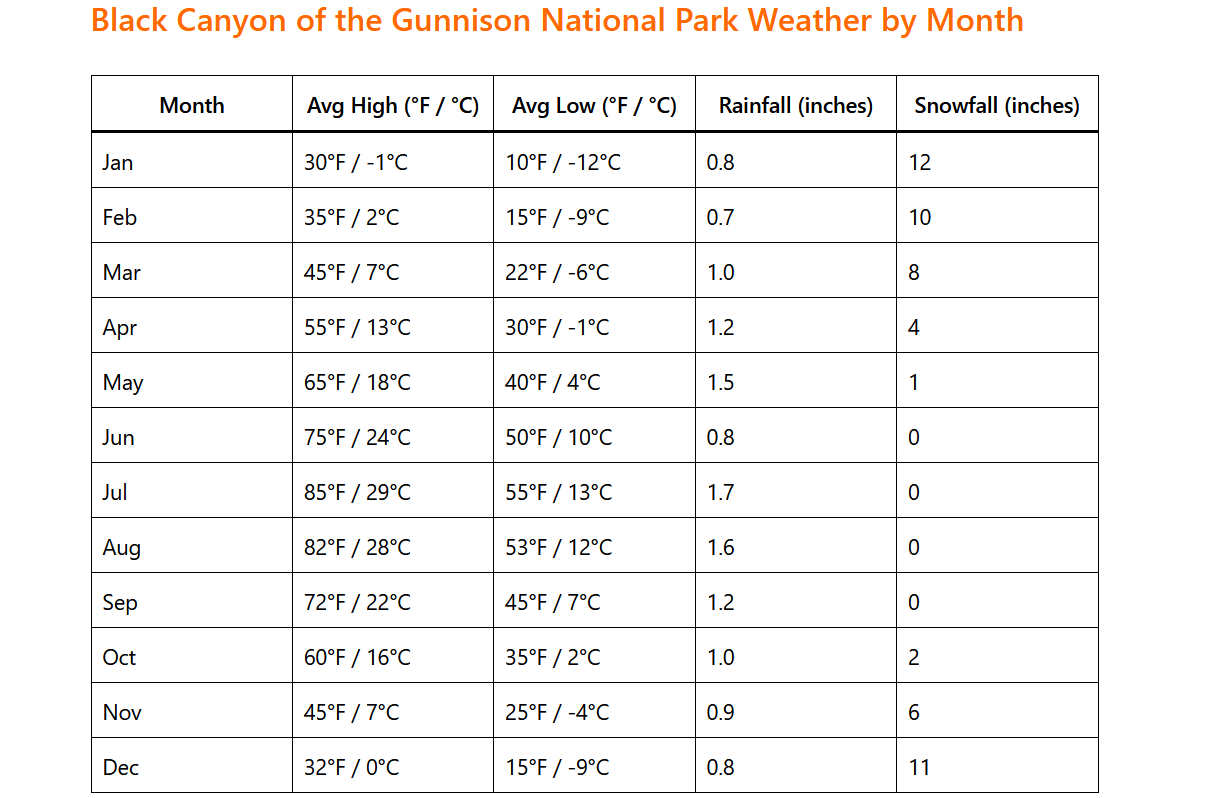
Black Canyon of the Gunnison National Park Weather by Month
| Month | Avg High (°F / °C) | Avg Low (°F / °C) | Rainfall (inches) | Snowfall (inches) |
|---|---|---|---|---|
| Jan | 30°F / -1°C | 10°F / -12°C | 0.8 | 12 |
| Feb | 35°F / 2°C | 15°F / -9°C | 0.7 | 10 |
| Mar | 45°F / 7°C | 22°F / -6°C | 1.0 | 8 |
| Apr | 55°F / 13°C | 30°F / -1°C | 1.2 | 4 |
| May | 65°F / 18°C | 40°F / 4°C | 1.5 | 1 |
| Jun | 75°F / 24°C | 50°F / 10°C | 0.8 | 0 |
| Jul | 85°F / 29°C | 55°F / 13°C | 1.7 | 0 |
| Aug | 82°F / 28°C | 53°F / 12°C | 1.6 | 0 |
| Sep | 72°F / 22°C | 45°F / 7°C | 1.2 | 0 |
| Oct | 60°F / 16°C | 35°F / 2°C | 1.0 | 2 |
| Nov | 45°F / 7°C | 25°F / -4°C | 0.9 | 6 |
| Dec | 32°F / 0°C | 15°F / -9°C | 0.8 | 11 |
Notes:
- Weather varies between the South Rim and North Rim due to elevation differences.
- Snowfall can fluctuate significantly year to year, especially in spring and fall months.
- Summer rainfall is influenced by afternoon thunderstorms (monsoon season).
January
Mid-winter brings cold temperatures and snow-covered landscapes.
- Average highs: 25–35°F (-4 to 2°C)
- Average lows: 5–15°F (-15 to -9°C)
- Conditions: Snow, icy roads, limited access
The South Rim remains partially open, but many areas—especially the North Rim—are closed. Ideal for solitude and winter photography.
February
Similar to January but slightly milder toward the end of the month.
- Highs: 30–40°F (-1 to 4°C)
- Lows: 10–20°F (-12 to -6°C)
Snowshoeing and cross-country skiing become popular. Expect quiet trails and minimal crowds.
March
A transitional month with unpredictable conditions.
- Highs: 40–50°F (4 to 10°C)
- Lows: 15–25°F (-9 to -4°C)
Snow begins melting, but storms are still common. Roads may open gradually depending on weather.
April
Spring arrives slowly at higher elevations.
- Highs: 50–60°F (10 to 16°C)
- Lows: 25–35°F (-4 to 2°C)
Melting snow can make trails muddy. Wildflowers begin appearing late in the month.
May
One of the best shoulder-season months.
- Highs: 60–70°F (16 to 21°C)
- Lows: 35–45°F (2 to 7°C)
The canyon becomes greener, and access improves. The North Rim may reopen late in the month depending on snow.
June
Early summer offers comfortable conditions.
- Highs: 70–80°F (21 to 27°C)
- Lows: 45–55°F (7 to 13°C)
Clear skies dominate, making it perfect for hiking and scenic drives.
July
Peak summer with warm days and occasional storms.
- Highs: 80–90°F (27 to 32°C)
- Lows: 50–60°F (10 to 16°C)
Afternoon thunderstorms are common due to the North American monsoon. Lightning can be a hazard near exposed viewpoints.
August
Similar to July but slightly less intense heat.
- Highs: 75–85°F (24 to 29°C)
- Lows: 50–60°F (10 to 16°C)
Storms continue, but mornings are typically clear—ideal for photography.
September
A favorite month for many visitors.
- Highs: 65–75°F (18 to 24°C)
- Lows: 40–50°F (4 to 10°C)
Fewer crowds, cooler temperatures, and early fall colors make this one of the best times to visit.
October
Fall colors peak early in the month.
- Highs: 55–65°F (13 to 18°C)
- Lows: 30–40°F (-1 to 4°C)
Crisp air and golden foliage create stunning scenery. Snow is possible late in the month.
November
Late fall transitions quickly into winter.
- Highs: 40–50°F (4 to 10°C)
- Lows: 20–30°F (-6 to -1°C)
Facilities begin closing, and snow becomes more frequent.
December
Winter fully sets in.
- Highs: 25–35°F (-4 to 2°C)
- Lows: 5–15°F (-15 to -9°C)
Snow blankets the canyon, offering peaceful, scenic views. Access is limited, but the solitude is unmatched.
Best Time to Visit Black Canyon of the Gunnison National Park
- Best overall weather: May, June, September
- Best for fewer crowds: April, October
- Best for winter scenery: December–February
20 useful FAQs about the weather at Black Canyon of the Gunnison National Park
1. What is the weather like year-round?
The park experiences cold winters, mild springs, warm summers, and cool autumns, with significant variation due to elevation.
2. What is the hottest month in Black Canyon of the Gunnison National Park?
July is typically the hottest month, with daytime highs reaching around 85–90°F (29–32°C).
3. What is the coldest month in Black Canyon of the Gunnison National Park?
January is usually the coldest, with temperatures often dropping below 10°F (-12°C).
4. Does it snow in Black Canyon of the Gunnison National Park?
Yes, snowfall is common from late fall through early spring, especially on the North Rim.
5. How much snow does the park get annually?
Snowfall can exceed 50–60 inches annually, depending on elevation and year.
6. When does snow start and end in Black Canyon of the Gunnison National Park?
Snow can begin as early as October and last into April or even May in higher elevations.
7. What is the best month for good weather?
May, June, and September offer the most comfortable temperatures and stable conditions.
8. Does it rain a lot in Black Canyon of the Gunnison National Park?
Rainfall is generally low, but summer thunderstorms can bring short, intense showers.
9. When is the rainy season in Black Canyon of the Gunnison National Park?
July and August see the most rainfall due to monsoon patterns in Colorado.
10. Are thunderstorms common in Black Canyon of the Gunnison National Park?
Yes, especially in summer afternoons. Lightning is a real hazard near exposed viewpoints.
11. Is it safe to visit Black Canyon of the Gunnison National Park during storms?
It can be, but visitors should avoid exposed areas and be cautious of sudden weather changes.
12. How windy is the park?
Wind can be strong year-round, particularly along canyon rims.
13. What’s the difference between North Rim and South Rim weather?
The North Rim is higher in elevation, so it’s generally cooler and receives more snow.
14. When does the North Rim open?
Typically late April to May, depending on snow conditions.
15. Can weather in Black Canyon of the Gunnison National Park change quickly?
Yes, conditions can shift rapidly within hours due to elevation and terrain.
16. Is summer too hot for hiking?
Not usually on the rim, but inner canyon hikes can be extremely hot and strenuous.
17. What should I pack for spring?
Layers, waterproof gear, and sturdy shoes for muddy trails.
18. What should I pack for winter?
Warm clothing, snow gear, and traction devices for icy paths.
19. Are fall colors affected by weather?
Yes, temperature and rainfall influence the timing and intensity of fall foliage.
20. Is the park crowded depending on weather?
Yes, pleasant weather in summer and early fall brings more visitors, while winter sees fewer crowds.
Final Thoughts
Weather at Black Canyon of the Gunnison National Park can shift dramatically, even within a single day. Whether you’re chasing summer hikes, fall colors, or snowy solitude, understanding the monthly patterns will help you make the most of your visit.