


Atlanta, Georgia—often called the “Capital of the South”—offers a diverse climate that changes noticeably throughout the year. With four distinct seasons, the city can be enjoyed year-round, but knowing what to expect weather-wise will help you plan the perfect trip. This complete month-by-month guide breaks down temperatures, rainfall, and travel tips so you can choose the best time to visit Atlanta.
Overview of Atlanta’s Climate
Atlanta has a humid subtropical climate, characterized by:
- Hot, humid summers
- Mild to cool winters
- Pleasant spring and fall seasons
- Occasional thunderstorms, especially in summer
Snowfall is rare, and extreme cold is uncommon, making Atlanta an attractive destination for travelers who prefer moderate winter weather.
Atlanta Weather by Month
January
- Average High: ~52°F (11°C)
- Average Low: ~33°F (1°C)
- Rainfall: Moderate
January is the coldest month in Atlanta, but temperatures are still relatively mild compared to northern U.S. cities. It’s a quiet month for tourism, making it ideal for travelers looking to avoid crowds and enjoy indoor attractions like museums and aquariums.
Travel tip: Pack a warm jacket, especially for evenings.
February
- Average High: ~56°F (13°C)
- Average Low: ~35°F (2°C)
- Rainfall: Moderate
February starts to hint at spring, with slightly warmer days. While still cool, it’s comfortable for sightseeing and city exploration.
Travel tip: Layered clothing works best due to fluctuating temperatures.
March
- Average High: ~65°F (18°C)
- Average Low: ~42°F (6°C)
- Rainfall: Increasing
Spring begins in March, bringing blooming flowers and greener landscapes. Rain becomes more frequent, but temperatures are pleasant.
Travel tip: Bring a light rain jacket and comfortable walking shoes.
April
- Average High: ~73°F (23°C)
- Average Low: ~50°F (10°C)
- Rainfall: Moderate to high
April is one of the best months to visit Atlanta. The weather is warm but not hot, and the city comes alive with festivals and outdoor events.
Travel tip: Perfect month for outdoor attractions like parks and gardens.
May
- Average High: ~80°F (27°C)
- Average Low: ~58°F (14°C)
- Rainfall: High
May feels like early summer. Days are warm, nights are comfortable, and rain showers are common but often brief.
Travel tip: Sunscreen and breathable clothing are essential.
June
- Average High: ~87°F (31°C)
- Average Low: ~66°F (19°C)
- Rainfall: High
Summer arrives with heat and humidity. Thunderstorms are frequent, usually in the afternoons or evenings.
Travel tip: Plan outdoor activities for early morning or late afternoon.
July
- Average High: ~90°F (32°C)
- Average Low: ~71°F (22°C)
- Rainfall: High
July is typically the hottest month in Atlanta. Humidity can make temperatures feel even higher.
Travel tip: Stay hydrated and take advantage of air-conditioned indoor attractions.
August
- Average High: ~89°F (32°C)
- Average Low: ~70°F (21°C)
- Rainfall: High
August remains hot and humid, with frequent summer storms. Despite the heat, it’s still a popular travel month.
Travel tip: Lightweight clothing and cooling towels can make a big difference.
September
- Average High: ~83°F (28°C)
- Average Low: ~64°F (18°C)
- Rainfall: Decreasing
September marks the transition to fall. Temperatures begin to cool, and humidity drops slightly.
Travel tip: Great month for outdoor festivals and city tours.
October
- Average High: ~74°F (23°C)
- Average Low: ~52°F (11°C)
- Rainfall: Low to moderate
October is another ideal time to visit Atlanta. Fall foliage appears, and the weather is crisp and comfortable.
Travel tip: Bring a light sweater for evenings.
November
- Average High: ~65°F (18°C)
- Average Low: ~43°F (6°C)
- Rainfall: Low
November offers cool, pleasant days and fewer tourists. It’s a relaxed time to explore the city.
Travel tip: Perfect for walking tours and outdoor dining.
December
- Average High: ~55°F (13°C)
- Average Low: ~35°F (2°C)
- Rainfall: Moderate
December is mild compared to many U.S. cities, with festive holiday decorations and events throughout Atlanta.
Travel tip: Pack a coat for chilly nights, but heavy winter gear is rarely needed.
Best Time to Visit Atlanta
- Best overall weather: April, May, September, and October
- Best for budget travelers: January and February
- Best for summer events: June through August (prepare for heat)
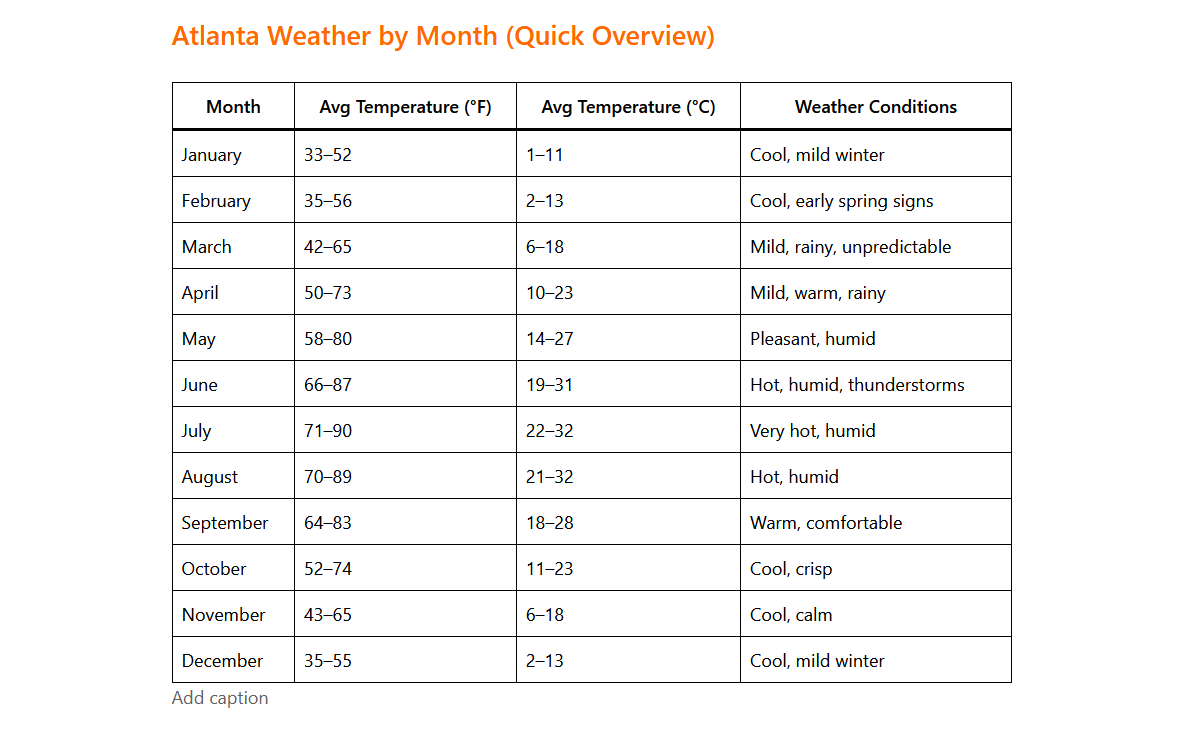
Atlanta Weather by Month (Quick Overview)
| Month | Avg Temperature (°F) | Avg Temperature (°C) | Weather Conditions |
|---|---|---|---|
| January | 33–52 | 1–11 | Cool, mild winter |
| February | 35–56 | 2–13 | Cool, early spring signs |
| March | 42–65 | 6–18 | Mild, rainy, unpredictable |
| April | 50–73 | 10–23 | Mild, warm, rainy |
| May | 58–80 | 14–27 | Pleasant, humid |
| June | 66–87 | 19–31 | Hot, humid, thunderstorms |
| July | 71–90 | 22–32 | Very hot, humid |
| August | 70–89 | 21–32 | Hot, humid |
| September | 64–83 | 18–28 | Warm, comfortable |
| October | 52–74 | 11–23 | Cool, crisp |
| November | 43–65 | 6–18 | Cool, calm |
| December | 35–55 | 2–13 | Cool, mild winter |
10 FAQs about Atlanta Weather
1. What is the best month to visit Atlanta?
The best months to visit Atlanta are April, May, September, and October, when the weather is mild, humidity is lower, and outdoor activities are most enjoyable.
2. What is the hottest month in Atlanta?
July is typically the hottest month in Atlanta, with average daytime temperatures around 90°F (32°C) and high humidity.
3. What is the coldest month in Atlanta?
January is usually the coldest month, with average temperatures ranging from 33–52°F (1–11°C).
4. Does Atlanta get snow?
Snowfall in Atlanta is rare and usually light. When it does snow, it typically occurs between January and February and rarely lasts long.
5. Is Atlanta very humid?
Yes, Atlanta can be quite humid, especially from June through August during the summer months.
6. What is the rainiest month in Atlanta?
Atlanta generally experiences the most rainfall in late spring and summer, particularly in May, June, and July, often from afternoon thunderstorms.
7. What should I pack for a trip to Atlanta?
Pack lightweight clothing for summer, layers for spring and fall, and a light jacket or coat for winter evenings. A rain jacket is useful year-round.
8. Is Atlanta weather good for outdoor activities?
Yes. Spring and fall offer the best conditions for outdoor sightseeing, hiking, and festivals due to comfortable temperatures and lower humidity.
9. Are hurricanes a concern in Atlanta?
Atlanta is far inland, so direct hurricanes are rare. However, remnants of tropical storms can occasionally bring heavy rain.
10. How does Atlanta weather compare to other U.S. cities?
Compared to northern U.S. cities, Atlanta has milder winters. Compared to Florida, it has cooler winters but similar summer heat and humidity.
Final Thoughts
Atlanta’s weather offers something for every type of traveler. Whether you prefer blooming spring gardens, lively summer festivals, colorful fall foliage, or quiet winter escapes, understanding Atlanta’s weather by month will help you plan a comfortable and memorable trip.