


Arches National Park in Moab, Utah is famous for its red-rock landscapes, natural arches, and dramatic desert scenery. But the experience you’ll have can vary greatly depending on the month you visit. Temperatures swing from freezing winter nights to scorching summer afternoons, and conditions like flash floods or snow can change your plans.
This month-by-month guide helps you choose the best time to visit based on weather, crowds, and seasonal conditions.
Overview of Arches National Park Climate
- Climate type: High-desert (hot, dry summers; cold winters)
- Elevation: 4,000–5,600 ft → cooler nights year-round
- Key factors: Sun exposure, low humidity, minimal shade
- Wildcards: Sudden storms, monsoon season, occasional winter snow
Arches National Park: Weather by Month
🌅 January – Coldest Month
- Highs: ~40°F (4°C)
- Lows: ~20°F (-6°C)
- Conditions: Chilly days, freezing nights, possible snow
- Pros: Minimal crowds, stunning snow on red rocks
- Cons: Some trails icy; occasional closures
🌦 February – Quiet but Cold
- Highs: ~47°F (8°C)
- Lows: ~26°F (-3°C)
- Conditions: Cold but slowly warming
- Pros: Great photography lighting
- Cons: Weather still unpredictable
🌤 March – Start of Spring Crowds
- Highs: ~60°F (15°C)
- Lows: ~35°F (2°C)
- Conditions: Comfortable days, chilly nights
- Pros: Ideal hiking temperatures
- Cons: Spring break crowds begin
🌤 April – Peak Spring Weather
- Highs: ~67°F (19°C)
- Lows: ~40°F (4°C)
- Conditions: Mild, mostly dry, breezy
- Pros: One of the best months to visit
- Cons: More windy days
☀️ May – Almost Perfect
- Highs: ~77°F (25°C)
- Lows: ~50°F (10°C)
- Conditions: Warm and dry
- Pros: Great for sunrise/sunset hikes
- Cons: Crowds increase significantly
🔥 June – Hot and Dry
- Highs: ~92°F (33°C)
- Lows: ~60°F (15°C)
- Conditions: Intense midday heat
- Pros: Long daylight hours
- Cons: Can be dangerously hot for long hikes after 10 AM
🔥 July – Peak Heat & Monsoon Season Begins
- Highs: ~97°F (36°C)
- Lows: ~66°F (18°C)
- Conditions: Very hot; afternoon thunderstorms
- Pros: Clear mornings for photos
- Cons: Flash-flood risk, extreme heat
🔥 August – Hot with Storm Potential
- Highs: ~94°F (34°C)
- Lows: ~64°F (17°C)
- Conditions: Hot, humid by desert standards
- Pros: Sunrise hikes are fantastic
- Cons: Monsoon storms can affect trails
🌅 September – Cooling Down
- Highs: ~85°F (29°C)
- Lows: ~55°F (13°C)
- Conditions: Warm days, cooler nights
- Pros: Ideal for hiking; fewer storms
- Cons: Still fairly crowded
🍂 October – Peak Fall Weather
- Highs: ~71°F (22°C)
- Lows: ~42°F (6°C)
- Conditions: Mild days, crisp nights
- Pros: One of the year’s best months
- Cons: None—near perfect time to visit
🍂 November – Cool and Quiet
- Highs: ~55°F (13°C)
- Lows: ~31°F (−1°C)
- Conditions: Cool but stable weather
- Pros: Low crowds, good hiking temps
- Cons: Shorter daylight
❄️ December – Cold but Beautiful
- Highs: ~45°F (7°C)
- Lows: ~24°F (-4°C)
- Conditions: Cold, occasional snow
- Pros: Peaceful, dramatic winter scenery
- Cons: Some icy trails at higher elevations
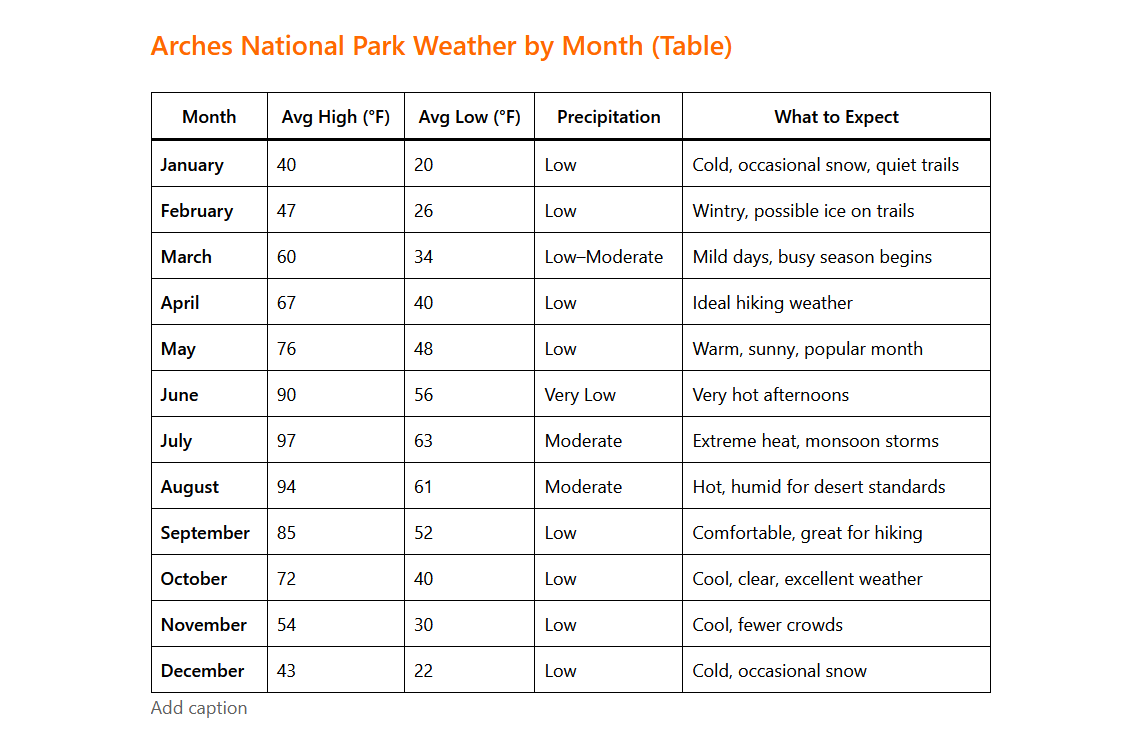
Arches National Park Weather by Month (Table)
| Month | Avg High (°F) | Avg Low (°F) | Precipitation | What to Expect |
|---|---|---|---|---|
| January | 40 | 20 | Low | Cold, occasional snow, quiet trails |
| February | 47 | 26 | Low | Wintry, possible ice on trails |
| March | 60 | 34 | Low–Moderate | Mild days, busy season begins |
| April | 67 | 40 | Low | Ideal hiking weather |
| May | 76 | 48 | Low | Warm, sunny, popular month |
| June | 90 | 56 | Very Low | Very hot afternoons |
| July | 97 | 63 | Moderate | Extreme heat, monsoon storms |
| August | 94 | 61 | Moderate | Hot, humid for desert standards |
| September | 85 | 52 | Low | Comfortable, great for hiking |
| October | 72 | 40 | Low | Cool, clear, excellent weather |
| November | 54 | 30 | Low | Cool, fewer crowds |
| December | 43 | 22 | Low | Cold, occasional snow |
Best Time to Visit Arches National Park
- Overall Best: April, May, September, October: Perfect combination of mild temps and lower-weather risks.
- Best for Sunrise Photography: June–August: Clear skies and vivid desert colors—just avoid midday heat.
- Best for Snow Photography: December–February
- Best for Low Crowds: January, February, November, December
Tips for Visiting Arches Based on Weather
Hydration & Heat
- Bring 2–4 liters of water per person on longer hikes
- Start early (5–8 AM during summer)
Clothing
- Layering is essential—temperature swings can exceed 30°F
- Sun protection is crucial year-round
Storm Safety
- Avoid narrow canyons during July–August monsoon season
- Check flash-flood warnings
Winter Safety
- Use traction devices for icy trails
- Expect potential road closures after snow
20 FAQs About Arches National Park Weather
- What is the best month to visit Arches National Park?
April, May, September, and October offer ideal weather. - How hot does it get in Arches in summer?
Temperatures often exceed 100°F (38°C) in July. - Does Arches National Park get snow?
Yes—mostly December through February. - Is winter a good time to visit?
Yes, if you don’t mind cold weather and potential icy trails. - When is Arches the least crowded?
December–February. - When is Arches the most crowded?
March–May and September–October. - Is there a rainy season?
Yes—monsoon storms typically occur July–August. - Can thunderstorms be dangerous in Arches?
Yes—flash floods and lightning can occur. - What should I wear in summer?
Lightweight clothing, a hat, sunscreen, and sturdy shoes. - Do temperature swings happen often?
Yes—high desert conditions create large day/night differences. - When is sunrise the best?
March–May and September–October for cooler mornings. - Is hiking safe in extreme heat?
Only with hydration, shade breaks, and early start times. - Does Arches ever close due to weather?
Rarely, but icy roads or flooding can temporarily affect access. - Are mornings cold year-round?
Even in summer, mornings can be mild or cool. - Can I visit in the rain?
Yes, but trails may be slippery, and flash floods are possible. - What’s the humidity like?
Very low—Arches is a dry, high desert environment. - Is wind common?
Especially in spring (March–April). - Are there shaded areas?
Very few—most trails have little natural shade. - What month has the most comfortable nights?
May, June, and September. - Do temperatures drop quickly after sunset?
Yes—desert cooling is rapid, even in summer.
Conclusion
Arches National Park offers dramatically different experiences depending on the month you visit. Whether you want mild spring hiking, summer sunrise adventures, or peaceful snowy red-rock landscapes, understanding the monthly weather helps you plan a safer and more memorable trip.