

Anchorage, Alaska’s largest city, offers dramatic seasonal changes that can greatly shape your travel experience. From snowy winters and dazzling northern lights to mild summers with endless daylight, understanding Anchorage’s weather by month helps you plan the perfect trip.
This complete guide breaks down Anchorage, Alaska weather by month, highlighting temperatures, conditions, and what each season is best for.
Overview of Anchorage’s Climate
Anchorage has a subarctic climate, meaning:
- Long, cold winters
- Short but pleasant summers
- Rapid changes in daylight hours
- Low overall precipitation, with snow dominating in winter
Despite its northern location, Anchorage is milder than many expect due to coastal influences from Cook Inlet.
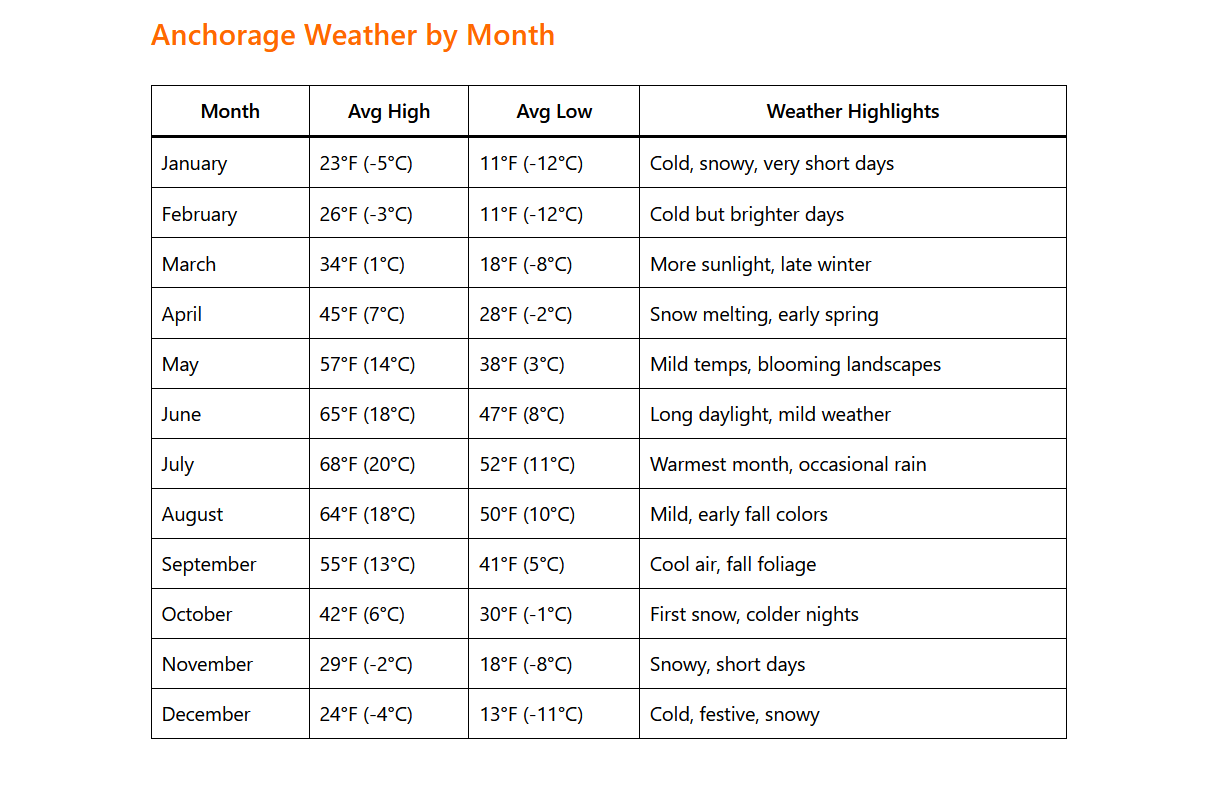
Anchorage Weather by Month
| Month | Avg High | Avg Low | Weather Highlights |
|---|---|---|---|
| January | 23°F (-5°C) | 11°F (-12°C) | Cold, snowy, very short days |
| February | 26°F (-3°C) | 11°F (-12°C) | Cold but brighter days |
| March | 34°F (1°C) | 18°F (-8°C) | More sunlight, late winter |
| April | 45°F (7°C) | 28°F (-2°C) | Snow melting, early spring |
| May | 57°F (14°C) | 38°F (3°C) | Mild temps, blooming landscapes |
| June | 65°F (18°C) | 47°F (8°C) | Long daylight, mild weather |
| July | 68°F (20°C) | 52°F (11°C) | Warmest month, occasional rain |
| August | 64°F (18°C) | 50°F (10°C) | Mild, early fall colors |
| September | 55°F (13°C) | 41°F (5°C) | Cool air, fall foliage |
| October | 42°F (6°C) | 30°F (-1°C) | First snow, colder nights |
| November | 29°F (-2°C) | 18°F (-8°C) | Snowy, short days |
| December | 24°F (-4°C) | 13°F (-11°C) | Cold, festive, snowy |
January – Deep Winter Wonderland
- Average High: 23°F (-5°C)
- Average Low: 11°F (-12°C)
January is Anchorage’s coldest month. Snow blankets the city, creating ideal conditions for winter sports like skiing, snowmobiling, and dog sledding. Daylight is limited, but the chances of seeing the Northern Lights are excellent.
Best for: Aurora viewing, winter adventures
Travel tip: Dress in layers and prepare for icy roads.
February – Cold but Brighter
- Average High: 26°F (-3°C)
- Average Low: 11°F (-12°C)
February remains cold, but days grow noticeably longer. Snow conditions are still excellent, making it a favorite month for winter festivals and outdoor activities.
Best for: Winter festivals, photography
Travel tip: Expect crisp, clear days with stunning mountain views.
March – Transition Toward Spring
- Average High: 34°F (1°C)
- Average Low: 18°F (-8°C)
March brings more sunlight and slightly warmer temperatures. Snow is still present, but melting begins toward the end of the month.
Best for: Late-season skiing, longer daylight
Travel tip: Waterproof boots are helpful during thawing periods.
April – Early Spring Awakening
- Average High: 45°F (7°C)
- Average Low: 28°F (-2°C)
April marks the start of spring. Snow melts rapidly, trails begin to open, and wildlife becomes more active.
Best for: Budget travelers, wildlife spotting
Travel tip: Expect muddy conditions and fluctuating temperatures.
May – Spring in Full Swing
- Average High: 57°F (14°C)
- Average Low: 38°F (3°C)
May is a refreshing month with blooming landscapes and long daylight hours. Snow is mostly gone, and outdoor activities increase.
Best for: Hiking, sightseeing
Travel tip: Pack layers—days are mild, evenings are cool.
June – Start of Summer & Midnight Sun
- Average High: 65°F (18°C)
- Average Low: 47°F (8°C)
June offers pleasant weather and nearly 19 hours of daylight. The city is lively, and outdoor adventures are in full swing.
Best for: Hiking, fishing, wildlife tours
Travel tip: Bring an eye mask if you’re sensitive to light while sleeping.
July – Warmest Month
- Average High: 68°F (20°C)
- Average Low: 52°F (11°C)
July is the warmest and most popular month to visit Anchorage. The weather is ideal for exploring nature, though occasional rain showers occur.
Best for: Peak tourism, festivals
Travel tip: Book accommodations early—this is high season.
August – Mild with Early Fall Hints
- Average High: 64°F (18°C)
- Average Low: 50°F (10°C)
August remains mild but slightly cooler. Fall colors begin appearing late in the month, and daylight slowly decreases.
Best for: Photography, fewer crowds
Travel tip: Carry rain gear for occasional wet days.
September – Fall Colors & Cooler Air
- Average High: 55°F (13°C)
- Average Low: 41°F (5°C)
September brings vibrant fall foliage and crisp air. It’s also the start of the Northern Lights season.
Best for: Fall scenery, aurora viewing
Travel tip: Pack warm layers—temperatures drop quickly at night.
October – Cold Returns
- Average High: 42°F (6°C)
- Average Low: 30°F (-1°C)
October is a transitional month with the first snowfall often appearing. Daylight decreases rapidly, and winter approaches.
Best for: Quiet travel, early winter scenery
Travel tip: Be prepared for snow and icy conditions.
November – Early Winter
- Average High: 29°F (-2°C)
- Average Low: 18°F (-8°C)
November marks the return of full winter conditions. Snow accumulates, and daylight is limited.
Best for: Northern Lights, winter photography
Travel tip: Plan indoor activities alongside outdoor excursions.
December – Festive & Snowy
- Average High: 24°F (-4°C)
- Average Low: 13°F (-11°C)
December is cold and snowy, with very short days. The city feels festive with holiday lights reflecting off the snow.
Best for: Holiday travel, winter charm
Travel tip: Expect limited daylight but magical winter scenery.
Best Time to Visit Anchorage, Alaska
- For warm weather & outdoor activities: June–August
- For Northern Lights: September–March
- For winter sports: December–March
- For fewer crowds & lower costs: April, May, September
Frequently Asked Questions About Anchorage Weather
What is the coldest month in Anchorage, Alaska?
January is typically the coldest month, with average lows around 11°F (-12°C).
What is the warmest month in Anchorage?
July is the warmest month, with average highs near 68°F (20°C).
Does Anchorage have all four seasons?
Yes, Anchorage experiences all four seasons, though winter is long and summer is short.
How much snow does Anchorage get each year?
Anchorage receives about 75 inches (190 cm) of snow annually on average.
When is the best time to visit Anchorage for good weather?
June through August offers the mildest temperatures and longest daylight hours.
What month has the most daylight in Anchorage?
June has the most daylight, with nearly 19 hours during the summer solstice.
What month has the least daylight in Anchorage?
December has the least daylight, with just over 5 hours of daylight.
Is Anchorage colder than Fairbanks?
No, Anchorage is generally milder due to its coastal location, while Fairbanks experiences more extreme temperatures.
When can you see the Northern Lights in Anchorage?
The best time to see the Northern Lights is from September through March.
Does it rain a lot in Anchorage?
No, Anchorage has relatively low rainfall compared to many U.S. cities.
What should I wear in Anchorage during winter?
Wear insulated layers, waterproof boots, gloves, a hat, and a heavy winter coat.
Is summer in Anchorage hot?
No, summers are mild and comfortable, rarely exceeding 75°F (24°C).
Does Anchorage experience extreme weather?
Anchorage rarely experiences extreme weather like hurricanes or severe heatwaves.
When does snow start falling in Anchorage?
Snow can begin as early as October and usually lasts through April.
Is April a good time to visit Anchorage?
April can be a budget-friendly time to visit, though conditions are often muddy due to melting snow.
How cold does Anchorage get at night?
Winter nights often drop into the low teens or single digits Fahrenheit.
Does Anchorage have midnight sun?
Anchorage does not have a true midnight sun, but summer nights are very bright with extended twilight.
What is the best month for outdoor activities in Anchorage?
July is ideal for outdoor activities due to warm temperatures and long daylight hours.
Is September a good month to visit Anchorage?
Yes, September offers fall colors, cooler temperatures, and opportunities to see the Northern Lights.
Can you visit Anchorage in winter as a tourist?
Absolutely. Winter offers unique experiences like dog sledding, snowshoeing, and aurora viewing.
Final Thoughts
Anchorage’s weather varies dramatically by month, offering something unique in every season. Whether you dream of summer hikes under the midnight sun or snowy nights illuminated by the Northern Lights, knowing Anchorage Alaska weather by month allows you to plan a trip that perfectly matches your travel goals.
No matter when you visit, Anchorage’s natural beauty and seasonal charm make it a destination worth experiencing year-round.