

Alaska is a land of dramatic seasons, where weather can shape your entire travel experience. From endless summer daylight to snow-covered winter landscapes, understanding Alaska’s weather by month is essential for planning the perfect trip. This guide breaks down what travelers can expect each month, including temperatures, daylight, and the best activities.
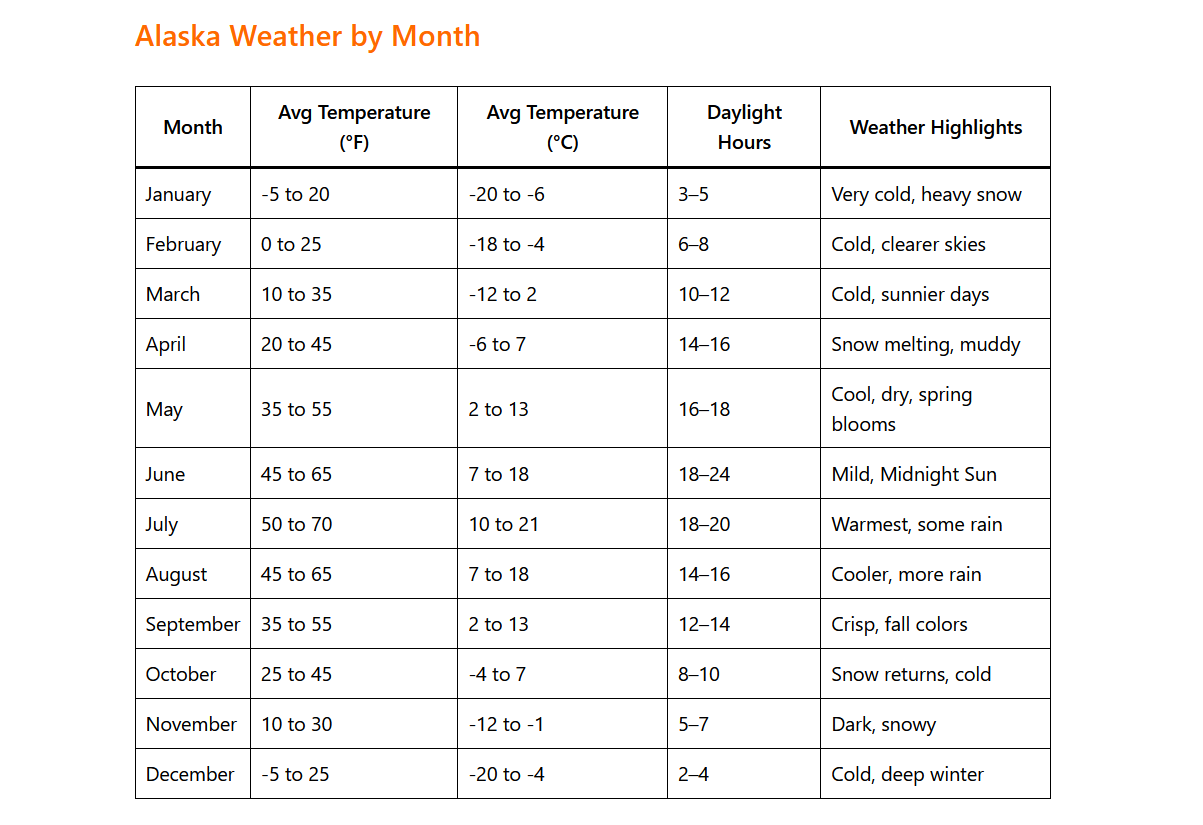
Alaska Weather by Month
| Month | Avg Temperature (°F) | Avg Temperature (°C) | Daylight Hours | Weather Highlights | Best For |
|---|---|---|---|---|---|
| January | -5 to 20 | -20 to -6 | 3–5 | Very cold, heavy snow | Northern Lights, dog sledding |
| February | 0 to 25 | -18 to -4 | 6–8 | Cold, clearer skies | Aurora viewing, winter festivals |
| March | 10 to 35 | -12 to 2 | 10–12 | Cold, sunnier days | Skiing, snowshoeing |
| April | 20 to 45 | -6 to 7 | 14–16 | Snow melting, muddy | Budget travel, sightseeing |
| May | 35 to 55 | 2 to 13 | 16–18 | Cool, dry, spring blooms | Wildlife viewing, cruises |
| June | 45 to 65 | 7 to 18 | 18–24 | Mild, Midnight Sun | Hiking, fishing, parks |
| July | 50 to 70 | 10 to 21 | 18–20 | Warmest, some rain | Cruises, outdoor adventures |
| August | 45 to 65 | 7 to 18 | 14–16 | Cooler, more rain | Fishing, berry picking |
| September | 35 to 55 | 2 to 13 | 12–14 | Crisp, fall colors | Photography, Northern Lights |
| October | 25 to 45 | -4 to 7 | 8–10 | Snow returns, cold | Aurora viewing, quiet travel |
| November | 10 to 30 | -12 to -1 | 5–7 | Dark, snowy | Solitude, Northern Lights |
| December | -5 to 25 | -20 to -4 | 2–4 | Cold, deep winter | Winter scenery, auroras |
Alaska Weather in January: Deep Winter Wonderland
- Average Temperature: -5°F to 20°F (-20°C to -6°C)
- Weather: Very cold, heavy snow in many regions
- Daylight: As little as 3–5 hours in northern Alaska
January is ideal for winter enthusiasts. Expect frozen rivers, snow-blanketed landscapes, and excellent conditions for dog sledding, snowmobiling, and Northern Lights viewing. Coastal areas like Anchorage are milder than the interior.
Alaska Weather in February: Cold but Brightening
- Average Temperature: 0°F to 25°F (-18°C to -4°C)
- Weather: Cold and dry
- Daylight: Rapidly increasing
February offers clearer skies and longer days, making it one of the best months for aurora hunting. Winter festivals and outdoor activities are still in full swing.
Alaska Weather in March: Transition to Spring
- Average Temperature: 10°F to 35°F (-12°C to 2°C)
- Weather: Cold but sunnier
- Daylight: 10–12 hours
March is a favorite for locals. Snow remains, but days are noticeably longer. It’s perfect for skiing, snowshoeing, and enjoying Alaska’s late-winter light.
Alaska Weather in April: Early Spring Thaw
- Average Temperature: 20°F to 45°F (-6°C to 7°C)
- Weather: Snow melting, some muddy conditions
- Daylight: 14+ hours
April is a shoulder season. Winter activities fade while summer tourism hasn’t fully started. Travelers can enjoy quieter towns and lower prices, though trails may be wet.
Alaska Weather in May: Spring Awakens
- Average Temperature: 35°F to 55°F (2°C to 13°C)
- Weather: Cool, relatively dry
- Daylight: Up to 18 hours
May marks the beginning of cruise season. Wildlife becomes more active, flowers bloom, and hiking starts to open up. It’s a great month for budget travelers.
Alaska Weather in June: Start of Peak Summer
- Average Temperature: 45°F to 65°F (7°C to 18°C)
- Weather: Mild and pleasant
- Daylight: Nearly 24 hours in some regions
June offers Alaska’s famous Midnight Sun. This is one of the best months for hiking, fishing, wildlife viewing, and national park visits.
Alaska Weather in July: Warmest Month
- Average Temperature: 50°F to 70°F (10°C to 21°C)
- Weather: Warmest and sometimes rainy
- Daylight: 18–20 hours
July is peak tourist season. Expect lush landscapes, active wildlife, and excellent conditions for cruises and outdoor adventures. Mosquitoes can be strong—pack repellent.
Alaska Weather in August: Late Summer & Early Fall
- Average Temperature: 45°F to 65°F (7°C to 18°C)
- Weather: Cooler, more rain
- Daylight: Gradually decreasing
August is fantastic for berry picking, fishing, and early fall colors. Toward the end of the month, Northern Lights may begin to reappear in darker skies.
Alaska Weather in September: Fall Colors & Aurora Season
- Average Temperature: 35°F to 55°F (2°C to 13°C)
- Weather: Cool and crisp
- Daylight: 12–14 hours
September is a favorite for photographers. Fall foliage peaks, crowds thin out, and aurora viewing improves—especially in the interior.
Alaska Weather in October: Winter Returns
- Average Temperature: 25°F to 45°F (-4°C to 7°C)
- Weather: Snow begins, colder nights
- Daylight: Rapidly decreasing
October is a quiet month. Roads and services may start to close, but it’s a good time for Northern Lights and early winter scenery.
Alaska Weather in November: Dark & Cold
- Average Temperature: 10°F to 30°F (-12°C to -1°C)
- Weather: Snowy and cold
- Daylight: Very limited
November is not ideal for general sightseeing, but it’s excellent for travelers seeking solitude and strong aurora activity.
Alaska Weather in December: Arctic Winter Magic
- Average Temperature: -5°F to 25°F (-20°C to -4°C)
- Weather: Cold, snowy
- Daylight: As little as 2–4 hours in the north
December brings festive winter charm. Despite limited daylight, travelers can enjoy holiday events, Northern Lights, and iconic winter experiences.

Best Time to Visit Alaska (Quick Summary)
- Best for Warm Weather & Sightseeing: June – July
- Best for Budget Travel: May & September
- Best for Northern Lights: February – March & September – November
- Best for Winter Adventures: December – March
Alaska Weather FAQs
1. What is the best month to visit Alaska?
The best month depends on your interests. June and July are best for warm weather and sightseeing, while February–March and September are ideal for Northern Lights.
2. What is the warmest month in Alaska?
July is typically the warmest month, with average temperatures between 50°F and 70°F (10°C–21°C).
3. What is the coldest month in Alaska?
January is usually the coldest month, especially in interior regions like Fairbanks.
4. Does it snow all year in Alaska?
No. Snow is common from October through April, but summer months usually have little to no snowfall.
5. When can you see the Northern Lights in Alaska?
Northern Lights are best seen from late August through April, when nights are dark and skies are clear.
6. How much daylight does Alaska get in summer?
During June, some areas experience up to 24 hours of daylight due to the Midnight Sun.
7. How dark does Alaska get in winter?
In December, northern Alaska can have as little as 2–4 hours of daylight, with extended twilight.
8. Is Alaska rainy in summer?
Yes, July and August can be rainy, especially in coastal areas like Southeast Alaska.
9. What should I pack for Alaska weather?
Pack layers, a waterproof jacket, warm clothing, sturdy shoes, and seasonal gear like gloves or mosquito repellent.
10. Which month has the least tourists in Alaska?
April, October, and November are considered shoulder or low seasons with fewer visitors.
11. Is May a good time to visit Alaska?
Yes. May offers longer daylight, fewer crowds, lower prices, and emerging wildlife.
12. Is September too cold to visit Alaska?
No. September is cool but comfortable and offers fall colors and aurora viewing.
13. Can you cruise to Alaska year-round?
No. Most Alaska cruises operate from May through September.
14. Which month is best for wildlife viewing?
June through August are best for spotting bears, whales, and other wildlife.
15. Are mosquitoes bad in Alaska?
Mosquitoes can be heavy in June and July, especially near lakes and wetlands.
16. Does Alaska have different climates?
Yes. Alaska has coastal, interior, and Arctic climates, which vary significantly by region.
17. Is winter travel in Alaska safe?
Yes, with proper preparation. Winter travel requires cold-weather gear and planning.
18. What month is best for photography in Alaska?
September is excellent for photography due to fall colors and dramatic lighting.
19. Does Alaska have extreme weather?
Alaska can experience extreme cold, heavy snow, and strong winds, particularly in winter.
20. When is the cheapest time to visit Alaska?
The cheapest times are April, early May, and October, outside peak tourist season.
Final Tips for Travelers
- Always pack layers, regardless of season.
- Weather varies greatly between coastal, interior, and northern Alaska.
- Check daylight hours carefully when planning activities.
No matter when you visit, Alaska’s weather adds to its wild beauty. With the right planning, every month offers something unforgettable.