National Park Scenic Drives by RV: Parking Restrictions, Viewpoint Access, and Safe Stops
Some of America’s finest national park views appear just beyond a bend in the road. Scenic drives can lead through high mountain passes, desert rock formations, and forests that change with elevation. For RV travelers, the road itself is part of the experience, and reaching a viewpoint requires careful planning.
An RV may be permitted on a park road while the parking lot at a popular overlook has little or no space for oversized vehicles. A seasonal closure, restricted tunnel, or crowded trailhead can also change the day’s itinerary.
The most useful way to plan is to make three separate decisions: where the RV can drive, where it can park, and how travelers will explore after stopping.
Drive, Park, Explore: A Three-Stage Planning Method
Start with the full vehicle configuration: motorhome length, width including mirrors, height, and any towed vehicle or trailer. A restriction may apply to the entire combination. Compare these measurements with the National Park Service’s current guidance for each specific road.
Next, identify actual parking options. Look for designated oversized spaces at visitor centers, scenic overlooks, and trailheads. Parking availability can differ dramatically between stops on the same route. Allow space for entering, exiting, and turning without blocking traffic.
Finally, plan what happens after parking. Some park highlights are best reached by shuttle or on foot. Others have roadside overlooks with designated RV parking. A campground outside the park may be a convenient base for exploring by a smaller vehicle or an authorized transit service.
This three-stage method prevents a common itinerary problem: choosing a beautiful road first and discovering too late that the RV has nowhere suitable to stop.
Check Road Limits Before Choosing the Viewpoints
The National Park Service describes scenic roads as part of the parks’ visitor experience. Across the park system, historic parkways and mountain drives connect travelers with landscapes that would otherwise require far longer approaches. Their designs and operating conditions vary widely.
Glacier National Park offers a clear example. On the restricted portion of Going-to-the-Sun Road, vehicles and vehicle combinations longer than 21 feet, including bumpers, or wider than 8 feet, including mirrors, are prohibited. Vehicles over 10 feet high may also encounter rock-overhang clearance problems on a westbound section. Many motorhomes will therefore need a different sightseeing plan for Logan Pass.
Elsewhere, a road may be open to RVs in good weather yet close seasonally because of snow or other conditions.
Check the park’s road-status page shortly before travel, and confirm reservations or shuttle requirements for the actual date of your visit. General travel guides are useful for inspiration; park-specific notices establish the operating rules.
Bryce Canyon: A Road You Can Drive With Parking Restrictions
Bryce Canyon National Park illustrates why road access and overlook parking need separate checks.
During the shuttle operating season, vehicles 23 feet or longer face parking restrictions in much of the popular Bryce Amphitheater area, including several viewpoints along the first three miles of the main road.
The park provides alternatives, including its shuttle station in Bryce Canyon City and other designated locations. Farther south, oversized vehicles are permitted to drive the Southern Scenic Drive and park at its viewpoints, subject to current conditions and available spaces.
There is also a useful way to organize the scenic drive. The park recommends traveling south to Rainbow and Yovimpa Points first, then visiting overlooks while returning north. The stops will be on the right side of the road, reducing unnecessary crossings of opposing traffic.
For RV travelers, this is a strong example of turning a parking restriction into an efficient itinerary: leave the large vehicle where the park directs, use the shuttle for the Amphitheater, and save the Southern Scenic Drive for suitable RV-accessible stops.
Arches: Expect Limited Oversized Parking
At Arches National Park, the National Park Service advises that parking for RVs and trailers is extremely limited.
Popular destinations can fill for hours, especially at busy trailheads. The park recommends leaving oversized vehicles in town or at the visitor center rather than assuming a large space will be available at each attraction.
That makes a smaller vehicle or a carefully planned alternative especially valuable.
If your RV is the only transportation available, choose realistic destinations using the park’s published parking details. Arrange a fallback stop before reaching a full lot, and continue to a legal parking area if the preferred location has no suitable space.
This is why RV travelers should check the parking arrangements for individual attractions before deciding which scenic-road stops to include.
Make Scenic Stops Part of the Itinerary
Scenic roads tempt travelers to make spontaneous stops. In a long motorhome, it is better to choose a few priority viewpoints and confirm suitable parking before leaving the campground.
Select a primary stop with documented oversized spaces and an alternative if it is full.
Review the direction of travel, turns into the lot, and whether there is room to depart without reversing into active traffic. Budget extra time for pedestrians, wildlife, and slower vehicles.
Use designated pullouts only. Road shoulders, narrow switchbacks, and areas beside drop-offs are unsuitable substitutes for an established RV parking space.
If a viewpoint is full, drive on to the next safe and legal option.
On some routes, it may be easier to see fewer overlooks and enjoy each one properly.
Plan the Campground as Your Sightseeing Base
A good overnight base can simplify an entire national park visit.
For RV travelers, the key considerations include campground reservations, vehicle-length limits, available utility hookups, and the convenience of nearby campgrounds outside park boundaries.
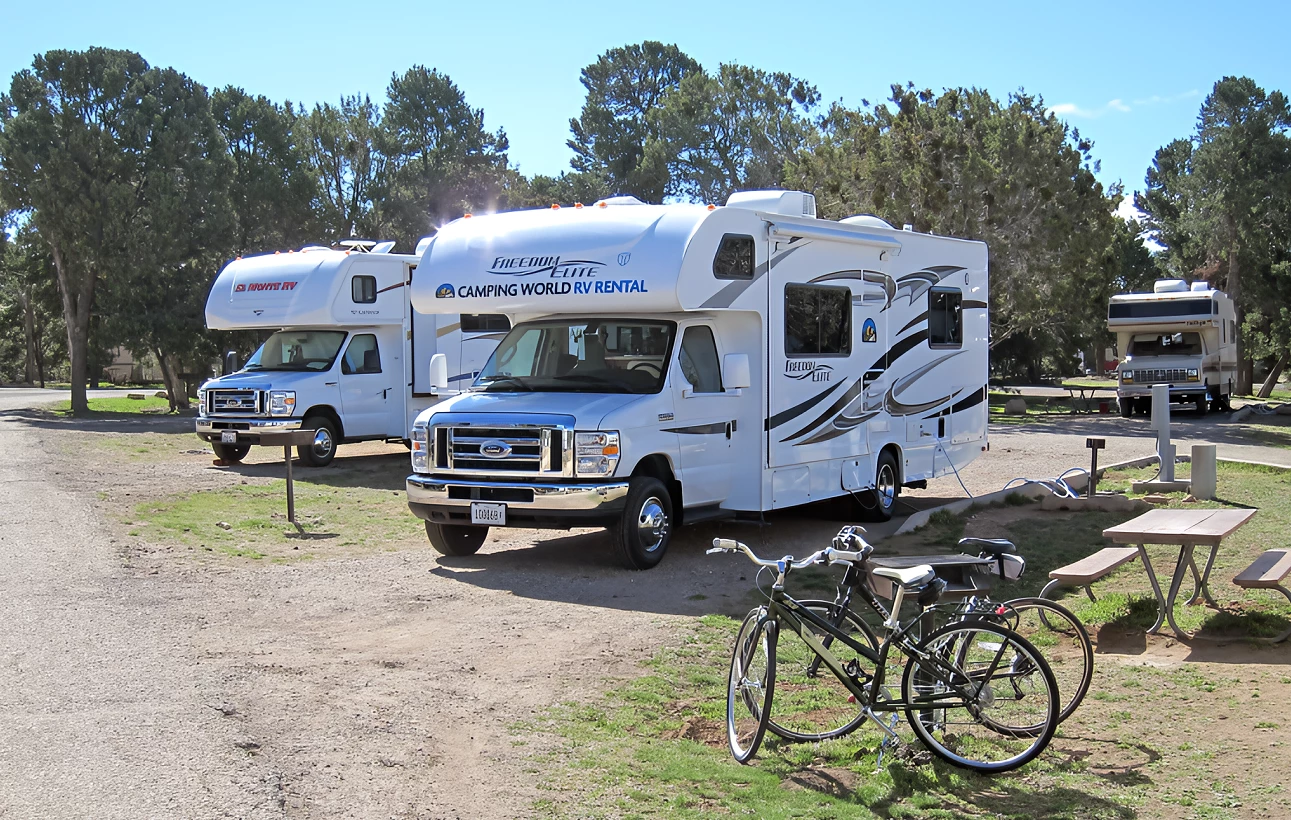
Check that a site accommodates both the RV and any tow vehicle. Confirm the actual pad length, slide-out clearance, electrical and water connections, and any generator or arrival-time rules.
Popular sites often require advance booking, while nearby commercial RV parks may offer additional services.
For parks with restricted scenic roads, a practical arrangement is to leave the RV at the campsite and use a shuttle, tow vehicle, or other approved transportation to reach major viewpoints.
Verify that the chosen shuttle serves the attractions on your itinerary and whether advance tickets are needed.
This arrangement can make it easier to visit popular viewpoints while avoiding the parking limitations associated with a large motorhome.
Park and Maneuver Within the Designated Space
Even a marked RV parking area can require careful positioning. A long rear overhang, nearby pedestrians, and low obstacles can make the final few feet of a parking maneuver difficult to judge.
An rv backup camera can add a useful view behind the motorhome while positioning it inside a suitable space.
Use the camera alongside mirrors, direct observation, and a spotter when available. Check the surrounding area before moving, keep the speed low, and stop whenever clearance becomes uncertain.
A camera adds visibility within its field of view. It cannot establish whether an unpaved shoulder is stable or whether reversing near an exposed road edge is safe.
Choose a verified parking area first; then use the available visibility tools to enter it carefully.
Allow for Weather, Crowds, and Changing Access
Mountain passes can close after snow, high-elevation conditions can change quickly, and desert destinations may have extreme temperatures.
Crowds also affect parking availability, especially during holiday periods and peak visiting hours.
Before setting out, confirm current road status, relevant size restrictions, shuttle service, and any entry or parking reservations.
Download park maps because mobile coverage may be limited. Carry drinking water, maintain sufficient fuel, and allow extra time for slow scenic traffic.
It is worth checking these details again on the morning of a planned drive. A route that looked suitable when the trip was booked may require a different approach by the time you arrive.
A Better Way to Enjoy National Park Scenic Roads
An RV road trip offers the freedom to travel with familiar comforts while exploring extraordinary landscapes.
The best scenic-drive plan connects that freedom with realistic access decisions.
Check the road first, confirm oversized parking second, and decide how to reach the viewpoints third.
Use official park guidance for restrictions and current conditions, choose a few worthwhile stops, and keep an alternative ready.
This approach leaves more time for the scenery and less time searching for somewhere a large vehicle can safely fit.