Renting a Car for Your National Parks Road Trip: 10 Things to Know Before You Go
National Parks tend to be miles from the nearest airport. So, if you are visiting one during your trip from overseas or out of state, hiring a car is often the easiest way to do so. Doing this gives you the freedom to explore at your own pace, stop at lookouts whenever you like and pop into any small town that takes your fancy.
However, driving in or around a national park can expose you to conditions you may not face at home. For this reason, before reserving a vehicle, it is worth taking a moment to consider factors such as insurance, road conditions, fuel stops, and the type of vehicle your route requires.
With that in mind, here are 10 things you should know before renting a car for a national park road trip.
1. Book Your Rental Car Before Your Flight
Given that demand for rental cars can be high, especially during summer, school holidays and long weekends, it is a good idea to book your vehicle in advance of your flight.
Doing this gives you time to compare details such as rental rates, excess amounts and insurance choices. You can also arrange rental car insurance with RentalCover before you reach the rental desk, where they might otherwise try to upsell you.
Whatever policy you take out, make sure you read what it covers. In particular, its limits and exclusions. Also, be sure to keep a digital or printed copy of your documents with you at all times.
2. Which Airport To Fly Into
It is important to recognise that the closest airport to a national park might not necessarily be the best place to hire a car. Indeed, while a smaller regional airport might be near the park, it may offer limited flights and fewer rental vehicles than one based in a larger city.
That said, if you decide to fly into a major city airport, you might find yourself having to do a longer drive to get to your chosen National Park. For this reason, it is worth researching where the best place is for you to land and pick up your vehicle, all things considered.
3. Consider a One-Way Car Rental
A one-way rental lets you pick up a car in one place and drop it off somewhere else. This can be useful if you are short on time and want to visit several parks or other destinations.
If this is something you would like to do, then you will need to factor it into your planning. Especially if you are travelling back overseas, as you’ll need to decide which airport to fly home from.
While a one-way rental will mean you will not need to retrace the same route, you might incur a possible relocation fee. Some companies also restrict which branches accept one-way returns, so make sure you confirm this at the time of your booking.
4. Whether You Need a 4WD or Higher-Clearance Vehicle
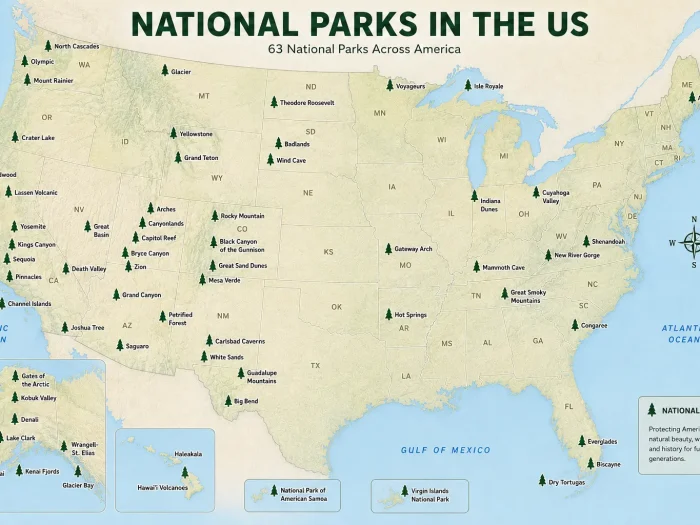
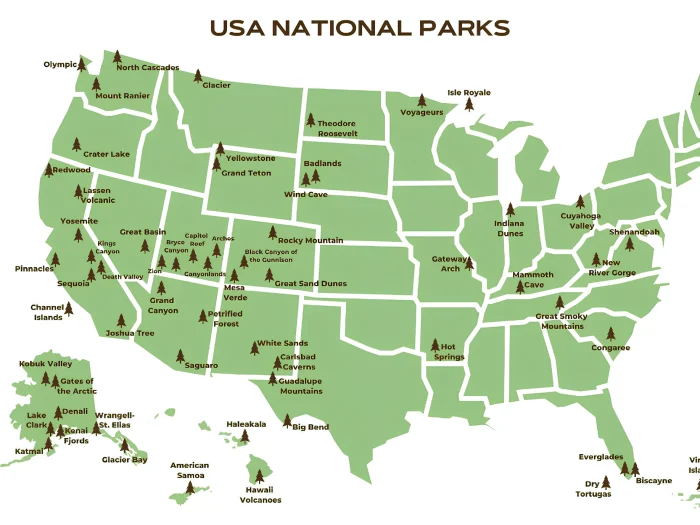
Many National Parks, including Rocky Mountain, Shenandoah, and Acadia, can be explored in a standard two-wheel-drive car. These tend to have sealed roads that easily take you to major visitor centres, campgrounds and scenic lookouts.
However, if you intend to venture into the remote backcountry of places like Canyonlands National Park, Death Valley, or Capitol Reef, then you might require a Four Wheel Drive. Often, these contain corrugated tracks, creek crossings, deep sand or steep sections which are otherwise impossible to cross.
Before you venture into a National Park, it’s worth confirming with the National Park Service what type of vehicle you might need.
5. If You Can Drive a Rental Car on Gravel Roads
When hiring a vehicle, do not assume that gravel roads are included in your rental agreement. Some rental companies do allow travel on well-maintained public roads. However, others prohibit you from taking them onto unsealed tracks or even specific regions.
Mainly, this is because gravel can increase the risk of damage to your windscreen or paintwork, while corrugations and potholes may affect the tyres, suspension and underside of the car.
Make sure you confirm with the rental company that you can drive their vehicle where you want to go.
6. How Far Can You Drive Between Fuel Stops
Another thing to consider is that some companies do not allow you to drive more than a certain number of miles when you rent their cars. This could be problematic if you intend to do a 200-mile round trip to Glacier National Park from certain parts of Montana, or to Yellowstone from Idaho.
Be sure to check whether your agreement includes unlimited mileage. If there is a daily allowance, it is advisable to estimate the total distance of the trip before setting off.
7. Which Park Passes and Permits Will You Need
Depending on which National Park you want to visit, you might need a specific type of entry permit. Some might charge per vehicle or require you to hold a pass. There may even be timed-entry reservations for the more popular destinations during busy months.
Additionally, just because you have a park pass, it doesn’t necessarily include camping, guided activities, or access to restricted areas. Instead, these might require separate permits for overnight walks, four-wheel-drive routes or remote campsites.
Again, it is recommended to check with the park authority’s official website before travelling. You should also save passes and confirmations to your phone, although it’s a good idea to keep screenshots in case there is no mobile reception at the entrance.
8. What To Check Before Driving Away
Before you drive your hire car off the forecourt, take the time to fully inspect it. When doing this, take clear photos or a video of every side of the vehicle, including the roof, wheels and windscreen. At the same time, record any scratches, dents and stone chips and check that any damage report matches what you see.
It is also advisable to photograph the fuel gauge and odometer and to make sure the headlights, indicators, air conditioning, and windscreen wipers work. If there is any existing damage, do not leave until it has been acknowledged by the rental company.
9. Preparing for the Drive
The USA is a fabulous place for road-tripping. However, it pays to be prepared for the journey. That’s why it’s worth downloading offline maps before you leave. Additionally, pack the following:
- Appropriate clothes
- Carry drinking water
- Bring plenty of snacks
- Charging cables
- Sun protection
- Small first-aid kit
Wherever you decide to go, it is advisable to tell someone of your plans and even drop a location pin to their phone every now and then. The weather conditions can make the drive a bit more difficult. Therefore, make a point of checking the forecast before you head off.
10. Returning the Car
When returning the car, be sure you do so before the cut-off time. Otherwise, you’ll be hit with a hefty late fee. Additionally, if the car runs on petrol, you’ll be required to return it with a full tank.
The rental company will check over the vehicle to ensure no further damage has been done. Don’t leave their premises until they confirm they are happy with the car’s condition.