Rocky Mountain National Park Weather by Month
Rocky Mountain National Park experiences dramatic weather changes throughout the year because of its high elevation and alpine environment. Temperatures, snowfall, rainfall, and road conditions can vary significantly between seasons — and even within the same day.
Rocky Mountain National Park Weather by Month
Click the image below to view the full-size version.
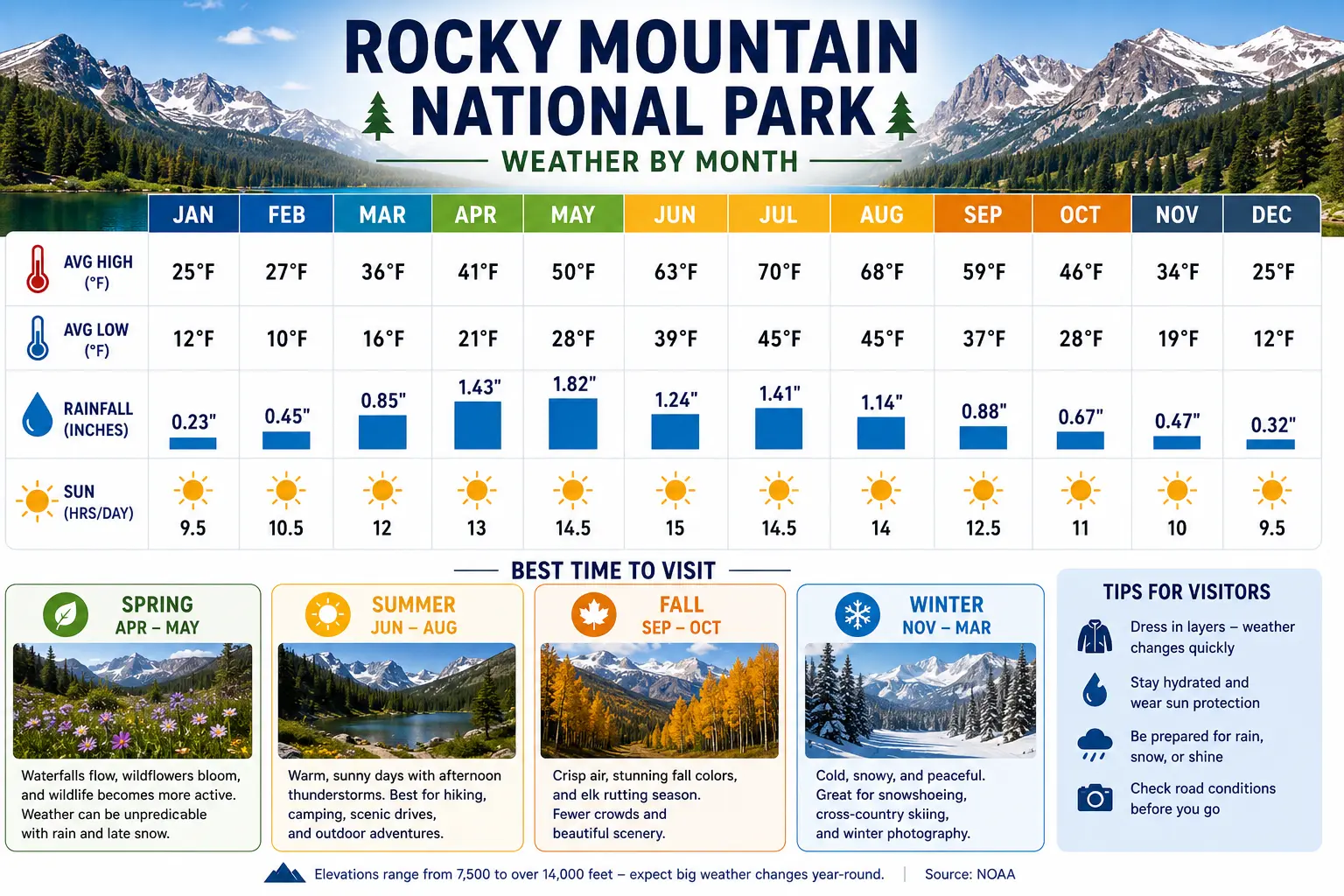
January – Freezing and Very Dry
Average high: -4°C (25°F)
Average low: -11°C (12°F)
Rainfall: 0.23 inches (5.8 mm)
Daylight: 9.5 hours
January is one of the coldest and driest months in Rocky Mountain National Park. Most precipitation falls as snow rather than rain, especially at higher elevations.
Snow-covered forests, frozen lakes, and icy mountain peaks create spectacular winter scenery. Visitor numbers are low, making this an excellent time for peaceful snowshoeing and winter photography.
February – Cold with Bright Winter Skies
Average high: -3°C (27°F)
Average low: -12°C (10°F)
Rainfall: 0.45 inches (11.4 mm)
Daylight: 10.5 hours
February remains deeply wintery, although slightly longer daylight hours improve outdoor conditions. Crisp air and sunny mornings often provide excellent mountain visibility.
Snow continues across the park, particularly in alpine areas, while lower valleys may experience calmer weather between winter storms.
March – Early Spring but Still Snowy
Average high: 2°C (36°F)
Average low: -9°C (16°F)
Rainfall: 0.85 inches (21.6 mm)
Daylight: 12 hours
March brings the first signs of spring, but winter conditions still dominate much of the park. Snowstorms remain common, especially at higher elevations.
Trails can be muddy, icy, or snow-covered depending on elevation and recent weather. Wildlife activity gradually increases as temperatures slowly rise.
April – Unpredictable with Snow and Rain
Average high: 5°C (41°F)
Average low: -6°C (21°F)
Rainfall: 1.43 inches (36.3 mm)
Daylight: 13 hours
April marks the beginning of the wetter season in Rocky Mountain National Park. Spring storms often bring a mix of snow and rain, especially during changing weather patterns.
Lower elevations may begin showing green grass and early wildflowers, while mountain peaks remain heavily snow-covered. Conditions can shift rapidly within a single day.
May – Wettest Month of the Year
Average high: 10°C (50°F)
Average low: -2°C (28°F)
Rainfall: 1.82 inches (46.2 mm)
Daylight: 14.5 hours
May is typically the wettest month in the park. Melting snow combines with spring storms to create lush valleys, rushing waterfalls, and greener landscapes.
Rain showers become more frequent at lower elevations, while snow may still fall in the mountains. Visitors should expect highly variable conditions and pack waterproof clothing.
June – Mild with Afternoon Storms
Average high: 17°C (63°F)
Average low: 4°C (39°F)
Rainfall: 1.24 inches (31.5 mm)
Daylight: 15 hours
June offers pleasant temperatures and longer days, making it one of the best times for hiking and scenic drives. Wildflowers bloom across alpine meadows as snow continues melting.
Afternoon thunderstorms become increasingly common later in the month, especially in higher elevations.
July – Warm and Peak Hiking Season
Average high: 21°C (70°F)
Average low: 7°C (45°F)
Rainfall: 1.41 inches (35.8 mm)
Daylight: 14.5 hours
July is the warmest month in Rocky Mountain NP and the peak tourist season. Most trails and roads are fully accessible, including famous alpine routes.
Although mornings are often sunny and clear, brief afternoon thunderstorms frequently develop. Early starts are recommended for hikers exploring exposed mountain terrain.
August – Warm with Summer Thunderstorms
Average high: 20°C (68°F)
Average low: 7°C (45°F)
Rainfall: 1.14 inches (29 mm)
Daylight: 14 hours
August continues the pleasant summer weather with comfortable daytime temperatures and vibrant alpine scenery.
Thunderstorms remain possible during afternoons, but rainfall is generally lighter compared to late spring. Wildlife viewing opportunities remain excellent throughout the park.
September – Cool and Colorful
Average high: 15°C (59°F)
Average low: 3°C (37°F)
Rainfall: 0.88 inches (22.4 mm)
Daylight: 12.5 hours
September brings cooler temperatures, crisp mountain air, and beautiful golden aspens. Fall colors begin spreading across the park, especially in lower valleys and forested areas.
This is also elk rutting season, making September one of the best months for wildlife photography and scenic drives.
October – Chilly with Early Snowfall
Average high: 8°C (46°F)
Average low: -2°C (28°F)
Rainfall: 0.67 inches (17 mm)
Daylight: 11 hours
October introduces colder temperatures and occasional early snowstorms. Autumn colors usually peak early in the month before winter gradually returns.
Weather becomes increasingly unpredictable, especially at higher elevations where snow can arrive suddenly.
November – Quiet and Wintry
Average high: 1°C (34°F)
Average low: -7°C (19°F)
Rainfall: 0.47 inches (11.9 mm)
Daylight: 10 hours
November marks the return of winter conditions throughout much of the park. Snowfall becomes more frequent, while temperatures regularly drop below freezing overnight.
Visitor numbers decrease significantly, creating peaceful landscapes and quiet trails.
December – Snowy and Extremely Cold
Average high: -4°C (25°F)
Average low: -11°C (12°F)
Rainfall: 0.32 inches (8.1 mm)
Daylight: 9.5 hours
December transforms Rocky Mountain National Park into a classic alpine winter destination. Snow-covered forests and frozen lakes dominate the landscape.
Although rainfall is very low, snowfall can still be significant because temperatures remain far below freezing. Winter gear and careful travel planning are essential during this season.
Rocky Mountain National Park Weather Summary
- Warmest months: July and August
- Coldest months: February
- Wettest month: May
- Driest month: January
- Best months for hiking: June through September
- Best months for fall colors: September and early October
- Best months for snow activities: December through March
Rocky Mountain National Park Weather by Month Table
| Month | Avg High (°F/°C) | Avg Low (°F/°C) | Rainfall (inches) | Sun (hrs/day) |
|---|---|---|---|---|
| January | 25°F (-4°C) | 12°F (-11°C) | 0.23 | 9.5 |
| February | 27°F (-3°C) | 10°F (-12°C) | 0.45 | 10.5 |
| March | 36°F (2°C) | 16°F (-9°C) | 0.85 | 12 |
| April | 41°F (5°C) | 21°F (-6°C) | 1.43 | 13 |
| May | 50°F (10°C) | 28°F (-2°C) | 1.82 | 14.5 |
| June | 63°F (17°C) | 39°F (4°C) | 1.24 | 15 |
| July | 70°F (21°C) | 45°F (7°C) | 1.41 | 14.5 |
| August | 68°F (20°C) | 45°F (7°C) | 1.14 | 14 |
| September | 59°F (15°C) | 37°F (3°C) | 0.88 | 12.5 |
| October | 46°F (8°C) | 28°F (-2°C) | 0.67 | 11 |
| November | 34°F (1°C) | 19°F (-7°C) | 0.47 | 10 |
| December | 25°F (-4°C) | 12°F (-11°C) | 0.32 | 9.5 |
Rocky Mountain National Park Weather Overview
Summer is the warmest and busiest season, with daytime temperatures often reaching around 20–21°C (68–70°F) in July and August. This is the best time for hiking high alpine trails, scenic drives, camping, and wildlife viewing. Afternoon thunderstorms are common during summer, especially above the tree line.
Spring and fall are transition seasons with highly unpredictable weather. Snowstorms can still occur in May and return as early as September or October. These months are excellent for avoiding crowds and enjoying changing scenery, including wildflowers in spring and golden aspens in autumn.
Winter is long, cold, and snowy. From November through March, temperatures frequently stay below freezing, especially at night. Heavy snow transforms the park into a winter wonderland ideal for snowshoeing, cross-country skiing, and peaceful mountain photography.
Rainfall is generally highest during spring, especially in April and May, while summer tends to bring short afternoon storms rather than all-day rain. Winter precipitation mostly falls as snow at higher elevations.
Because elevations inside the park range from about 2,300 meters (7,500 feet) to over 4,300 meters (14,000 feet), visitors should always prepare for rapid weather changes. Layered clothing, waterproof gear, sunscreen, and plenty of water are recommended year-round.
20 FAQs About Rocky Mountain National Park Weather by Month
1. What is the best month to visit Rocky Mountain National Park?
July and August are the most popular months because of warm weather, fully open roads, and accessible hiking trails. September is also excellent for fall colors and fewer crowds.
2. What is the warmest month in Rocky Mountain National Park?
July is typically the warmest month, with average highs around 70°F (21°C).
3. What is the coldest month in Rocky Mountain National Park?
February is the coldest months, with average lows near 12°F (-11°C).
4. Does it snow year-round in Rocky Mountain National Park?
Yes. Snow can occur during any month at higher elevations, even in summer.
5. What is the wettest month in Rocky Mountain National Park?
May is generally the wettest month, with around 1.82 inches of precipitation.
6. What is the driest month in Rocky Mountain National Park?
January is usually the driest month, with only about 0.23 inches of rainfall.
7. How hot does Rocky Mountain National Park get in summer?
Summer temperatures usually range from 63°F to 70°F (17°C to 21°C) during the day, though nights remain cool.
8. Is Rocky Mountain National Park crowded in summer?
Yes. June through August is peak tourist season, especially around Trail Ridge Road and Bear Lake.
9. What is the weather like in spring?
Spring weather is highly unpredictable. April and May often bring a mix of sunshine, rain, snow, and strong winds.
10. Are afternoon thunderstorms common in summer?
Yes. Thunderstorms frequently develop during July and August afternoons, especially at higher elevations.
11. What month has the best fall colors?
Late September and early October are usually the best times to see golden aspen trees.
12. Is winter a good time to visit Rocky Mountain National Park?
Yes, especially for snowshoeing, winter photography, and peaceful scenery. However, many roads and trails may close due to snow.
13. What should I wear in Rocky Mountain National Park?
Layered clothing is recommended year-round because temperatures can change rapidly throughout the day.
14. Does elevation affect the weather in Rocky Mountain National Park?
Absolutely. Higher elevations are significantly colder and windier than lower valleys.
15. Can Trail Ridge Road close weather?
Yes. Trail Ridge Road usually closes seasonally because of heavy snow and dangerous winter conditions.
16. What is the best month for hiking?
July through September generally offer the best hiking conditions with warmer weather and less snow on trails.
17. How much daylight does the park get in summer?
June has the longest days, averaging around 15 hours of daylight.
18. Are nights cold even during summer?
Yes. Summer nights often drop into the 30s and 40s°F (around 4–7°C), especially at higher elevations.
19. Is September a good time for wildlife viewing?
Yes. September is famous for elk rutting season, making it one of the best months for wildlife photography.
20. How quickly can weather change in Rocky Mountain National Park?
Very quickly. Sunny mornings can turn into snowy or stormy afternoons, especially in alpine areas.