Redwood National Park Weather by Month
Located along California’s northern coast, Redwood National Park enjoys a cool maritime climate throughout the year. Thanks to the influence of the Pacific Ocean, temperatures remain relatively mild with small seasonal swings compared to inland destinations. Winters are wet and misty, while summers are cool, dry, and often foggy—perfect for exploring towering redwood forests.
Redwood National Park Temperatures by Month
Click the image below to view the full-size version.
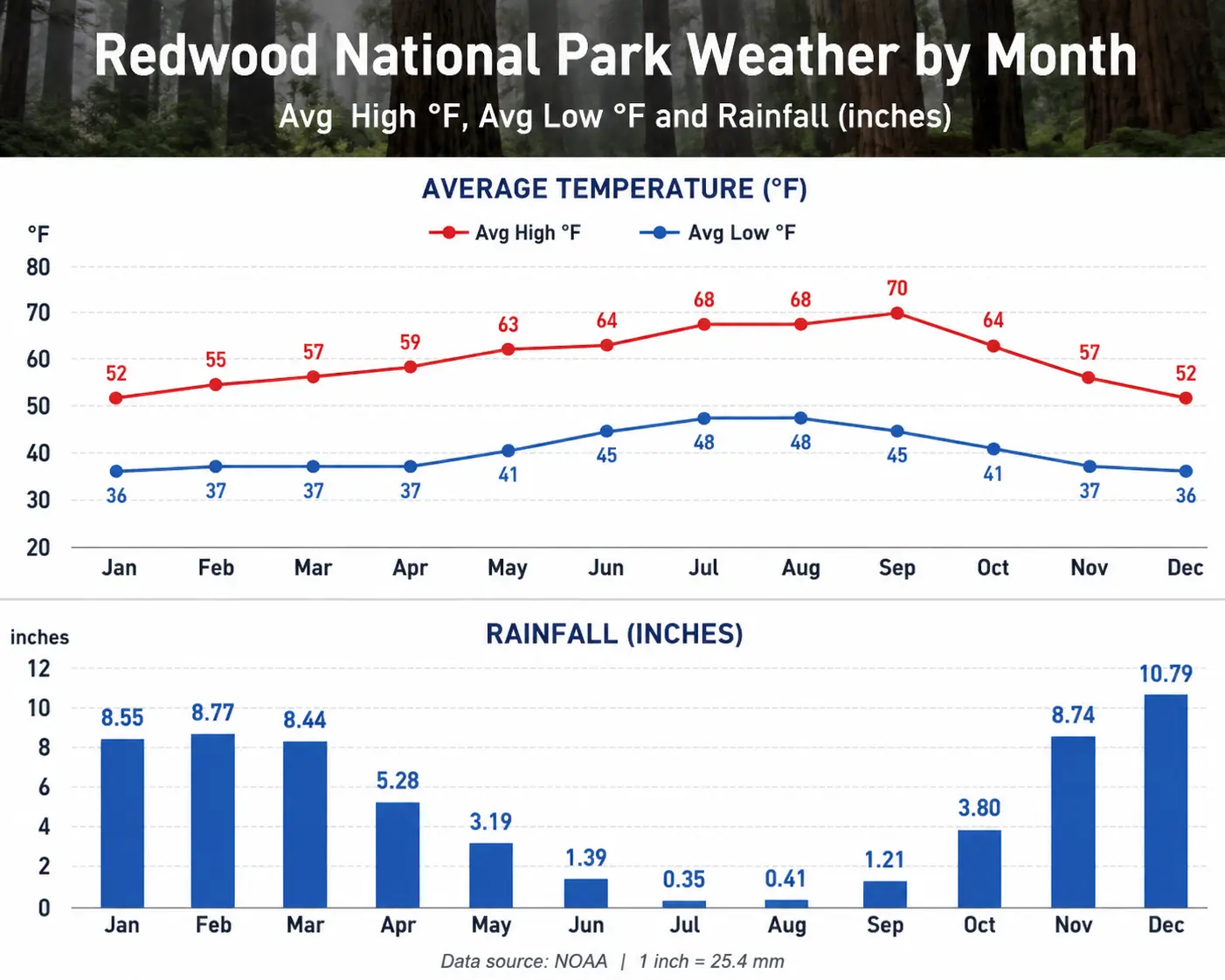
January – Cool and Rainy
Average high: 11°C (52°F)
Average low: 2°C (36°F)
Rainfall: 217.2 mm (8.55 in)
Daylight: 9.5 hours
January is one of the wettest months in Redwood National Park and gives the landscape its classic misty coastal appearance. Frequent rainfall and cool temperatures create lush green forests, vibrant moss, and dramatic fog drifting through the giant redwoods.
Visitor numbers are typically lower during winter, making trails feel peaceful and quiet. Waterproof clothing is recommended because conditions can change quickly.
Best for: Quiet hiking, winter scenery, photography, and storm watching.
February – Rainy with Early Signs of Spring
Average high: 13°C (55°F)
Average low: 3°C (37°F)
Rainfall: 222.7 mm (8.77 in)
Daylight: 10.5 hours
February continues the wet season with cool temperatures and frequent rainfall. The forest remains deep green, and streams often flow at their strongest during this time of year.
Although weather conditions can be unpredictable, visitors are rewarded with peaceful trails and excellent opportunities to experience the redwoods without summer crowds.
Best for: Forest walks, scenic drives, and peaceful visits.
March – Cool and Lush
Average high: 14°C (57°F)
Average low: 3°C (37°F)
Rainfall: 214.5 mm (8.44 in)
Daylight: 12 hours
March begins the transition toward spring while still bringing substantial rainfall. Longer daylight hours make it easier to enjoy full-day hikes, and the forest looks especially vibrant after winter rains.
Temperatures remain comfortable for outdoor activities, although mornings and evenings can still feel chilly.
Best for: Waterfalls, spring landscapes, and hiking.
April – Milder Weather and Longer Days
Average high: 15°C (59°F)
Average low: 3°C (37°F)
Rainfall: 134 mm (5.28 in)
Daylight: 13.5 hours
April introduces noticeably drier conditions and more sunshine across Redwood National Park. Vegetation remains lush while improving weather makes hiking more enjoyable.
Trails begin drying out, creating excellent conditions for exploring both the forest and nearby coastline.
Best for: Comfortable hiking and outdoor exploration.
May – Pleasant Spring Conditions
Average high: 17°C (63°F)
Average low: 5°C (41°F)
Rainfall: 81.1 mm (3.19 in)
Daylight: 14.5 hours
May marks the beginning of a much drier season in Redwood National Park. Temperatures become more pleasant and daylight hours increase significantly.
The forests remain fresh from spring rainfall while offering more stable weather for longer outdoor adventures.
Best for: Hiking, camping, and scenic photography.
June – Cool Summer Begins
Average high: 18°C (64°F)
Average low: 7°C (45°F)
Rainfall: 35.4 mm (1.39 in)
Daylight: 15 hours
June brings cooler summer weather than many visitors expect from California. Coastal fog often appears in the mornings and creates a unique atmosphere among the redwoods.
Rainfall becomes limited, making this a popular month for hiking and camping.
Best for: Summer hiking and comfortable temperatures.
July – Mild and Dry
Average high: 20°C (68°F)
Average low: 9°C (48°F)
Rainfall: 9 mm (0.35 in)
Daylight: 15 hours
July is one of the driest months of the year and offers excellent outdoor conditions. Despite being summer, temperatures remain comfortably cool thanks to ocean influence.
Morning fog is common and often adds a magical feeling to forest walks.
Best for: Camping, hiking, and scenic drives.
August – Comfortable Summer Weather
Average high: 20°C (68°F)
Average low: 9°C (48°F)
Rainfall: 10.4 mm (0.41 in)
Daylight: 15 hours
August continues the dry summer pattern with stable weather and long daylight hours. Temperatures remain mild rather than hot, creating ideal conditions for active outdoor days.
Visitors can comfortably combine forest exploration with nearby coastal stops.
Best for: Outdoor activities and extended sightseeing.
September – Warmest Month of the Year
Average high: 21°C (70°F)
Average low: 7°C (45°F)
Rainfall: 30.7 mm (1.21 in)
Daylight: 14 hours
September is typically the warmest month in Redwood National Park while still maintaining comfortable conditions. Rainfall stays low and trails are generally dry.
This combination of warmer temperatures and fewer weather interruptions makes September one of the best times to visit.
Best for: Ideal weather, hiking, and photography.
October – Cooler Autumn Conditions
Average high: 18°C (64°F)
Average low: 5°C (41°F)
Rainfall: 96.6 mm (3.80 in)
Daylight: 12.5 hours
October introduces cooler weather and gradually increasing rainfall. Visitor numbers begin to decline, creating a more peaceful atmosphere across the park.
Autumn light and changing conditions make this a beautiful season for photography.
Best for: Fewer crowds and scenic autumn landscapes.
November – Return of the Rainy Season
Average high: 14°C (57°F)
Average low: 3°C (37°F)
Rainfall: 222 mm (8.74 in)
Daylight: 11 hours
November marks the return of wetter conditions as winter approaches. Rain refreshes the forest and creates dramatic mist throughout the giant redwood groves.
Trails can become muddy, but visitors enjoy quieter conditions.
Best for: Peaceful forest experiences and photography.
December – Wettest Month of the Year
Average high: 11°C (52°F)
Average low: 2°C (36°F)
Rainfall: 274 mm (10.79 in)
Daylight: 9.5 hours
December is the wettest month in Redwood NP and delivers the classic Northern California winter atmosphere. Heavy rainfall, cool temperatures, and fog create a dramatic environment beneath the towering redwoods.
While outdoor plans may require flexibility, winter visitors experience some of the park’s most atmospheric scenery.
Best for: Winter landscapes, photography, and peaceful visits.
Redwood National Park Weather by Month Table
| Month | Avg High (°F/°C) | Avg Low (°F/°C) | Rainfall (inches) | Sun (hrs/day) |
|---|---|---|---|---|
| January | 52°F / 11°C | 36°F / 2°C | 8.55 | 9.5 |
| February | 55°F / 13°C | 37°F / 3°C | 8.77 | 10.5 |
| March | 57°F / 14°C | 37°F / 3°C | 8.44 | 12 |
| April | 59°F / 15°C | 37°F / 3°C | 5.28 | 13.5 |
| May | 63°F / 17°C | 41°F / 5°C | 3.19 | 14.5 |
| June | 64°F / 18°C | 45°F / 7°C | 1.39 | 15 |
| July | 68°F / 20°C | 48°F / 9°C | 0.35 | 15 |
| August | 68°F / 20°C | 48°F / 9°C | 0.41 | 15 |
| September | 70°F / 21°C | 45°F / 7°C | 1.21 | 14 |
| October | 64°F / 18°C | 41°F / 5°C | 3.80 | 12.5 |
| November | 57°F / 14°C | 37°F / 3°C | 8.74 | 11 |
| December | 52°F / 11°C | 36°F / 2°C | 10.79 | 9.5 |
20 FAQs About Redwood National Park Weather
1. What is the weather like in Redwood National Park year-round?
Redwood National Park has a cool coastal climate with mild temperatures throughout the year. Summers are generally dry and comfortable, while winters are wetter with frequent rain and fog.
2. What is the best month to visit Redwood National Park?
September is often considered the best month to visit because it combines the warmest temperatures with relatively low rainfall and pleasant hiking conditions.
3. What is the warmest month in Redwood National Park?
September is typically the warmest month, with average daytime temperatures reaching around 21°C (70°F).
4. What is the coldest month in Redwood National Park?
January and December are generally the coldest months, with average lows around 2°C (36°F).
5. Does Redwood National Park get snow?
Snow is extremely rare in Redwood National Park. Most areas receive little to no measurable snowfall during the year.
6. What is the rainiest month in Redwood National Park?
December is usually the wettest month, averaging approximately 274 mm (10.79 inches) of rainfall.
7. What is the driest month in Redwood National Park?
July is typically the driest month, receiving only about 9 mm (0.35 inches) of rainfall.
8. Is Redwood National Park foggy?
Yes. Coastal fog is common, especially during summer mornings and evenings, creating the park’s famous misty atmosphere.
9. Can you visit Redwood National Park in winter?
Yes. Winter visits offer fewer crowds, dramatic scenery, and lush forests, but visitors should prepare for frequent rain.
10. Is summer hot in Redwood National Park?
No. Summer temperatures are generally mild, averaging around 18–20°C (64–68°F).
11. How much rain does Redwood National Park get annually?
Based on the provided data, the park receives over 1,500 mm (approximately 59 inches) of rainfall annually.
12. What should I wear when visiting Redwood National Park?
Layered clothing is recommended year-round. Bring a waterproof jacket and sturdy shoes because weather conditions can change quickly.
13. Is Redwood National Park humid?
Yes. The nearby Pacific Ocean creates relatively humid conditions throughout the year.
14. Are summers crowded at Redwood National Park?
Summer attracts more visitors, especially from June through August, although the park generally feels less crowded than many major national parks.
15. Is spring a good time to visit Redwood National Park?
Yes. Spring offers greener landscapes, fewer crowds, and gradually improving weather.
16. How many hours of daylight does Redwood National Park get?
Daylight ranges from approximately 9.5 hours in winter to 15 hours during summer.
17. Can rain affect hiking conditions?
Yes. Heavy winter rainfall may create muddy trails and temporary closures in some areas.
18. Is Redwood National Park windy?
Coastal sections can experience breezy conditions, particularly near beaches and exposed viewpoints.
19. Does Redwood National Park experience extreme temperatures?
No. Temperatures remain relatively stable year-round due to the Pacific Ocean’s moderating influence.
20. When should I visit Redwood National Park for hiking?
For the best hiking weather, visit between June and September, when rainfall is lower and trail conditions are usually drier.